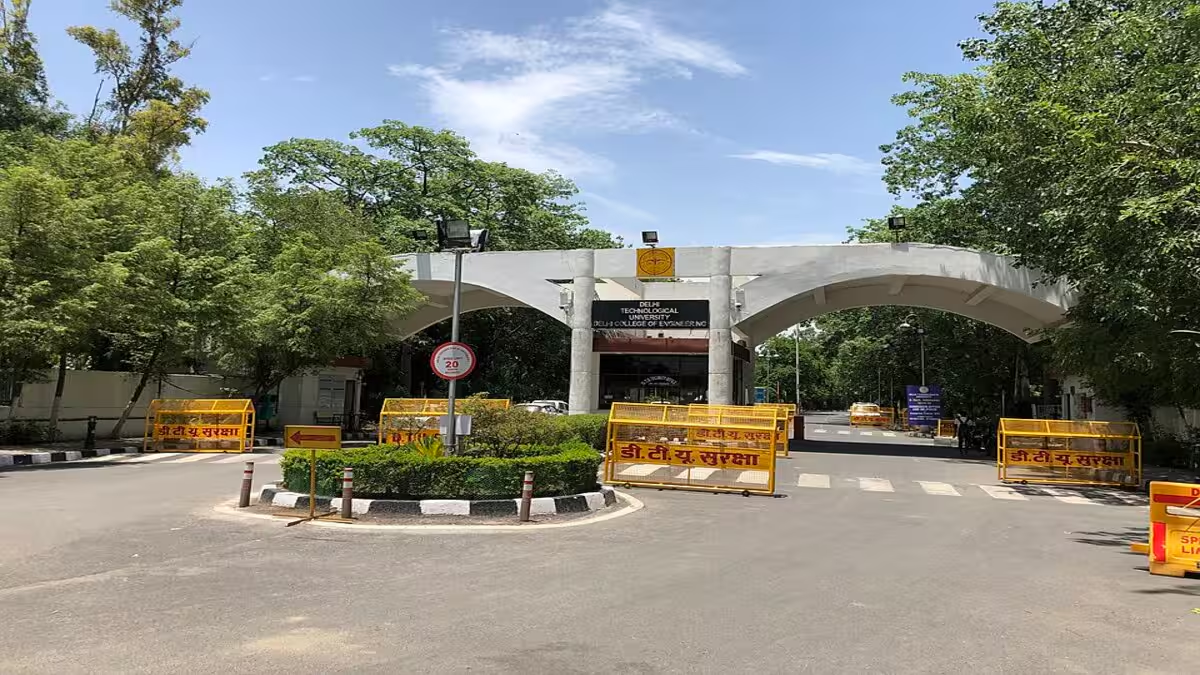
Delhi Technological University (DTU) has introduced two new executive education programs aimed at working professionals interested in clean energy and corporate sustainability. These six-month courses combine live online sessions on Sundays with a three-day campus immersion, six academic modules, and a capstone project to provide a comprehensive learning experience.
DTU’s New Executive Programs and Structure
The university’s executive education offerings are developed in partnership with VCnow and delivered through DTU’s Centre for Technology Enhanced Learning (CTEL). The first batch of the advanced program in renewable and sustainable energy management has already begun, alongside the Leadership Programme in CSR, Energy and Corporate Sustainability (LPCECS).
These courses are designed to accommodate the schedules of working professionals, with weekend online classes and a brief on-campus component. The curriculum includes six academic modules that cover key topics in clean energy technologies and corporate sustainability practices, culminating in a capstone project that allows participants to apply their learning to real-world challenges.
Access to Cutting-Edge Facilities and International Participation
Participants in the clean energy program will benefit from access to DTU’s Nodal Centre of Excellence in Energy Transition (NCEET), which houses the state-of-the-art Yogi Goswami Clean Energy Laboratory. This facility supports advanced research and practical learning in renewable energy technologies.
The inaugural batch includes professionals not only from India but also from the United Kingdom and the United Arab Emirates, reflecting the global relevance of clean energy and sustainability education.
Significance of the Programs for India’s Energy and Sustainability Goals
DTU Vice-Chancellor Prateek Sharma emphasized the importance of lifelong learning and the university’s commitment to supporting India’s rapidly evolving renewable energy sector. He highlighted that these executive courses align with the Government of India’s National Education Policy (NEP) 2020 and contribute to the broader vision of Viksit Bharat Abhiyan, a campaign aimed at national development.
The founders of VCnow pointed out that the timing of these programs is critical, given the global challenges related to energy and sustainability. They stressed that transitioning to clean energy and corporate sustainability is essential not only for environmental reasons but also for national security, geopolitical stability, and economic resilience.
DTU’s senior faculty and program director noted the rigorous curriculum and high professional standards set for these courses, underscoring the university’s dedication to quality education that meets the demands of industry and society.
Frequently Asked Questions
Q: Who can enroll in DTU’s executive education programs?
A: These programs are designed for working professionals interested in advancing their knowledge and skills in clean energy and corporate sustainability.
Q: What is the duration and format of these courses?
A: Each program lasts six months and includes live online classes on Sundays, a three-day campus immersion, six academic modules, and a capstone project.
Q: How do these programs support India’s national goals?
A: The courses align with the National Education Policy 2020 and contribute to the Viksit Bharat Abhiyan initiative by preparing professionals to lead in renewable energy and sustainability sectors.