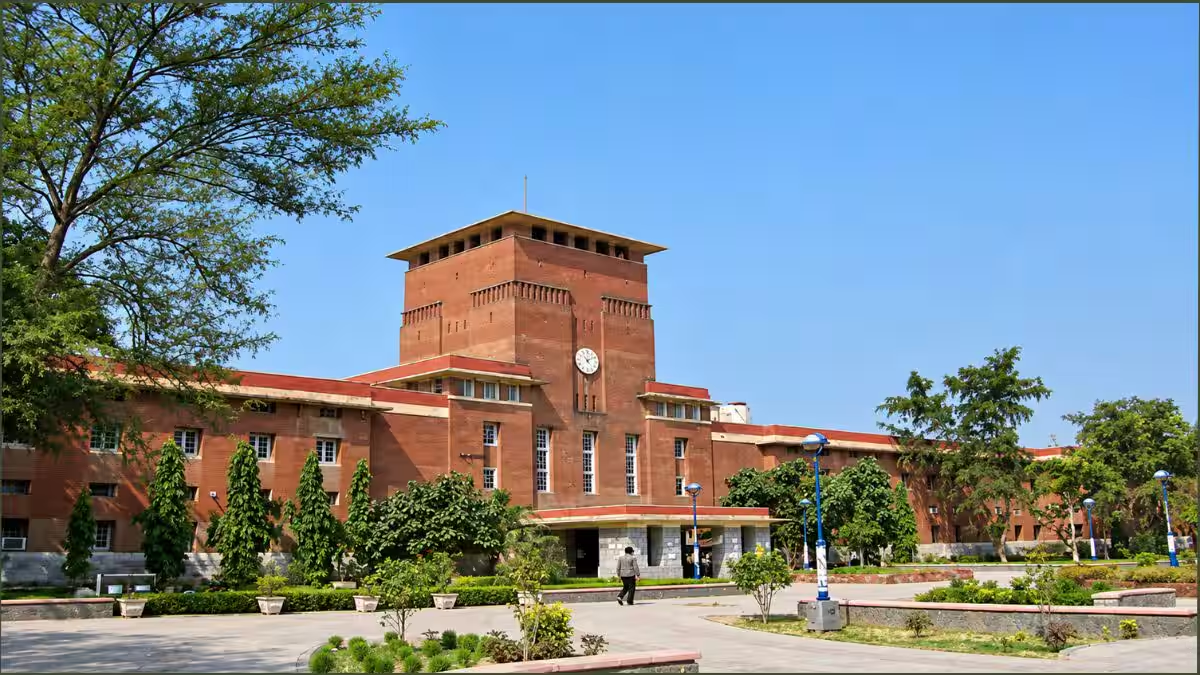
Delhi University's Centre for Distance and Online Education (CDOE) is actively supporting the treatment of a faculty member's child diagnosed with a rare genetic disorder called Spinal Muscular Atrophy (SMA) Type 2. This effort aims to provide financial assistance and medical guidance to help cover the high costs of treatment.
- The child's condition is Spinal Muscular Atrophy Type 2, a rare genetic disorder.
- CDOE formed a committee including AIIMS senior doctors to review the case.
- Gene therapy is needed but not covered under the Central Government Health Scheme.
- About Rs 1 crore has been raised through crowdfunding, covering only 6.25% of treatment costs.
- The Centre for Distance and Online Teachers' Association (CDOETA) played a key role in mobilizing support.
What is Spinal Muscular Atrophy Type 2?
Spinal Muscular Atrophy (SMA) Type 2 is a genetic disorder that affects the muscles and motor neurons, leading to muscle weakness and loss of movement. It typically appears in early childhood and requires specialized medical treatment, including gene therapy, which can be very expensive.
How is Delhi University supporting the treatment?
The Centre for Distance and Online Education, formerly known as the School of Open Learning (SOL), responded to requests from the newly formed Centre for Distance and Online Teachers' Association (CDOETA). The association's leaders approached the SOL Director to seek help for the child's treatment.
In response, the university set up a committee of experts, including senior doctors from the All India Institute of Medical Sciences (AIIMS), to examine the case. This committee evaluated the urgency and medical needs, especially the requirement for gene therapy, which is not covered by the Central Government Health Scheme (CGHS).
What fundraising efforts have been made?
Through crowdfunding efforts supported by colleagues and family members, approximately Rs 1 crore has been raised over several months. However, this amount represents only about 6.25% of the total expected cost for the treatment. The teachers' association and the university community have actively contributed to these fundraising efforts.
How did the teachers' associations contribute?
The Centre for Distance and Online Teachers' Association (CDOETA) played a crucial role in bringing attention to the case. Even before its formal establishment, members reached out to the Delhi University Teachers' Association (DUTA) leaders, who encouraged teachers across the university to donate.
CDOETA President Kancharkuntla Praveen Reddy highlighted how this situation united teachers with shared concerns. Secretary Ravi Kumar noted that teachers unanimously agreed to support the cause, and the university director acted promptly to facilitate assistance.
What is the significance of this initiative?
This initiative demonstrates collective action and institutional coordination to support a family facing significant medical expenses. The funds collected will be used solely for the child's treatment and welfare. Additionally, the association has appealed to the public to contribute through online transfers to help cover ongoing costs.
Frequently Asked Questions
Q: What is the role of the Centre for Distance and Online Education in this case?
A: The Centre is facilitating financial support and coordinating medical expert advice to help with the child's treatment.
Q: Why is gene therapy important for the child's treatment?
A: Gene therapy is a crucial treatment for Spinal Muscular Atrophy Type 2 but is expensive and not covered by government health schemes.
Q: How can people contribute to the treatment fund?
A: Contributions can be made through online transfers using the payment ID einstein2@fbl as requested by the association.