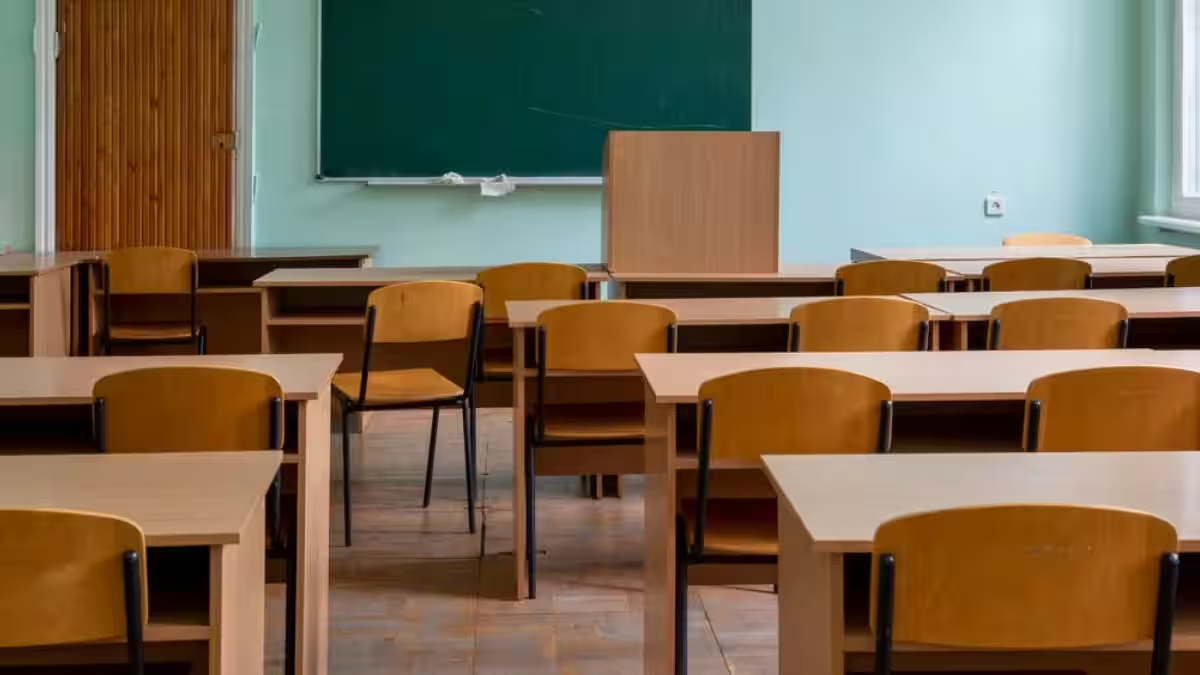
Across several states in India, students born between 2010 and 2024, known as Gen Alpha, have taken to the streets to protest the poor state of their schools. From Rajasthan to Uttar Pradesh and Madhya Pradesh, these young learners are raising their voices against a lack of basic facilities such as toilets, fans, teachers, and even proper school buildings. Their demonstrations highlight urgent problems affecting their education and safety.
Why Students Are Protesting
For many of these children, attending school means coping with unsafe or inadequate environments. In Rajasthan’s Jaipur district, for example, students were forced to hold classes in a cattle enclosure after their school building was declared unsafe. In other areas, students have protested against the absence of teachers, poor sanitation, and allegations of misconduct by school staff. These protests are not isolated incidents but part of a growing movement where students demand better learning conditions and accountability from authorities.
Key Facts About the Protests
- In Rampura Kanwarpura village, Rajasthan, students attended classes in a dilapidated building and later a cattle enclosure. Following protests, the government approved construction of a new school building starting September 1.
- In Ajmer, girl students protested against their principal over allegations of molestation, leading to police action.
- Hearing- and speech-impaired students in Jaipur staged a dharna over unhygienic toilets, lack of drinking water, and poor infrastructure, prompting the removal of the school principal.
- In Madhya Pradesh’s Bhopal, students and teachers protested the closure of over 25,000 government schools and poor building conditions, planning further sit-ins.
- Uttar Pradesh saw multiple protests, including a boycott at PM Shri Composite School over caste discrimination and protests in Lucknow over teacher shortages, especially in science subjects.
- At Sarvodaya Inter College in Kishanpur, nearly 1,800 students protested against poor facilities and alleged unauthorized fees, receiving government assurances to address the issues.
What These Protests Reveal About Education in India
Education experts say these protests expose deeper systemic problems. Prabhu Mohapatra, a former Delhi University professor, notes that education policies have often ignored students’ voices, treating reforms as top-down decisions. The protests reflect a decline in government prioritization of education, especially in northern and eastern India, where infrastructure and teacher availability have worsened.
The movement also signals a shift in how young people view their role in shaping education. Rather than accepting poor conditions, students are actively demanding improvements. Campaigns like the "School Thik Karo" initiative and the Students' Federation of India's upcoming "School Bachao Andolan" aim to sustain pressure on governments to invest more in public schools and ensure safe, quality learning environments.
Frequently Asked Questions
Q: Who are the Gen Alpha students leading these protests?
A: Gen Alpha refers to children born between 2010 and 2024. These young students are increasingly speaking out about the conditions in their schools across India.
Q: What are the main issues these students are protesting?
A: The protests focus on inadequate school infrastructure, lack of teachers, unsafe or unhygienic facilities, allegations of misconduct by school staff, and unauthorized fees.
Q: How have authorities responded to these protests?
A: In some cases, governments have promised to build new school buildings, investigate complaints, remove problematic staff, and address infrastructure issues. However, many protests continue as students seek sustained improvements.