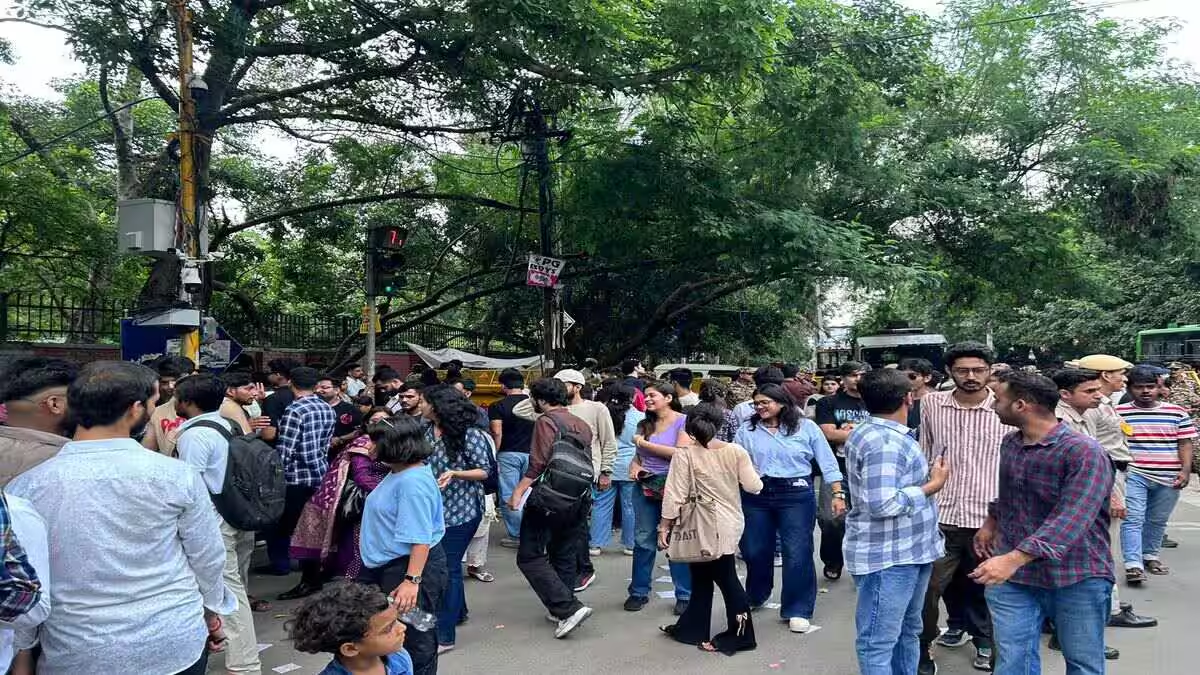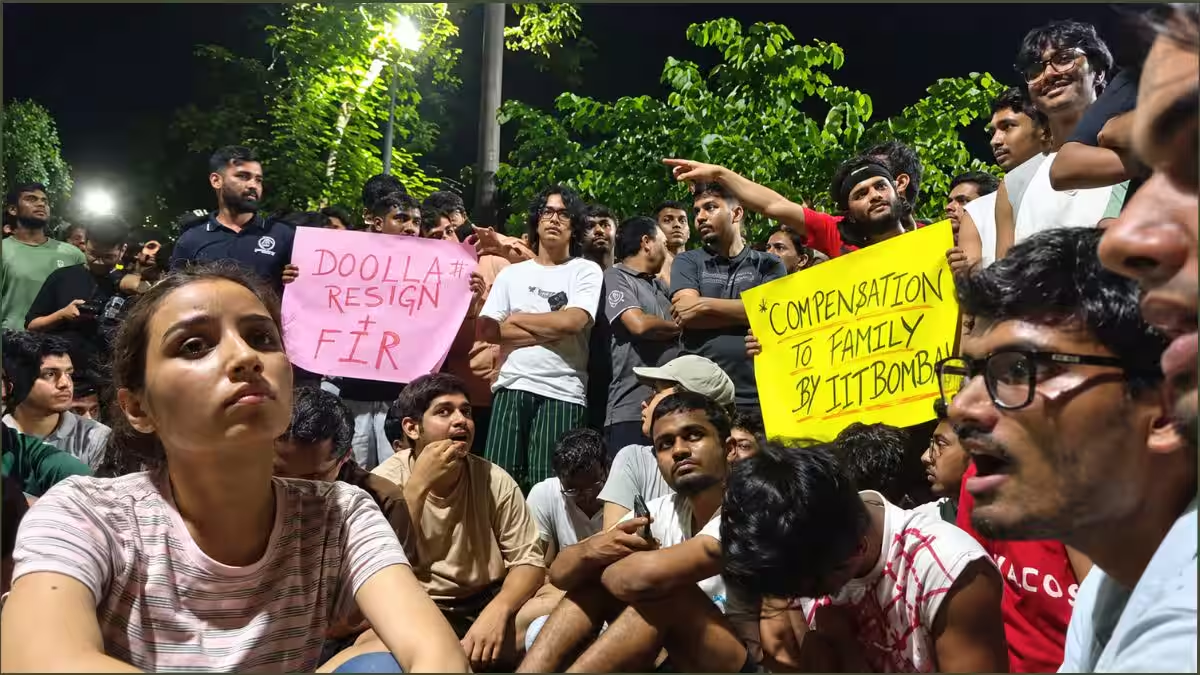
The Ambedkar Periyar Phule Study Circle (APPSC) at IIT Bombay has accused Powai police of detaining protesting students twice on October 18 and subjecting them to violence. These students were demanding accountability for the death of Sahil Wakode, a fellow student. The protest had been ongoing for 30 days, with a sit-in demonstration at the campus.
- Students were detained twice by police during the protest.
- Police and campus security allegedly used violence against students.
- Casteist abuse and harassment were reported against protesting students.
- Portraits of notable social reformers were damaged during police action.
- APPSC condemned the administration for allowing right-wing groups to target protesters.
- Chandrashekhar Azad has requested a CBI probe into Sahil Wakode's death and police conduct.
What happened during the police intervention at IIT Bombay?
According to APPSC's statement dated October 21, police and campus security forces detained eight students after using violence during the protest. The incident occurred when a police car approached a student in a way that caused panic, leading another student to jump onto the car to avoid being run over. Police then took advantage of the situation to detain the students, including one who was on a hunger strike that day.
How did Sahil Wakode’s parents respond to the protest?
Sahil Wakode’s parents visited IIT Bombay on the one-month anniversary of his death to pay tribute. They sought to meet an authority at the institute but were informed that the Chairman of the Board of Governors was unwell and hospitalized. While they waited at the protest site, APPSC alleges that police detained students again.
Were there any reports of damage or abuse during the detentions?
APPSC reported that portraits of prominent figures such as Babasaheb Ambedkar, Jyotiba Phule, Savitribai Phule, Mahatma Gandhi, Birsa Munda, Shivaji Maharaj, and Bhagat Singh were mishandled and broken during the detentions. The group also alleged that students were dragged by their hair, choked, beaten, and had their clothes torn, resulting in several injuries.
What concerns did APPSC raise about casteist abuse?
The group accused the IIT Bombay administration of allowing right-wing groups to spread casteist narratives targeting Sahil Wakode and the students seeking justice. They also highlighted that posters were torn down, the protest site was cleared, and the area was converted for Dussehra celebrations, which raised concerns about marginalizing the protest and its participants. Additionally, students faced casteist slurs and abuse on social media and messaging platforms.
How did the IIT Bombay administration respond to the protests?
APPSC criticized the administration for showing intolerance towards criticism and failing to engage meaningfully with questions about its conduct and institutional responsibility for Wakode’s death. The administration was also accused of colluding with the police to detain and harass students demanding accountability.
What actions have been taken by external leaders regarding the incident?
Nagina MP and Azad Samaj Party national president Chandrashekhar Azad wrote to Union Home Minister Amit Shah, seeking a Central Bureau of Investigation (CBI) probe into Sahil Wakode’s death and an inquiry into the police’s treatment of students during the protests. He requested an impartial examination of evidence, including Wakode’s mobile phone, examination room records, and institutional documents. Azad also urged that the investigation should not negatively impact the students’ education or academic futures.
What is the current status of the student protests?
Despite the police actions and administrative challenges, students continue their protest at the main building of IIT Bombay. They demand justice for Sahil Wakode and call for campus democracy free from caste discrimination, emphasizing equality, fraternity, and institutional accountability.