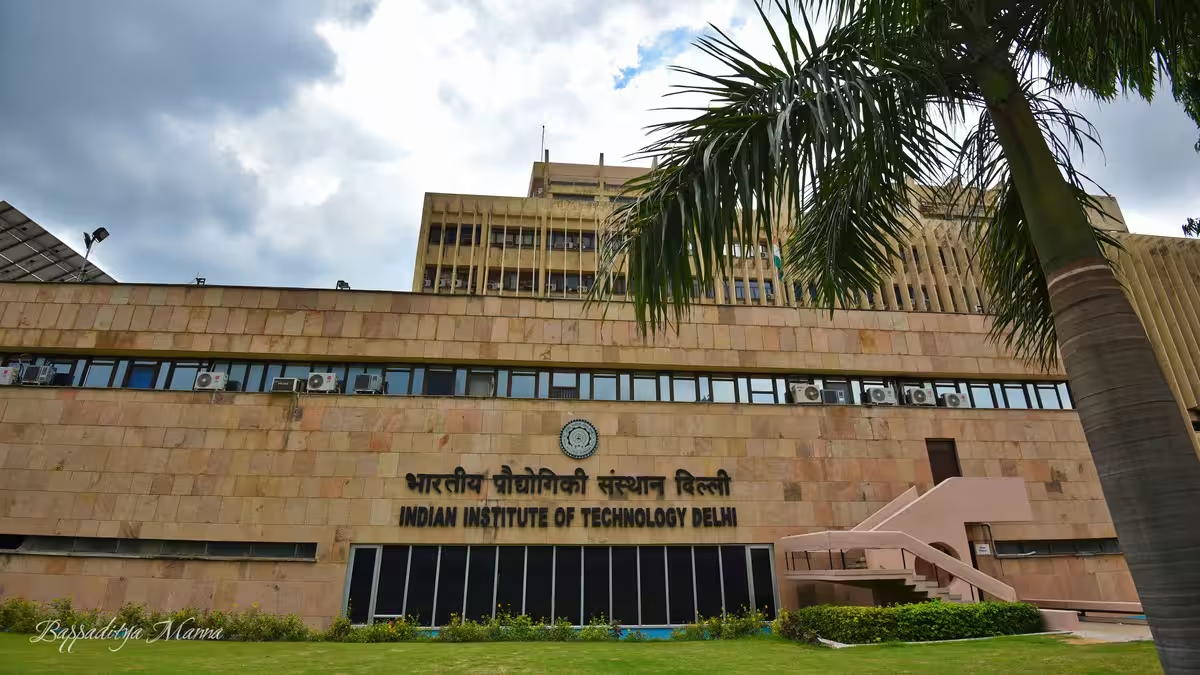
Researchers from IIT Delhi, AIIMS New Delhi, and the Institute of Human Behaviour and Allied Sciences (IHBAS) have created the first Hindi adaptation of Melodic Intonation Therapy (MIT), a music-based speech therapy aimed at helping stroke survivors recover their ability to speak. This therapy, previously available only in English and other Western languages, has now been tailored specifically for Hindi speakers.
Understanding Melodic Intonation Therapy and Aphasia
Melodic Intonation Therapy is a specialized form of speech therapy that uses musical elements like melody and rhythm to stimulate language recovery in people affected by aphasia. Aphasia is a condition often caused by stroke or brain injury that impairs a person’s ability to communicate effectively. Traditional MIT has been widely used in English-speaking countries, but until now, there was no validated version for Hindi, one of the most spoken languages in the world.
The therapy works by engaging the brain’s musical and language centers simultaneously, helping patients relearn speech patterns through singing and rhythmic exercises. However, simply translating the English version of MIT would not be effective due to the unique cadence and tonal qualities of Hindi. The research team redesigned the melodies and rhythms to suit the natural flow of the Hindi language, ensuring the therapy aligns with how Hindi speakers naturally communicate.
Key Findings from the Pilot Study
The collaborative study involved six Hindi-speaking stroke survivors diagnosed with aphasia. Each participant underwent 40 therapy sessions, each lasting between 45 and 60 minutes, guided by trained speech therapists. The therapy was delivered in a clinical setting, combining expertise from engineering, neurology, otorhinolaryngology, and speech therapy specialists.
- All six patients completed the full course of therapy.
- Participants showed clinically meaningful improvements in their ability to form longer sentences and speak more fluently.
- Patients reported an enhanced quality of life following the therapy.
- No adverse effects were observed during the treatment.
While these results are encouraging, the researchers caution that the small sample size means the findings are preliminary. Larger studies will be necessary to confirm the therapy’s effectiveness and to explore its broader application.
Implications for Stroke Rehabilitation in Hindi-Speaking Regions
This breakthrough offers new hope for millions of Hindi-speaking stroke survivors who previously had limited access to culturally and linguistically appropriate speech therapy options. By adapting MIT to Hindi’s unique linguistic features, the therapy can better support patients in regaining their communication skills, which are crucial for social interaction and overall well-being.
The research team is also investigating digital platforms to make this therapy more widely accessible beyond specialized hospitals. Such tools could enable remote therapy sessions, reaching patients in rural or underserved areas where speech therapy resources are scarce.
Experts involved in the project emphasize that while the initial results are promising, ongoing research and clinical trials with larger patient groups are essential before this therapy can become a standard treatment option.
Frequently Asked Questions
Q: What is Melodic Intonation Therapy?
A: Melodic Intonation Therapy is a speech therapy technique that uses melody and rhythm to help people with aphasia recover their ability to speak, by engaging brain areas involved in music and language.
Q: Why was a Hindi version of this therapy needed?
A: Hindi’s unique rhythm and tonal patterns differ from English, so the therapy had to be redesigned to match the natural flow of Hindi speech rather than just translated.
Q: Are the results of this new therapy proven?
A: The pilot study showed promising improvements in six patients, but larger studies are needed to confirm its effectiveness and safety for widespread use.