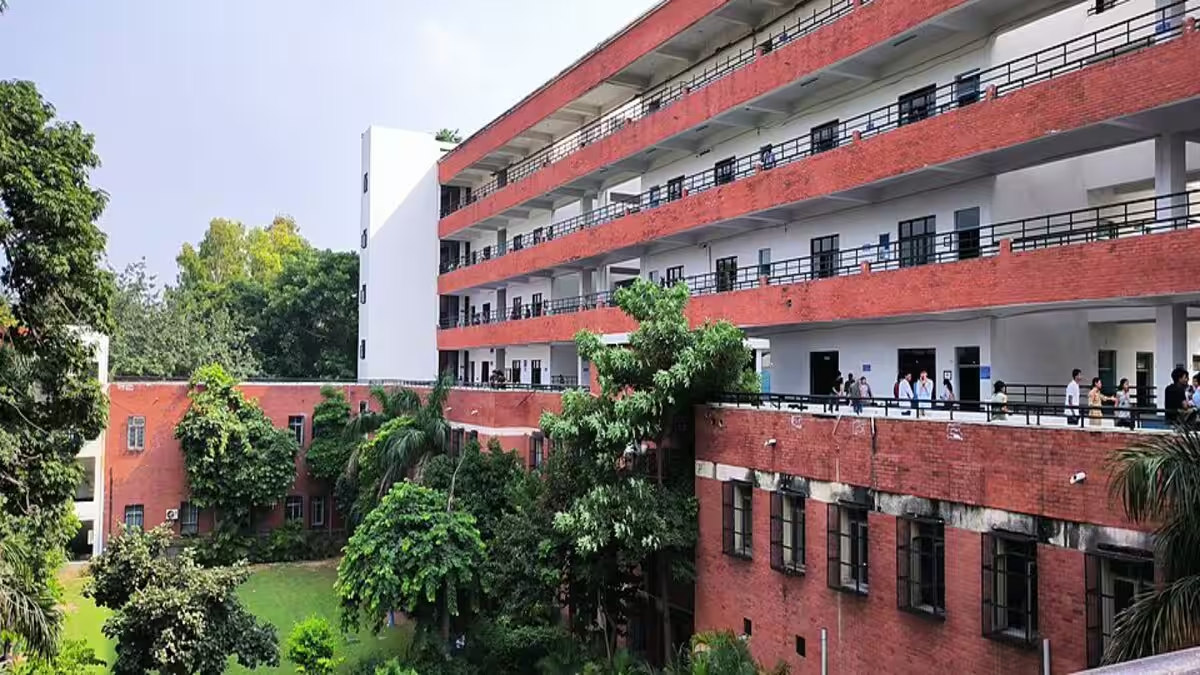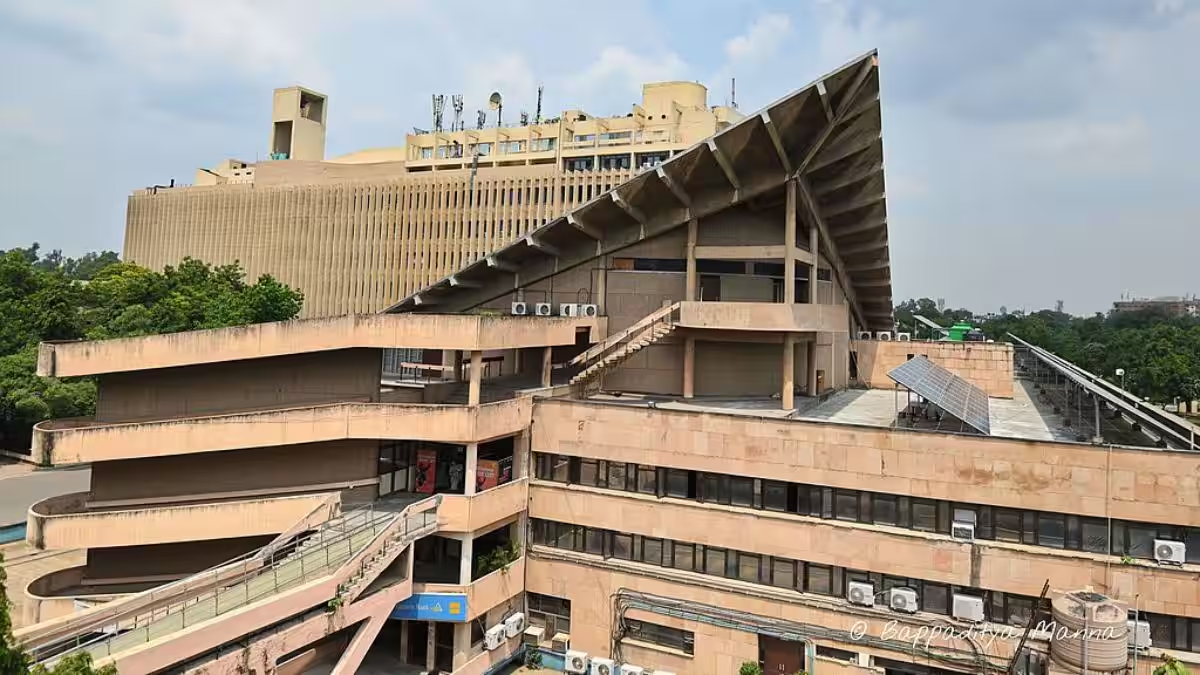
Students at the Indian Institute of Technology Delhi have voiced strong objections to the members appointed to an external inquiry committee investigating the recent suicide of an MSc physics student. They also criticized the institute's administration for framing the student's death primarily through a 'medical history' lens, which they argue ignores important perspectives from the student's family, friends, and peers.
Concerns Over Inquiry Panel Composition
The students specifically oppose the inclusion of IPS officer Ashok Kumar on the committee. They cite his past public remarks linking student protests to "radicalisation" and "digital terrorism," which they believe undermine his ability to handle student issues sensitively and fairly. The students argue that such views compromise the integrity of the inquiry and have called for the committee to be reconstituted. They want a panel led by a retired Supreme Court or High Court judge, nominated collectively by the student body, to ensure impartiality and trust in the process.
Key Points Raised by Students
- The administration’s narrative focuses on the student's mental health history, which students say downplays testimonies from those close to him.
- Students reject the idea that mental health challenges can be addressed primarily through "parental support," emphasizing the need for peer networks, equitable academic opportunities, and an empathetic campus environment.
- They demand a compensation package of Rs 1 crore for the deceased student's family, criticizing the administration’s reluctance to commit to this amount and noting that the standard benevolent fund is only Rs 6 lakh.
- There is a call for the resignation of Professor Sreedevi, the associate dean of student welfare, due to her perceived insensitivity and moral policing regarding mental health issues.
- Students insist on assurances that no punitive measures will be taken against those peacefully protesting for justice.
Why This Dispute Matters for IIT Delhi
The controversy highlights deeper issues around mental health support and student rights at IIT Delhi. The students argue that the current system is inadequate, with superficial solutions like assigning faculty mentors serving only as "band-aid" fixes rather than addressing systemic problems. They emphasize that transparent communication about existing mental health protocols and genuine engagement with student concerns are essential for meaningful change.
The dispute also reflects broader tensions between student activism and institutional responses in higher education. The students’ demand for a fair and sensitive inquiry underscores the importance of trust and accountability when addressing tragedies on campus. Their ongoing protest signals a push for reforms that go beyond immediate crisis management to foster a more supportive academic community.
Frequently Asked Questions
Q: Why are students opposing IPS Ashok Kumar’s role on the inquiry panel?
A: Students object to his past comments linking student protests to "radicalisation" and "digital terrorism," which they feel compromise his ability to conduct a fair and sensitive investigation.
Q: What compensation are the students demanding for the deceased student's family?
A: They are asking for Rs 1 crore in compensation, criticizing the administration’s standard benevolent fund of Rs 6 lakh as insufficient.
Q: What changes do students want regarding mental health support at IIT Delhi?
A: Students want transparent disclosure of existing mental health protocols, better peer support, fair academic opportunities, and a more empathetic campus environment rather than temporary fixes.