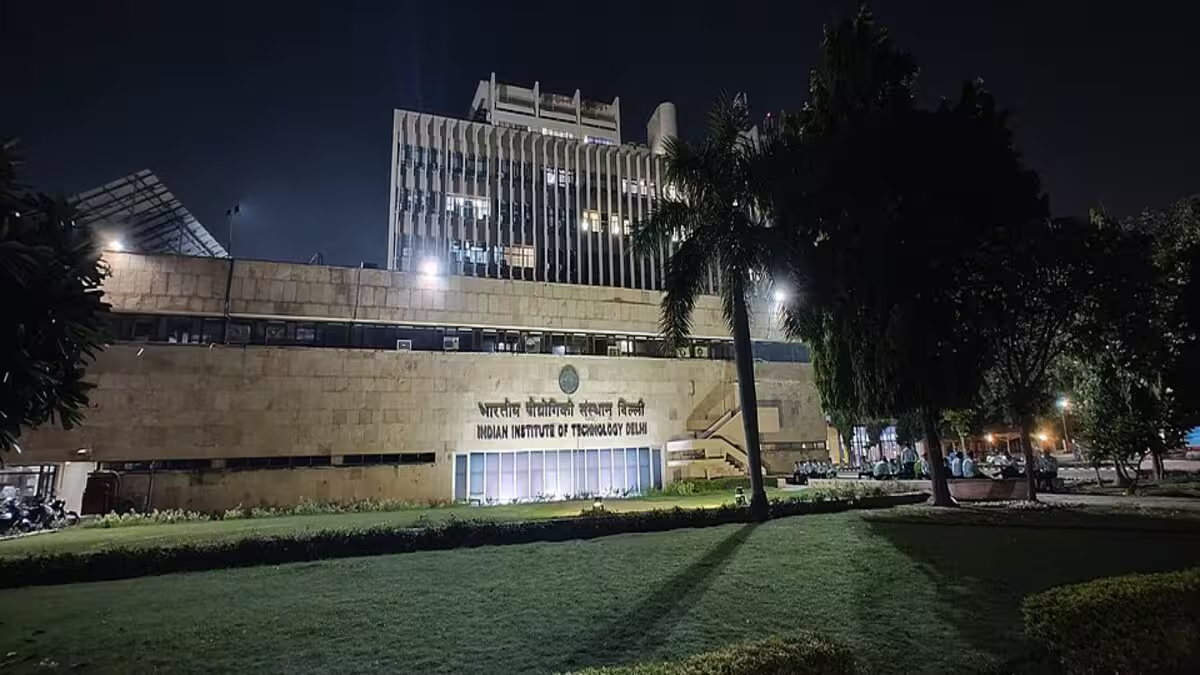
The Indian Institute of Technology Delhi (IIT Delhi) has established a five-member external committee to investigate the death of Rishikesh Kumar, an MSc Physics student who died by suicide. The institute announced this move following protests on campus where students demanded a thorough inquiry, the resignation of the dean, and compensation for Kumar's family.
The committee is tasked with engaging students, faculty, and administrative officials to understand the circumstances surrounding Kumar's death. It will also review existing protocols and suggest improvements. IIT Delhi has requested the committee to submit its findings within two weeks.
Understanding the Situation at IIT Delhi
Rishikesh Kumar joined the MSc Physics program at IIT Delhi in July 2025 and initially performed well academically. He lived in the Shivalik Hostel on campus. However, in March 2026, Kumar began experiencing mental health challenges. The institute's counsellor and psychiatrist advised that he remain under continuous parental supervision. Following this advice, Kumar applied for withdrawal from his second semester, which was approved, and he moved off campus to live with his parents.
When Kumar returned to IIT Delhi in July 2026, his medical records were reviewed again, and the recommendation to stay under parental supervision continued. He also applied for withdrawal from his third semester, which the Physics Department approved. Despite these measures, Kumar tragically took his own life, prompting concern and calls for action from the student body and administration alike.
Key Facts About the Investigation and Campus Response
- The five-member committee includes Ashok Kumar, former Uttarakhand DGP and IIT Delhi alumnus; Pratap Sharma, head of the psychiatry department at AIIMS, New Delhi; 3 to 4 student representatives; and administrative officials such as the registrar.
- The committee will conduct interviews with students, faculty, and administration to gather comprehensive information.
- IIT Delhi plans to provide financial aid to Kumar's family by reimbursing medical expenses and creating a fund supported by voluntary contributions from faculty, students, and staff.
- An external Ombudsperson will be appointed to handle grievances that are not resolved internally.
- The institute intends to establish a new support system involving faculty and student mentors focused on mental health.
- Students have been protesting on campus for over 14 hours, demanding accountability, investigation, and compensation.
- A PhD student, Sudipto, has reached out to media outlets to highlight the scale and seriousness of the protests, which drew over 3,000 participants.
Why This Investigation Matters for IIT Delhi and Its Community
The death of Rishikesh Kumar has brought mental health concerns at IIT Delhi into sharp focus. The establishment of an external committee signals the institute’s recognition of the need for transparency and accountability. By involving experts like Pratap Sharma from AIIMS and including student representatives, IIT Delhi aims to ensure a thorough and balanced inquiry.
Financial support for Kumar’s family and the creation of a dedicated fund demonstrate the institute’s commitment to assisting those affected by this tragedy. The appointment of an external Ombudsperson and the development of enhanced mental health support systems reflect a broader effort to improve student welfare and prevent future incidents.
The student protests reveal a strong demand for change and greater attention to mental health issues within the academic environment. This incident may prompt other institutions to review their own support structures and protocols for students facing mental health challenges.
Frequently Asked Questions
Q: Who is investigating the death of Rishikesh Kumar?
A: IIT Delhi has formed a five-member external committee including former police official Ashok Kumar, AIIMS psychiatry head Pratap Sharma, student representatives, and administrative officials to investigate the circumstances of Kumar's death.
Q: What support is IIT Delhi providing to Kumar's family?
A: The institute will reimburse medical expenses and create a fund with voluntary contributions from faculty, students, and staff to financially assist Kumar's family.
Q: What steps is IIT Delhi taking to address student mental health?
A: IIT Delhi plans to appoint an external Ombudsperson for grievance redressal and establish a support system with faculty and student mentors focused on mental health to better support students in need.