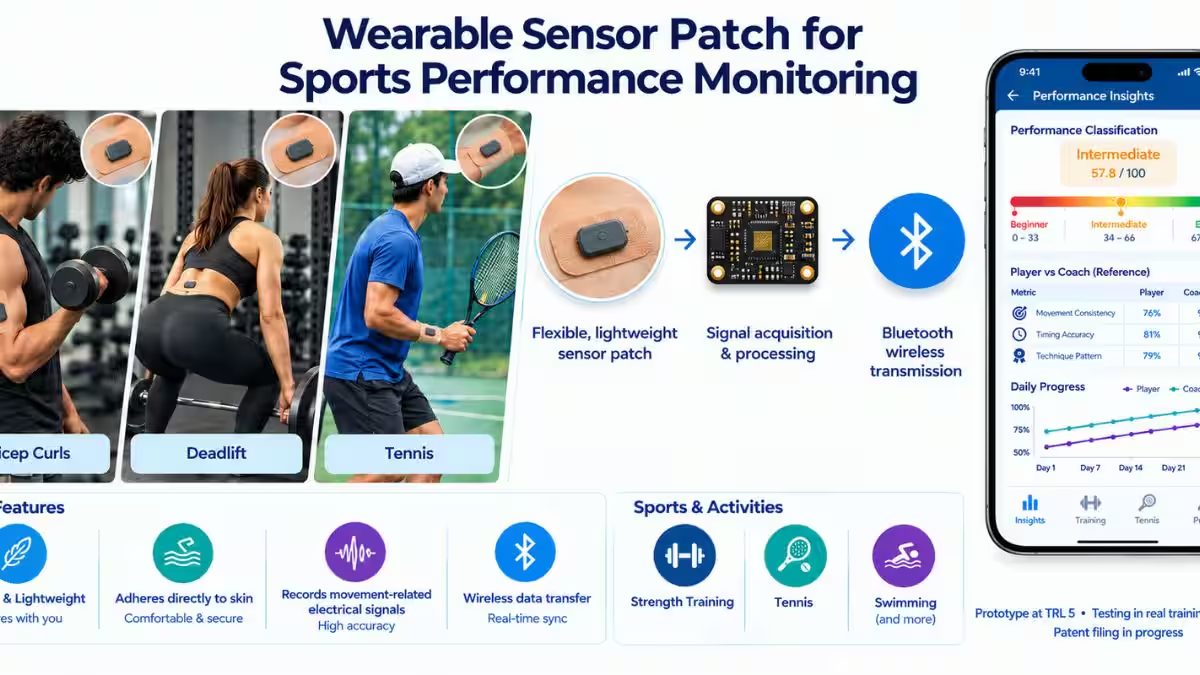
Researchers at the Indian Institute of Technology Gandhinagar (IITGN) have developed a wearable sensor that tracks body movements during sports and exercise. This technology uses small patches placed on the body to record movement changes and sends data to mobile devices for analysis. The goal is to help athletes and trainers better understand and improve performance.
- The sensor detects physical stretching and bending, converting them into electrical signals.
- Machine learning compares these signals with patterns from experienced athletes.
- The system helps assess timing, strength, and consistency of movements.
- It supports various sports, including weightlifting, tennis, and swimming.
- The prototype is at Technology Readiness Level 5 and undergoing real-world testing.
How does the wearable sensor work?
The sensor consists of small patches placed on selected parts of the body. These patches detect physical movements such as stretching or bending and convert these into electrical signals. The signals are transmitted via Bluetooth to a mobile device, where they are analyzed using machine learning algorithms. This process allows the system to monitor and assess different exercise movements in real time.
What role does machine learning play in this technology?
Machine learning models study the electrical signals from the sensor and compare them with movement patterns recorded from experienced athletes, coaches, and trainers. This comparison helps identify differences in movements and provides quantitative feedback. The technology aims to supplement traditional coaching by offering detailed data that might be difficult to observe consistently in busy training environments.
Which sports and exercises are being tested with the sensor?
The sensor is currently being tested in activities such as weightlifting, strength training, tennis, and swimming. The research team has monitored 50 individuals involved in weightlifting and strength training and recorded movements from 30 trainees participating in tennis, swimming, and other physical activities. This broad testing helps evaluate the sensor's effectiveness across different sports.
How can this technology benefit beginners and trainers?
Beginners often struggle to know if they are performing exercises correctly without constant guidance. The sensor examines the timing, strength, and consistency of movements across repetitions, providing objective data that can help identify areas for improvement. Trainers can use this information to offer more precise feedback, especially in crowded gyms where observing every repetition is challenging.
What is the current status of the sensor development?
The prototype has reached Technology Readiness Level 5 and is undergoing further testing in real training environments. The research team has integrated the sensor, data collection, and analysis systems into a single platform. A patent filing is in progress, and the team continues to refine and validate the system to ensure accuracy and usability.
Are there plans for collaboration and further development?
The researchers are looking to partner with fitness centres, sports academies, trainers, and industry organisations. These collaborations aim to support further testing and product development, helping to bring the technology closer to practical use in sports and fitness training.
Frequently Asked Questions
Q: What types of movements can the sensor track?
A: The sensor tracks various body movements such as stretching, bending, and other exercise-specific motions during activities like weightlifting, tennis, and swimming.
Q: How does the sensor help improve sports performance?
A: By providing detailed, quantitative data on movement patterns, the sensor helps trainers and athletes identify inconsistencies and areas for improvement that may not be easily observed.
Q: Is the technology ready for commercial use?
A: The prototype is at Technology Readiness Level 5 and is undergoing real-world testing. Further refinement and validation are in progress before commercial release.
Q: Can this sensor replace a coach?
A: No, the sensor is designed to complement traditional coaching by providing additional data to support training and performance analysis.