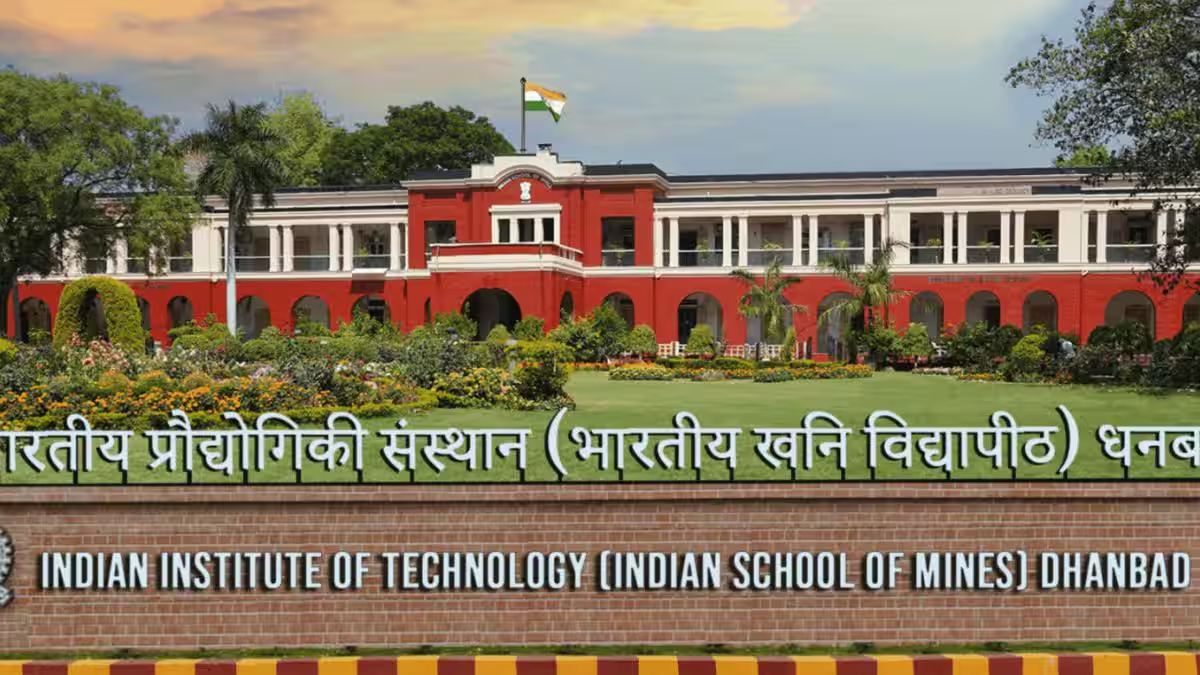
Researchers at IIT-ISM Dhanbad have been granted an Indian patent for a new technology that recovers copper from industrial wastewater. The innovation, an electrochemical reactor designed for cathodic recovery of copper, aims to support sustainable wastewater treatment and resource recovery, particularly benefiting mining and metallurgical sectors.
Innovative Approach to Wastewater Treatment
The patented technology uses an electrochemical process to extract copper ions from wastewater streams. This cathodic recovery method not only cleans the wastewater but also allows industries to reclaim valuable copper, reducing environmental pollution and promoting resource efficiency. The technology was developed by Professor Vipin Kumar from the Department of Environmental Science and Engineering, along with his PhD scholars Nishant Pandey and Ankur Singh.
Professor Kumar explained that the research involved years of dedicated work and a stringent patent examination to prove the novelty and scientific value of the invention. The electrochemical reactor is expected to provide a practical and eco-friendly alternative to conventional wastewater treatment methods, which often fail to recover metals effectively.
Key Facts About the Patent and Technology
- The patent is titled "An Electrochemical Reactor for Cathodic Recovery of Copper from Wastewater."
- It was awarded by the Patent Office of the Government of India.
- The technology targets industries with copper-contaminated wastewater, especially mining and metallurgical operations.
- The process involves cathodic electrochemical reactions that selectively recover copper ions.
- The innovation supports sustainable industrial practices by reducing metal pollution and enabling copper reuse.
- Professor Vipin Kumar has a strong background in environmental microbiology and wastewater treatment, with over 100 published research papers.
- The research team has received recognition including the Inder Mohan Thapar Foundation Research Award and membership in the National Academy of Sciences.
Why This Patent Matters for Industry and Environment
This patented technology represents a significant step toward greener industrial wastewater management. Mining and metallurgical industries often generate wastewater containing toxic metals like copper, which can harm ecosystems if released untreated. Traditional treatment methods may remove contaminants but rarely recover valuable metals.
By enabling copper recovery, the electrochemical reactor offers a dual benefit: it reduces environmental contamination and recovers a metal that can be reused, lowering raw material demand. This aligns with global efforts to promote circular economy principles and sustainable industrial growth.
IIT-ISM Dhanbad’s director, Professor Sukumar Mishra, emphasized that the patent reflects the institute’s commitment to developing technologies with real-world environmental impact. Such innovations are crucial for balancing industrial development with ecological preservation, especially in regions affected by mining activities.
Frequently Asked Questions
Q: What industries can benefit from this copper recovery technology?
A: The technology is primarily designed for mining and metallurgical industries that produce copper-contaminated wastewater, but it could be adapted for other sectors dealing with metal-laden effluents.
Q: How does the electrochemical reactor recover copper?
A: It uses a cathodic electrochemical process where copper ions in wastewater are reduced and deposited onto an electrode, allowing for their extraction and reuse.
Q: What environmental advantages does this technology offer?
A: It reduces the release of toxic copper into water bodies, promotes recycling of valuable metals, and supports sustainable wastewater treatment practices.