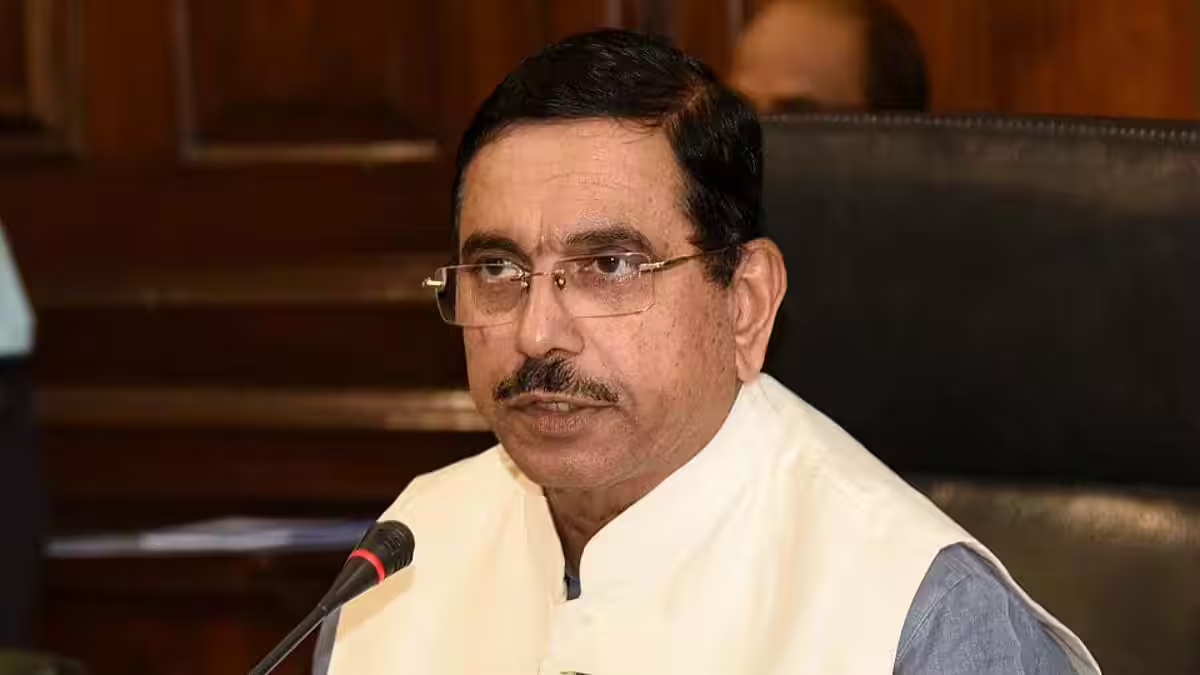
India is hosting the BRICS Education Ministers' Meeting in Bhubaneswar, with Union Education Minister Pralhad Joshi leading the discussions. The event brings together ministers, senior officials, and delegates from BRICS nations—Brazil, Russia, India, China, and South Africa—as well as representatives from Indonesia, Iran, Ethiopia, and the UAE. The meeting aims to strengthen collaboration in education across these countries.
BRICS Education Cooperation: What It Means
The BRICS group, consisting of five major emerging economies, has increasingly focused on education as a key area for cooperation. This meeting, held under India's BRICS Chairship for 2026, is part of ongoing efforts to align policies and initiatives that promote inclusive and resilient education systems. The gathering also includes countries beyond the core BRICS members, reflecting a broader interest in educational partnerships.
Education ministers and officials are discussing several priority areas, including Early Childhood Care and Education (ECCE), skill development programs, research and innovation, and the mutual recognition of academic qualifications. These topics are critical for building education systems that prepare students for future challenges and global opportunities.
Key Points from the Meeting
- The 3rd BRICS Senior Officials' Meeting took place on August 5 in Bhubaneswar, setting the stage for the ministers' discussions.
- Officials reviewed and refined the draft BRICS Education Ministers' Declaration, aiming for consensus on a document that outlines shared goals and commitments.
- Focus areas include strengthening Technical and Vocational Education and Training (TVET), promoting academic leadership, and recognizing traditional and indigenous knowledge systems.
- Delegates emphasized enhancing institutional frameworks to support academic and research collaborations among member countries.
- There is a strong push for exchanging best practices and boosting capacity-building initiatives to improve education quality and accessibility.
Why This Meeting Matters for Global Education
The BRICS Education Ministers' Meeting represents a significant step toward deeper educational cooperation among some of the world's fastest-growing economies. By focusing on early childhood education, skills training, and research collaboration, these countries aim to create education systems that are inclusive, innovative, and adaptable to future needs.
Mutual recognition of academic qualifications can facilitate student and professional mobility across member countries, enhancing opportunities for learners and educators alike. Additionally, acknowledging traditional and indigenous knowledge highlights a commitment to preserving cultural heritage within modern education frameworks.
India's leadership in this meeting underscores its role in shaping educational priorities on a global stage, especially as it prepares to chair BRICS in 2026. The outcomes of these discussions could influence policy decisions and collaborative projects that benefit millions of students and educators across these nations.
Frequently Asked Questions
Q: What is the BRICS Education Ministers' Meeting?
A: It is a gathering of education ministers and officials from BRICS countries and partner nations to discuss cooperation in education, including policy alignment, research, and skill development.
Q: Which countries participate in the BRICS Education Ministers' Meeting?
A: The core BRICS members—Brazil, Russia, India, China, and South Africa—participate, along with invited countries such as Indonesia, Iran, Ethiopia, and the UAE.
Q: What are the main topics discussed at the meeting?
A: Key topics include early childhood education, technical and vocational training, research and innovation, mutual recognition of academic qualifications, and preserving traditional knowledge systems.