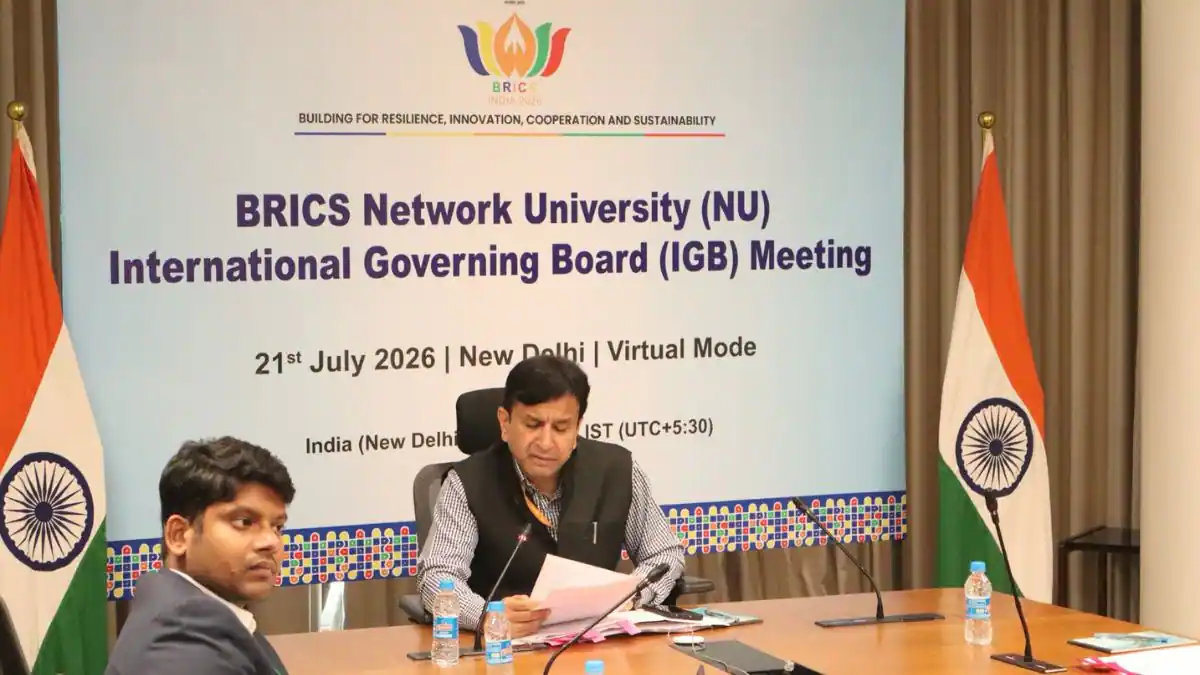
India's education ministry convened the International Governing Board meeting of the BRICS Network University alongside a conference focused on Traditional and Indigenous Knowledge Systems. The two-day event, starting July 20 in New Delhi, gathered government officials, university leaders, academics, and experts from BRICS member countries to discuss ways to enhance collaboration in higher education, research, and innovation.
BRICS Network University and Its Role
The BRICS Network University is a collaborative initiative among BRICS countries—Brazil, Russia, India, China, and South Africa—aimed at fostering academic partnerships and joint research projects. This platform encourages knowledge exchange and institutional cooperation to strengthen higher education across member nations. The recent conference expanded participation to include representatives from Egypt, Indonesia, Iran, and the United Arab Emirates, reflecting a broader engagement with emerging economies and academic communities.
Highlights and Key Outcomes of the Conference
- Participants shared national initiatives and best practices in higher education and research.
- The conference emphasized the importance of preserving and responsibly sharing traditional and indigenous knowledge systems.
- Discussions focused on ethical governance, community ownership, and equitable benefit-sharing related to indigenous knowledge.
- Emerging technologies, including Artificial Intelligence, were considered for their role in digital dissemination and knowledge management.
- Guiding principles were developed to strengthen academic collaboration on traditional and indigenous knowledge for future implementation by the International Governing Board.
- The BRICS Network University Action Plan for 2025–2028 was reviewed to set strategic priorities.
- Plans for a new BRICS-NU website were discussed to improve communication and resource sharing.
- Measures to enhance institutional cooperation, academic mobility, and collaborative research were considered.
- The International Governing Board adopted a formal declaration outlining commitments to these goals.
Why Strengthening BRICS Education Cooperation Matters
The BRICS Network University conference highlights a growing recognition of the value of international collaboration in higher education. By pooling resources, expertise, and cultural knowledge, member countries can address shared challenges and foster innovation. The focus on traditional and indigenous knowledge systems underscores the importance of preserving cultural heritage while integrating modern technologies to make this knowledge accessible and beneficial to wider communities.
Enhanced academic mobility and joint research initiatives can lead to improved educational standards and new opportunities for students and researchers across BRICS nations. The adoption of a multi-year action plan signals a long-term commitment to deepening these partnerships, which could influence policy, funding, and curriculum development in participating countries.
Frequently Asked Questions
Q: What is the BRICS Network University?
A: It is a collaborative platform among BRICS countries designed to promote academic cooperation, joint research, and knowledge exchange in higher education.
Q: Which countries participated in the recent conference?
A: Representatives from Brazil, China, Egypt, Indonesia, Iran, Russia, South Africa, and the United Arab Emirates attended, along with Indian officials and academics.
Q: What topics were discussed regarding traditional and indigenous knowledge?
A: The conference focused on mapping, preserving, and ethically sharing traditional and indigenous knowledge, emphasizing community ownership and the use of technologies like Artificial Intelligence for responsible dissemination.