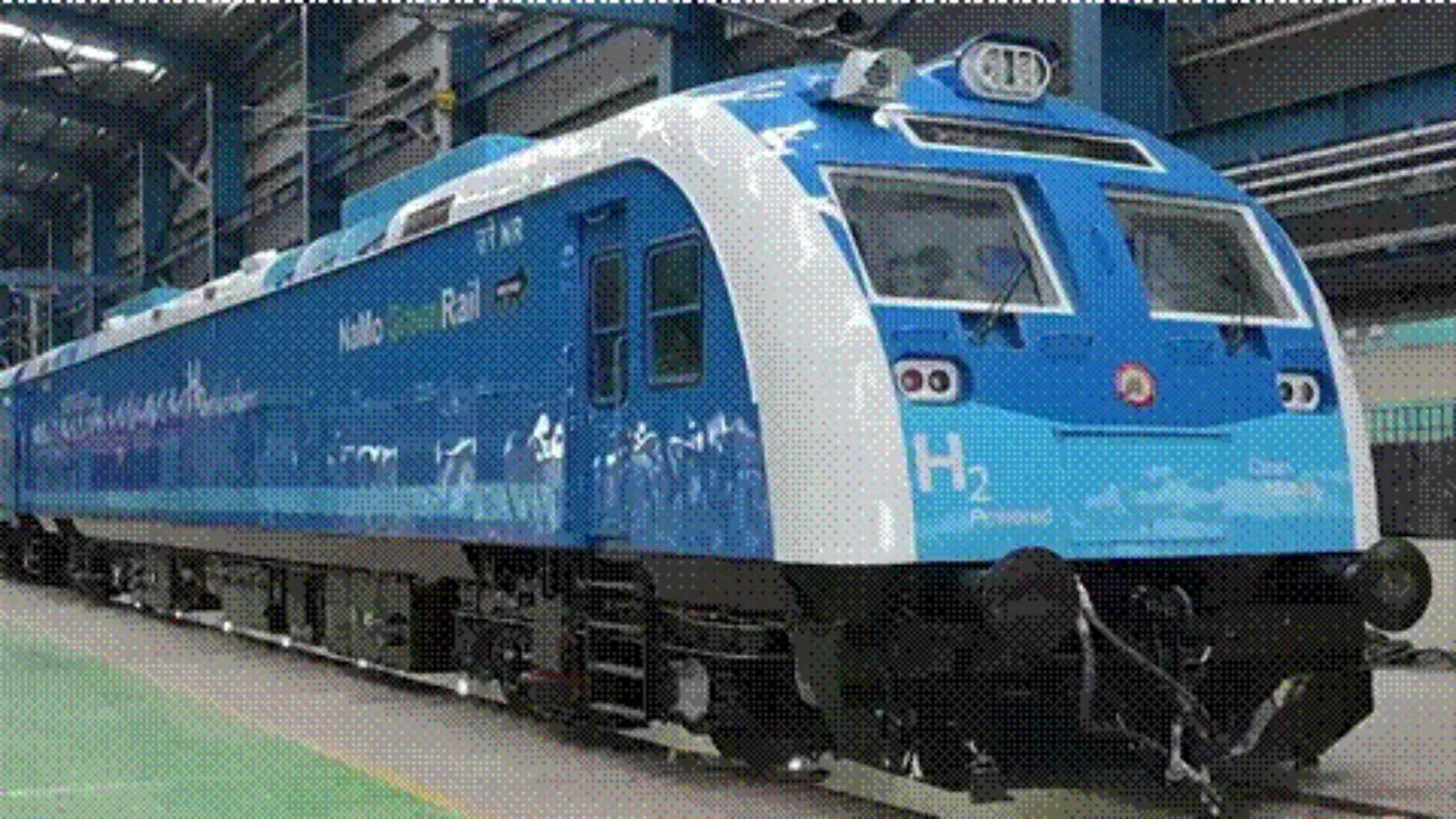
India is preparing to introduce its first hydrogen fuel cell-powered train, a significant step toward cleaner rail transport. The 10-coach train, capable of carrying approximately 2,600 passengers, will begin service on the 89-kilometer Jind-Sonipat route in Haryana under Northern Railway. This new train uses hydrogen fuel cells to generate electricity onboard, marking a shift from traditional diesel and electric trains.
How Hydrogen Fuel Cell Trains Work
Unlike conventional trains that rely on diesel engines or overhead electric wires, this train generates power through hydrogen fuel cells. These cells combine hydrogen with oxygen from the air to produce electricity, with water vapor and heat as the only direct by-products. This process results in near-zero emissions at the point of use, making it an environmentally friendly alternative to fossil fuel-powered trains.
The train is equipped with two hydrogen-powered driving cars and eight trailer coaches. Each driving car produces 1,200 kilowatts of power, giving the train a total output of 2,400 kilowatts. It is designed to run at an operational speed of 75 kilometers per hour, with a maximum design speed of 110 kilometers per hour.
Key Features and Safety Measures
- The train will serve multiple stops along the Jind-Sonipat route, including Jind City, Pandu Pindara Junction, Lalit Khera Halt, and Sonipat New.
- Hydrogen is stored and refueled at a dedicated facility in Jind, where it is produced through electrolysis, compressed, and dispensed to the train.
- The refueling station can store nearly 3,000 kilograms of hydrogen and can refuel both power cars simultaneously.
- Safety systems are robust, featuring continuous monitoring for hydrogen leaks, heat, flames, and smoke.
- Automatic shutdown mechanisms activate if any abnormalities are detected, and ventilation systems prevent hydrogen accumulation.
- The locomotive cabin includes real-time system monitoring and dedicated safety features for the driver.
- The hydrogen production and refueling infrastructure complies with international standards and regulations set by India's Petroleum and Explosives Safety Organisation (PESO).
- The project underwent a third-party safety assessment by TÜV SÜD, a German certification body, before receiving operational clearance.
Why This Train Matters for India's Rail Future
This hydrogen-powered train represents a pioneering effort in India’s push toward sustainable transportation. Globally, hydrogen trains are still emerging, with countries like Germany leading commercial deployments and others such as France, Italy, China, and Japan conducting pilot projects. However, these trains typically have fewer coaches and serve regional routes.
India’s 10-coach train is notable for its larger capacity and ambition to serve a busy route. The government also plans to explore hydrogen trains on heritage routes like the Kalka-Shimla railway, leveraging experience from the Jind-Sonipat project. This initiative aligns with broader goals to reduce carbon emissions and modernize the rail network with cleaner technologies.
By adopting hydrogen fuel cell technology, Indian Railways aims to reduce dependence on diesel fuel and electricity from conventional sources, contributing to environmental sustainability and energy diversification.
Frequently Asked Questions
Q: What makes hydrogen fuel cell trains different from electric trains?
A: Hydrogen fuel cell trains generate electricity onboard by combining hydrogen and oxygen, producing only water vapor and heat as emissions, unlike electric trains that rely on overhead power lines.
Q: How safe is the hydrogen fuel used in the train?
A: The train and refueling facilities have multiple safety systems, including leak detectors, automatic shutdowns, ventilation, and real-time monitoring to manage the risks associated with hydrogen, which is highly flammable.
Q: Where will this hydrogen train operate initially?
A: The train will run on the 89-kilometer route between Jind and Sonipat in Haryana, serving several stops along the way under Northern Railway.