Indian Markets and Economy Show Signs of Improvement in 2026
Recent financial data indicates that India's stock market and currency are strengthening, supported by government measures and market activities. The country is working toward reducing its fiscal deficit and stabilizing its economy.
3 min read126 views
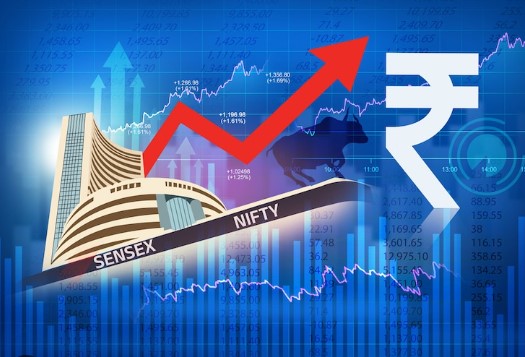
In early 2026, India’s stock markets and currency are showing signs of recovery and growth. This progress follows a period of economic challenges and market fluctuations. Recent data shows that the Sensex, one of India’s major stock indices, increased by 1,311 points in a week ending early February, reaching a closing value of 83,580. The Nifty index also rose significantly, gaining 373 points to settle at 25,694. These gains reflect a positive movement in India’s stock market, indicating investor confidence.
Additionally, the Indian rupee has strengthened against the US dollar. On February 4, 2026, the rupee gained 124 paise, reaching a rate of 90.27 per US dollar. This marked the strongest single-day increase for the rupee in seven years. Two days earlier, on February 2, it had closed at 91.51 after a rise of 42 paise, its highest single-day increase in over six weeks. Such movements in the rupee indicate improved stability and a strengthening of India’s currency.
The Reserve Bank of India (RBI) played a role in this stabilization by intervening in the foreign exchange market. During the market crash in 2025, the RBI sold USD 196 billion to support the rupee, helping to limit its volatility. These actions by the central bank aim to maintain currency stability and prevent sharp declines in the value of the rupee.
The Indian government has also taken specific steps to strengthen the economy. One of its goals is to reduce the country’s fiscal deficit—the gap between government spending and revenue. For the fiscal year 2025, the government aimed to lower this deficit from a revised 5.8% of GDP to 5.1%. Looking ahead, the government has set a target to further reduce the deficit to 4.5% of GDP by 2026.
To support economic growth and social welfare, the government plans to increase subsidies on essential goods such as food, fertilizer, and cooking gas. It intends to raise these subsidies to a total of 4.1 trillion rupees, equivalent to about 47.41 billion US dollars, in the next fiscal year. This increase—about 8% compared to the current year—aims to provide more support to citizens amid global and domestic economic pressures.
Despite positive signs, the country experienced a significant downturn in 2025, with the Sensex falling over 10,000 points, which is roughly an 11.79% decline over four months. This decline was part of a broader market crash, underscoring the volatility faced by India's financial markets. Nonetheless, the recent gains suggest a cautious but potential path toward economic recovery.
Looking to the future, the Indian government’s objective is clear: to further strengthen financial stability and ensure sustainable growth. It continues working toward reducing its fiscal deficit to 4.5% of GDP by 2026. Such efforts are expected to support economic confidence, attract investments, and improve the overall economic environment.
In summary, recent data indicates that India’s stock market and currency are on a positive trajectory. Government efforts, including market interventions and fiscal measures, aim to stabilize and strengthen the economy. While challenges from past market volatility remain, the current trends point toward a cautiously optimistic outlook for India’s financial future.