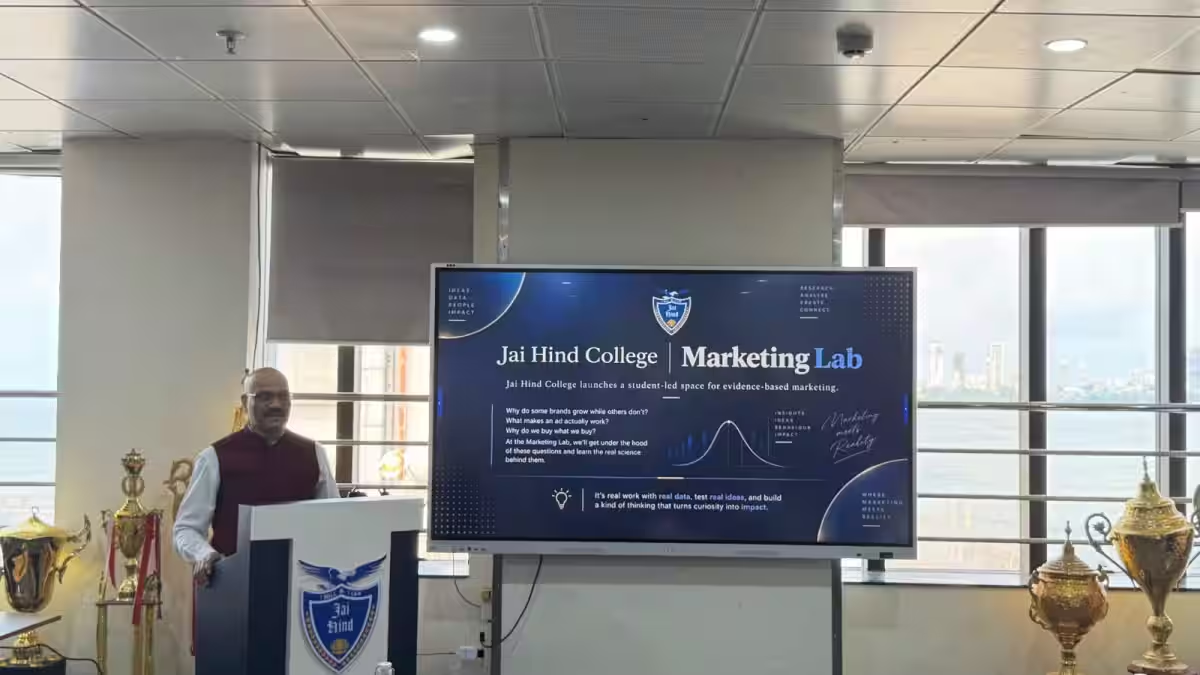
Jai Hind College has launched a Marketing Science Lab to help undergraduate students study consumer behaviour and brand performance using real-world data. This new lab moves marketing education beyond traditional theories and intuition, focusing instead on evidence-based research.
- Students will study established marketing laws like the Law of Double Jeopardy and Duplication of Purchase Law.
- The lab uses consumer data from Indian market categories to analyze brand and market behaviour.
- The initiative is supported by college leadership and guided by experts from the Ehrenberg-Bass Institute.
- Students will gain skills in data analysis, quantitative research, and evidence-based marketing.
What is the purpose of the Marketing Science Lab at Jai Hind College?
The lab aims to provide undergraduate students with practical experience in studying consumer behaviour and brand performance through real data. It encourages moving beyond traditional marketing education by applying scientific research methods and quantitative analysis.
Which marketing principles will students study in the lab?
Students will explore established marketing principles such as the Law of Double Jeopardy, which explains how smaller brands suffer double disadvantages in market share and customer loyalty, and the Duplication of Purchase Law, which describes how customers buy brands in proportion to their market share. These principles will be tested using Indian consumer data.
Who leads and supports the Marketing Science Lab?
The lab is led by Yash Chandiramani, a Jai Hind College alumnus and visiting faculty member in advertising and marketing. Chandiramani is also the founder of Admatazz, a creative agency in Mumbai, and has trained in evidence-based marketing through the Ehrenberg-Bass Institute's executive program.
The lab also receives guidance from an academic research mentor and a visiting statistics professor specializing in quantitative methods and data science. The initiative was supported by Rajesh Thadani, president of the college's governing board, and guided by Associate Professor Justin Cohen from the Ehrenberg-Bass Institute.
How does the lab benefit students?
Students selected for the lab spend an academic year analyzing consumer data and applying marketing laws to real-world situations. This hands-on approach helps them develop skills in data analysis, quantitative research, and critical thinking. It prepares them for careers that require evidence-based decision-making in marketing.
What do college leaders say about the initiative?
Vijay Dabholkar, principal of Jai Hind College, described the lab as an extension of the college’s academic ambition and innovative learning approach. He expressed pride in offering a program that brings genuine marketing science to students.
Rakhi Sharma, director of AICTE programs at the college, highlighted that the lab gives students practical experience with real data, fostering analytical thinking that will benefit their future careers.
What are the future goals of the Marketing Science Lab?
The lab team aims to publish their research findings in peer-reviewed marketing journals. This will contribute to a better understanding of how brands and markets behave, especially in the Indian context. The initiative seeks to fill gaps in marketing knowledge by combining real data with established scientific laws.
Frequently Asked Questions
Q: Who can participate in the Marketing Science Lab?
A: Selected undergraduate students at Jai Hind College who show an interest in marketing research and quantitative analysis are invited to join the lab.
Q: What kind of data will students work with?
A: Students will analyze consumer behaviour data from various Indian market categories to study brand performance and market dynamics.
Q: How does the lab differ from traditional marketing education?
A: Unlike traditional marketing courses that rely on theory and intuition, the lab emphasizes evidence-based research using real data and scientific marketing laws.
Q: Who provides academic guidance for the lab?
A: The lab is guided by an academic research mentor, a visiting statistics professor, and experts from the Ehrenberg-Bass Institute for Marketing Science.