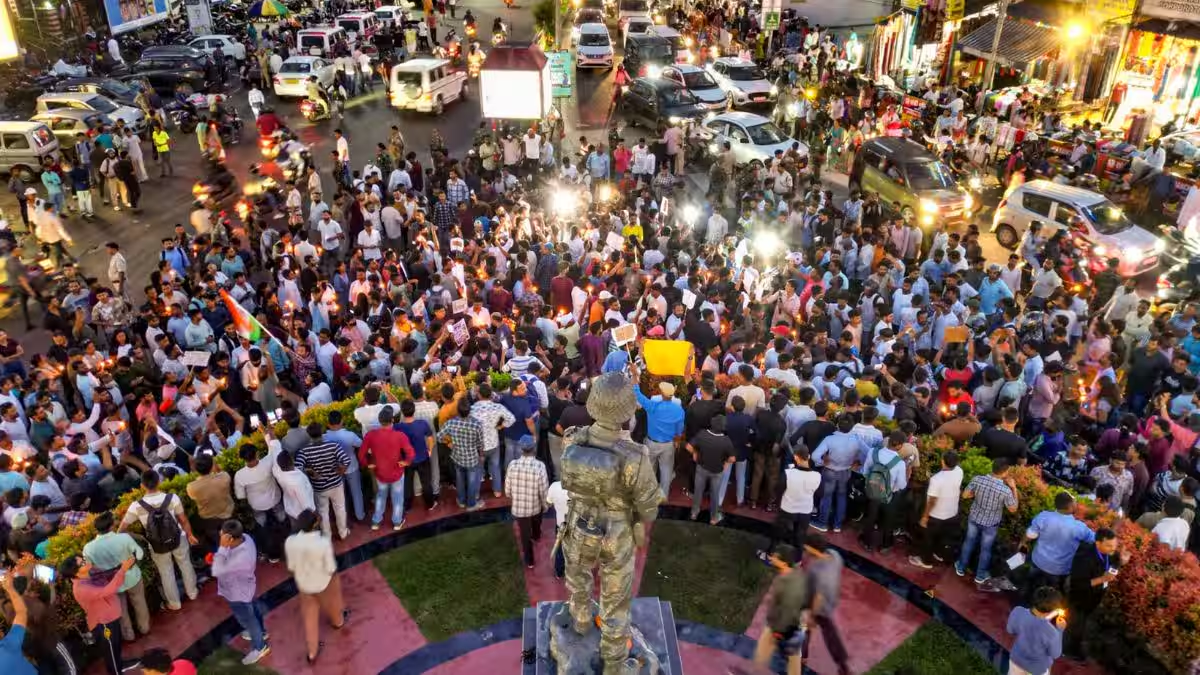
Students and job seekers protesting alleged irregularities in Jharkhand's recruitment exams have created an 11-member delegation to engage in talks with the state government. This move comes after Chief Minister Hemant Soren expressed willingness to meet with the protesters and address their concerns.
Origins of the Jharkhand Recruitment Protests
The protests began on July 25 at Jaipal Singh Munda Stadium under the banner of the JPSC-JSSC Reforms Manch. This movement quickly grew into one of the largest student-led demonstrations in Jharkhand in recent years. The demonstrators are primarily demanding the cancellation of the 14th Jharkhand Public Service Commission (JPSC) Civil Services Examination due to alleged irregularities and leaks in the recruitment process.
Protesters have called for a thorough and independent investigation into the exam anomalies. They want the probe to be conducted either by the Central Bureau of Investigation (CBI) or by a panel of retired high court judges from outside Jharkhand, aiming to ensure impartiality and transparency.
Details of the 11-Member Delegation and Their Demands
The newly formed delegation includes eight students, two journalists, and one advocate. The inclusion of journalists and a legal expert is intended to provide guidance and maintain peaceful negotiations with the government. The group represents the protesters' interests and will participate in discussions to find a resolution.
- The delegation was formed in response to Chief Minister Hemant Soren's offer to hold talks with the agitators.
- Protesters demand cancellation of the 14th JPSC Civil Services Examination.
- They seek an independent probe into exam irregularities by either the CBI or retired high court judges from outside the state.
- Calls for comprehensive reforms in the Jharkhand Public Service Commission (JPSC) and Jharkhand Staff Selection Commission (JSSC) are central to their demands.
- The delegation aims to pursue peaceful dialogue to resolve the ongoing impasse.
Why This Protest Matters for Jharkhand's Recruitment System
The protests highlight deep concerns about the integrity and transparency of Jharkhand's recruitment examinations, which are crucial for government job seekers. Allegations of question paper leaks undermine public trust in the recruitment process and can affect thousands of candidates' futures.
Chief Minister Hemant Soren acknowledged that question paper leaks are a national issue, not confined to Jharkhand, and expressed openness to dialogue. The formation of the delegation signals a willingness among protesters to engage constructively with the government, potentially paving the way for reforms that could restore confidence in the state's recruitment agencies.
Successful talks could lead to the cancellation of compromised exams, independent investigations, and systemic changes in how recruitment exams are conducted, benefiting future candidates and strengthening governance standards.
Frequently Asked Questions
Q: What triggered the Jharkhand recruitment exam protests?
A: The protests began due to alleged irregularities and leaks in the 14th Jharkhand Public Service Commission Civil Services Examination, which candidates believe compromised the exam's fairness.
Q: Who is part of the delegation formed to negotiate with the government?
A: The delegation consists of eight students, two journalists, and one advocate, representing the protesters in talks with the Hemant Soren government.
Q: What are the main demands of the protesters?
A: Protesters want the cancellation of the compromised exam, an independent investigation by the CBI or retired high court judges from outside Jharkhand, and comprehensive reforms in the state's recruitment commissions.