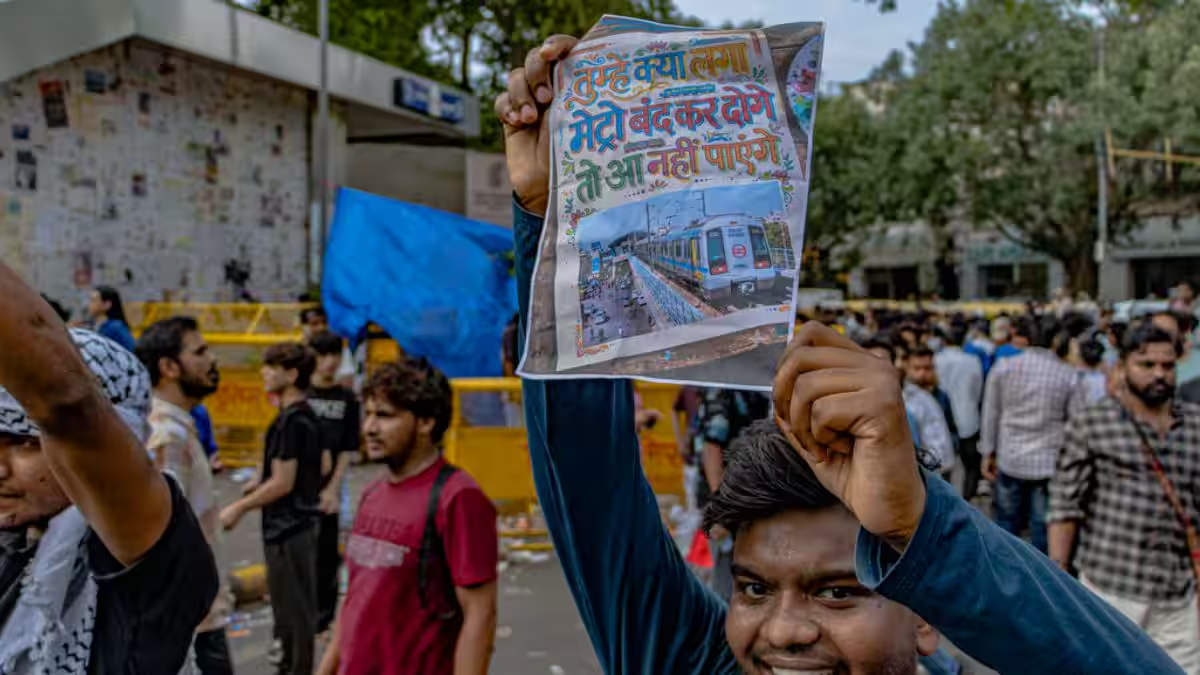
The recruitment exam protests in Jharkhand intensified on Wednesday as former Chief Minister Raghubar Das warned he would begin a hunger strike if the state government did not recommend a Central Bureau of Investigation (CBI) probe within a week. Meanwhile, the Akhil Bharatiya Vidyarthi Parishad (ABVP) announced plans to hold protests at over 1,200 universities across India. The ruling coalition, led by the Jharkhand Mukti Morcha (JMM), accused the opposition Bharatiya Janata Party (BJP) of politicizing the agitation and bringing outsiders to disrupt peaceful demonstrations.
Understanding the Jharkhand Recruitment Exam Controversy
The protests began over alleged irregularities in recruitment examinations conducted by the Jharkhand Public Service Commission (JPSC) and Jharkhand Staff Selection Commission (JSSC). Aspirants have been demanding transparency, cancellation of certain exams, and an independent investigation into the recruitment process. The agitation, led by the JPSC-JSSC Reforms Manch, has been ongoing for 19 days, with job seekers staging a dharna at Jaipal Singh Munda Stadium in Ranchi.
Security measures have been heightened in Ranchi, including increased police presence and barricades near government offices and the Chief Minister’s residence, amid concerns about further protests and attempts to march on government buildings.
Key Developments and Facts in the Recruitment Row
- Raghubar Das set a one-week deadline for the state government to recommend a CBI probe into recruitment exam irregularities.
- Das accused the JMM-led government of mishandling the futures of lakhs of students and highlighted recruitment scams over the past six years.
- He demanded compensation of Rs 1 crore each for the families of 19 candidates who died during physical tests for excise constable recruitment in 2024.
- The ABVP announced nationwide protests at more than 1,200 universities and in every district, demanding cancellation of the JSSC Combined Graduate Level (CGL) exam and a CBI investigation.
- ABVP General Secretary Virendra Singh Solanki criticized the state’s Special Investigation Team, citing frequent changes that undermined trust in the probe.
- Approximately 110 ABVP activists were detained during a march toward the Jharkhand Assembly.
- The Congress party accused the BJP of politicizing the protests and bringing outsiders to disrupt the movement, defending the state’s probe efforts.
- Police and BJP leaders traded accusations over handling of the protests, including claims of electricity being cut off at the protest site and pressure to vacate the stadium.
- Violent clashes occurred on Monday, with police using lathi-charge, water cannons, and tear gas to disperse protesters, resulting in injuries on both sides.
- The BJP called a statewide bandh on Tuesday to protest police actions, disrupting daily life in several districts.
- Four hunger-striking students are currently hospitalized but stable, with others continuing their fasts despite medical advice.
Why the Recruitment Protests Matter for Jharkhand’s Youth
The ongoing protests highlight deep frustrations among Jharkhand’s youth over alleged corruption and lack of transparency in government recruitment processes. For many aspirants, these exams represent critical opportunities for stable employment and economic security. The deaths during physical tests have added a tragic dimension, intensifying demands for accountability and reform.
The political tussle surrounding the protests reflects broader tensions between the BJP and the ruling JMM-led coalition, with each side accusing the other of exploiting the situation for political gain. The government has promised reforms, including canceling the 14th JPSC exam, but protesters remain skeptical, demanding independent investigations to restore trust.
The nationwide support from student groups like the ABVP indicates that the issue resonates beyond Jharkhand, touching on concerns about fairness and integrity in public sector recruitment across India.
Frequently Asked Questions
Q: What triggered the Jharkhand recruitment exam protests?
A: The protests began due to allegations of irregularities and corruption in the Jharkhand Public Service Commission and Jharkhand Staff Selection Commission exams, along with concerns over the deaths of candidates during physical tests.
Q: What are the protesters demanding?
A: They want greater transparency in recruitment exams, cancellation of certain tests, compensation for families of deceased candidates, and an independent investigation by the CBI or retired high court judges from outside Jharkhand.
Q: How has the government responded to the protests?
A: The state government has assured reforms, including canceling the 14th JPSC exam, and has set up a Special Investigation Team. However, protesters and opposition leaders remain skeptical and demand a CBI probe.