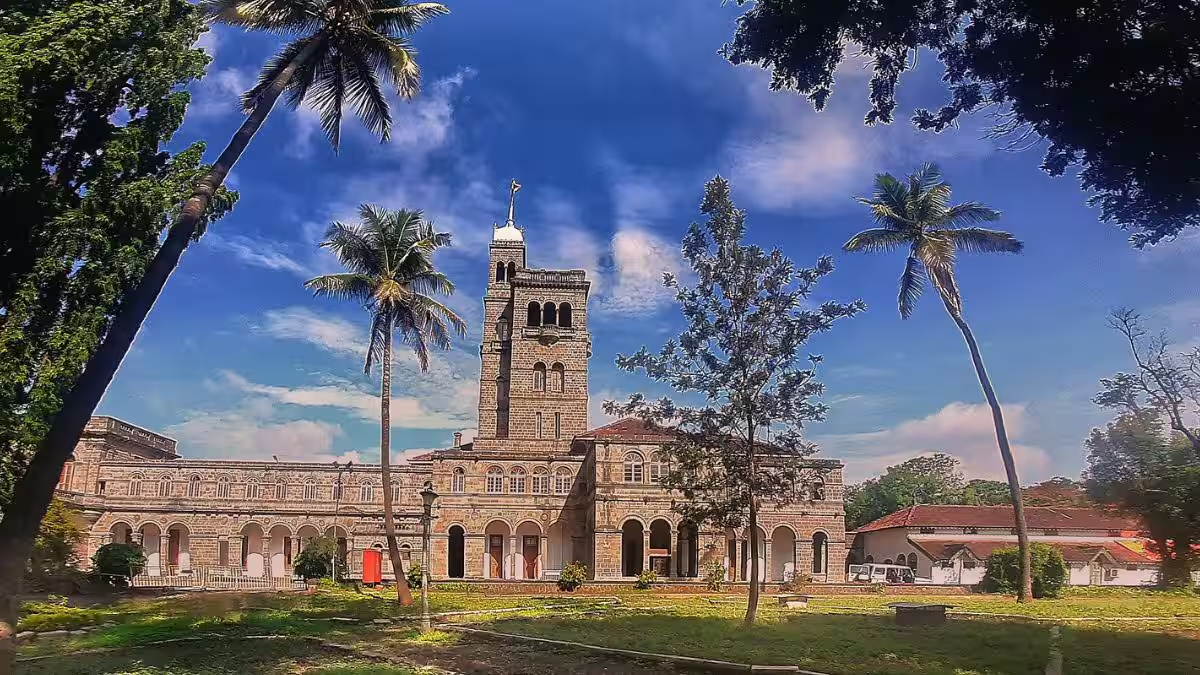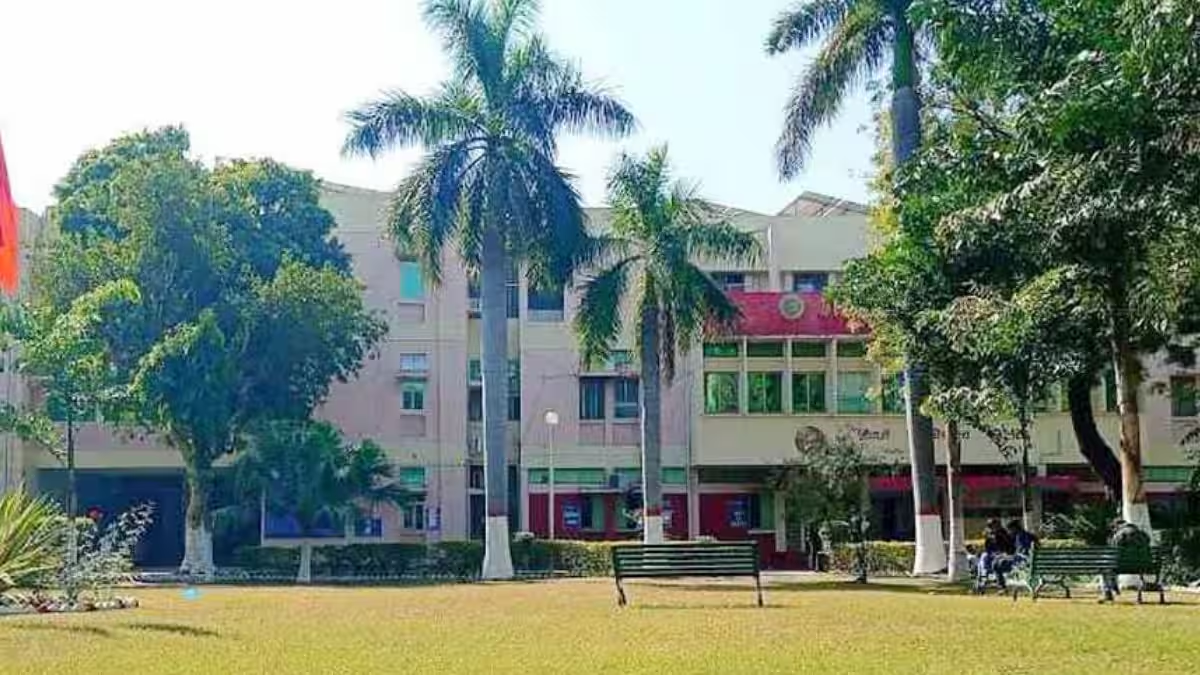
Jiwaji University in Gwalior, Madhya Pradesh, has come under scrutiny after an audit by the Comptroller and Auditor General (CAG) exposed multiple irregularities in how it grants affiliations to private colleges. The audit, covering the years 2021-22 to 2023-24, found that the university failed to ensure colleges met required standards before granting affiliation. It also highlighted severe teacher shortages, infrastructure deficiencies, and delays in examination results.
How Jiwaji University Grants College Affiliations
Jiwaji University oversees 449 affiliated colleges, including 77 government institutions, serving approximately 1.16 lakh students in affiliated colleges and 3,661 students at the university itself. Despite being accredited A++ by the National Assessment and Accreditation Council in 2023, the university’s affiliation process has raised concerns.
Between 2021 and 2024, the university granted affiliation to 80 colleges but only provided records for 40 during the audit. The CAG found that many colleges lacked the minimum land requirements—two acres for urban and five acres for rural areas—as well as essential facilities like libraries, laboratories, sports amenities, and safety measures.
The audit also revealed that inspection committees were often improperly formed, with over half of the inspection reports missing details about the members’ qualifications. Some colleges were never inspected at all. Additionally, appointments of teachers and principals in 23 private colleges were made by college managements rather than through university-approved selection committees, violating university rules.
Staffing Shortages and Infrastructure Problems in Affiliated Colleges
Government colleges affiliated with Jiwaji University are struggling with a shortage of qualified teachers. The audit found that many colleges relied heavily on guest faculty, some of whom were paid despite no students being enrolled in their courses. For example, Government College Basai in Datia paid nearly Rs 35 lakh to guest lecturers without maintaining proper attendance or teaching records.
In some colleges, faculty members from other institutions were brought in to cover classes, resulting in fewer lectures than required. The prescribed 90 lectures per paper were often not met, and lecture durations were shorter than the mandated one hour. Student surveys indicated that syllabi were frequently incomplete.
Teacher-student ratios were alarmingly high in several colleges. At Government College Pichhore in Shivpuri, one history teacher handled between 418 and 1,448 students across undergraduate and postgraduate classes, far exceeding the University Grants Commission’s norms of 1:30 for arts and 1:25 for science.
Financial and Administrative Challenges at the University
The audit uncovered significant vacancies in teaching and administrative positions. At the university level, 72% of teaching posts were vacant, and nearly half of the non-teaching posts in affiliated colleges remained unfilled. To compensate, the university hired guest and contractual faculty, but this has not resolved the underlying staffing crisis.
Infrastructure gaps were widespread. Several colleges lacked computer labs, internet access, generators, and librarians. Some operated in inadequate spaces, such as Government College Karahal, which functioned in just three rooms borrowed from a secondary school, making it impossible to conduct all scheduled classes properly.
Construction projects, like the new building for Government Law College in Shivpuri, were delayed despite allocated funds. Hostels also suffered from missing basic facilities and staff, including wardens and security measures.
Financial management issues were evident as well. Funds released for Centres of Excellence were underutilized, with large sums remaining unused years after allocation. Equipment worth crores of rupees remained idle due to lack of necessary supplies, pointing to poor planning and fund utilization.
Frequently Asked Questions
Q: What are the main issues found in the Jiwaji University audit?
A: The audit identified improper affiliation of colleges without meeting norms, severe teacher shortages, infrastructure deficiencies, delayed exam results, and poor financial management.
Q: How does the teacher shortage affect students at affiliated colleges?
A: Many colleges have insufficient regular faculty, rely on guest teachers, and fail to deliver the required number of lectures, leading to incomplete syllabi and overcrowded classes.
Q: What steps is Jiwaji University taking to address these problems?
A: The university has stated it will adhere to prescribed timelines for affiliations from 2025-26 onward, but the audit highlights ongoing challenges in staffing, infrastructure, and fund utilization that require comprehensive action.