Jamia Millia Islamia (JMI) has formed a committee to draft the constitution of the Jamia Millia Islamia Students’ Union (JMISU) and to examine the events that led to the union's dissolution in 2006. This decision comes amid ongoing student protests demanding the restoration of the students’ union and greater student representation on campus.
- The committee will review the 2006 dissolution, relevant court rulings, and the Lyngdoh Committee recommendations from 2007.
- The draft constitution will follow Article 23(J) and (K) of the Jamia Millia Islamia Act, 1988.
- Discussions between the university administration and protesting students have been ongoing since October 19.
- The university aims to restore peace and normalcy while safeguarding democratic values and campus heritage.
Why did JMI form a committee to draft the student union constitution?
The university administration formed the committee to address student demands for restoring the students’ union and representation on campus. The last students’ union was dissolved in 2006, and the university recognizes the need to review this decision in light of current legal and institutional frameworks. The committee will draft a constitution that complies with the Jamia Millia Islamia Act, 1988, and relevant recommendations and court rulings.
What will the committee examine during the drafting process?
The committee will look into the circumstances surrounding the 2006 dissolution of the JMISU. It will also consider court rulings related to the matter and the recommendations made by the Lyngdoh Committee in 2007, which provided guidelines on student elections and union functioning. The goal is to create a constitution that aligns with these legal frameworks and university statutes.
How has the university engaged with protesting students?
Since October 19, a seven-member high-level committee has engaged with the protesting students. The committee visited the protest site and invited student representatives for discussions. Meetings were held to hear student grievances and incorporate their suggestions. However, students have not yet agreed to sign the minutes of these discussions despite multiple rounds of dialogue.
What are the students protesting about?
The protests began with three students starting a hunger strike on October 13, demanding the restoration of the students’ union and student democracy on campus. Students want a platform for participation in campus decision-making and have raised concerns about the use of force by university security personnel during the protests.
What steps is JMI taking to ensure student safety and campus peace?
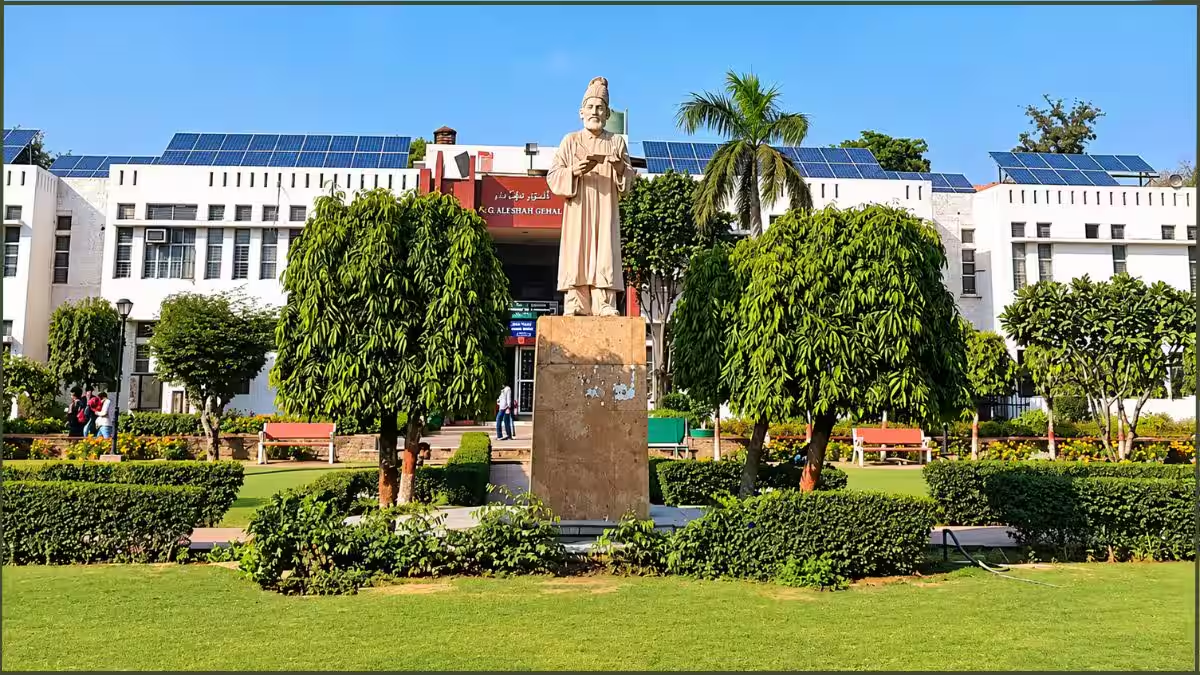
The university has deployed a medical team to monitor the health of students on hunger strike and stationed an ambulance at the protest site. It has also expressed concern over damage to campus property, including the defacement of the historic Ghalib statue and damage to gates and buildings. JMI remains committed to protecting students’ rights, upholding democratic values, and restoring peace while safeguarding the academic environment and heritage.
What is the significance of the Lyngdoh Committee recommendations?
The Lyngdoh Committee, formed in 2007, provided detailed guidelines for student elections and union functioning to ensure transparency, fairness, and democratic processes. JMI aims to draft its students’ union constitution in line with these recommendations to create a robust and legally compliant framework for student representation.