In Kerala, a political dispute has emerged over the implementation of the Centre's Pradhan Mantri Schools for Rising India (PM SHRI) scheme. Senior Indian Union Muslim League (IUML) leader and state minister P K Kunhalikutty publicly contradicted UDF convener Adoor Prakash, stating that no decision had been made yet regarding the scheme. Kunhalikutty emphasized that the issue was still under review by a cabinet-appointed subcommittee, and the government would act only after receiving its recommendations.
This disagreement highlights the ongoing debate within Kerala's ruling coalition and opposition about adopting the PM SHRI initiative, which aims to upgrade government schools into model institutions.
Understanding the PM SHRI Scheme and Kerala's Political Context
The PM SHRI scheme is a central government program designed to transform select government schools across India into high-quality model schools. It focuses on improving infrastructure, curriculum, and overall educational standards.
In Kerala, the previous Left Democratic Front (LDF) government had signed a memorandum of understanding (MoU) with the Centre to implement this scheme. However, the rollout was delayed amid protests and political opposition, particularly from the United Democratic Front (UDF) and some factions within the LDF itself.
The current debate centers on whether Kerala should proceed with the scheme, especially given concerns about curriculum changes and the selection of schools under the program. These concerns reflect broader political tensions between the state government and the central administration.
Key Points in the Ongoing PM SHRI Debate in Kerala
- P K Kunhalikutty, IUML leader and state minister, stated that the UDF meeting did not discuss the PM SHRI scheme and that decisions await a cabinet subcommittee's report.
- Kunhalikutty reaffirmed that Kerala would not accept any central government conditions related to curriculum or school selection under the scheme.
- Adoor Prakash, UDF convener, initially suggested the UDF had decided to proceed with the scheme but later retracted, clarifying that no formal decision was made and that action depends on the subcommittee's findings.
- IUML leader K M Shaji echoed the need to wait for the subcommittee's report before commenting further, denying any confusion within the Muslim League on the matter.
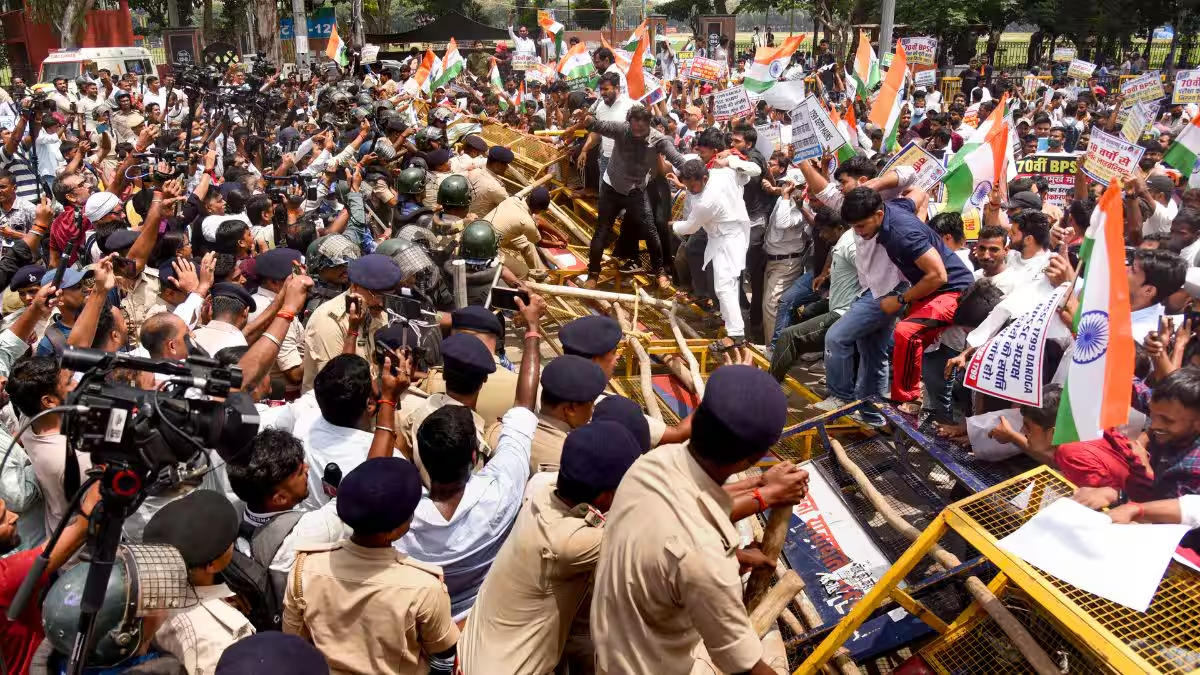
- Senior CPI(M) leaders, including former Chief Minister Pinarayi Vijayan, criticized the UDF for allegedly surrendering to the central government's agenda and accused it of betraying Kerala's secular education system.
- Vijayan cited parliamentary records indicating states can withdraw from the PM SHRI scheme without legal compulsion, contradicting UDF claims.
- The CPI(M) also accused the UDF of political double standards, pointing out that the opposition had previously opposed the scheme but now appeared to support it.
Why Kerala's PM SHRI Dispute Matters for Education and Politics
This disagreement over the PM SHRI scheme reflects deeper political and ideological divides in Kerala. Education policy is a sensitive issue, often intertwined with concerns about cultural identity, secularism, and political influence.
The IUML's insistence on rejecting central conditions on curriculum highlights fears of losing local control over education. Meanwhile, the CPI(M)'s accusations against the UDF suggest that political maneuvering is influencing educational decisions.
The outcome of the cabinet subcommittee's report will be crucial in determining Kerala's path forward. It will influence how the state balances central government initiatives with local priorities and political pressures.
For Kerala's students and educators, the debate could affect the quality and nature of schooling, including curriculum content and school selection criteria. The controversy also underscores the challenges of implementing nationwide educational reforms in diverse political landscapes.
Frequently Asked Questions
Q: What is the PM SHRI scheme?
A: The Pradhan Mantri Schools for Rising India (PM SHRI) scheme is a central government initiative aimed at upgrading selected government schools into model institutions with improved infrastructure and educational standards.
Q: Why is there controversy over the PM SHRI scheme in Kerala?
A: The controversy arises from political disagreements about curriculum changes and school selection under the scheme, as well as concerns about central government influence over state education policies.
Q: What is the current status of the PM SHRI scheme decision in Kerala?
A: Kerala's government has not made a final decision yet. A cabinet subcommittee is reviewing the scheme, and both the government and political parties are awaiting its report before taking further action.