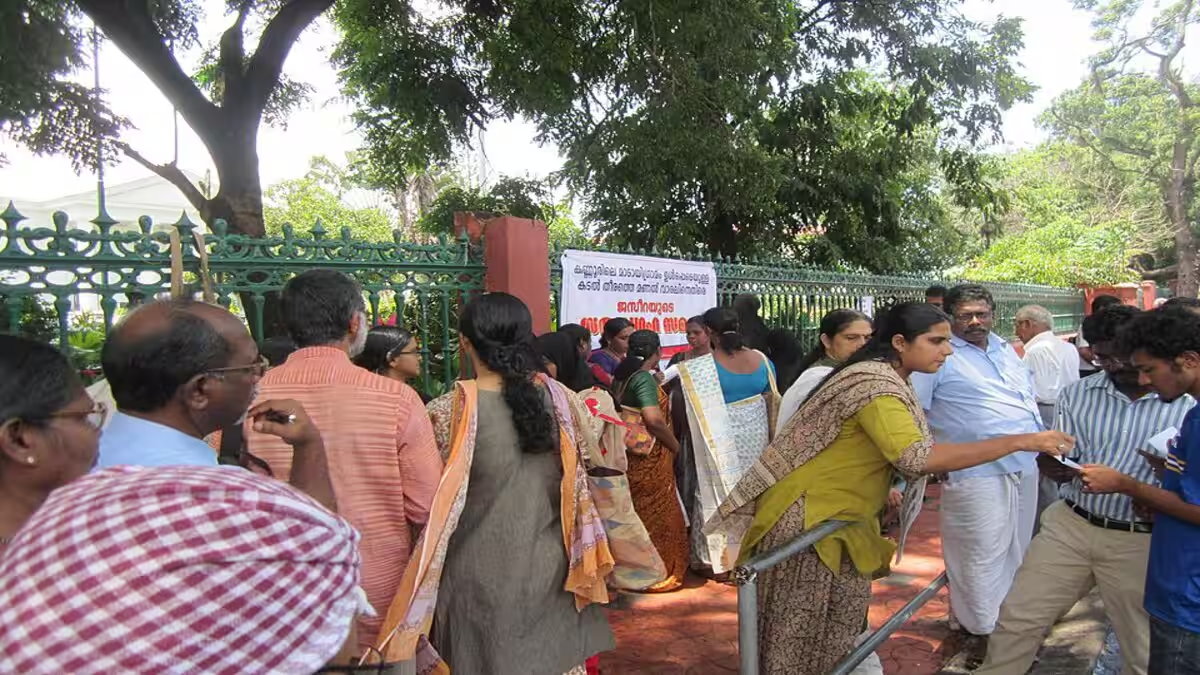
Kerala's Lower Primary School Teacher Rank Holders Association has launched a fast-until-death strike to press the government to fulfill its promises. The protest began after officials failed to provide written assurances on key demands, despite earlier verbal commitments.
- Protest led by Valarmathi S, secretary of the LPST Rank Holders’ Association
- Four main demands include reducing student-teacher ratio to 1:25 and including Head Teacher Vacancy under PSC
- Government officials agreed verbally but refused written confirmation
- Protesters face challenges such as rain without shelter due to police restrictions
What are the key demands of the LPST Rank Holders’ Association?
The association has raised four main demands to improve working conditions and appointment procedures for lower primary school teachers in Kerala. First, they want the student-teacher ratio reduced to 1:25. This ratio is crucial as it affects the quality of education and workload of teachers.
Second, they demand that Head Teacher Vacancies (HTV) be included under the Public Service Commission (PSC) umbrella. This inclusion would standardize recruitment and provide better job security.
Third, the association seeks an extension of the validity period of their rank list. This would allow more candidates to be appointed without frequent re-examinations.
Finally, they want the government to postpone issuing new notifications related to appointments until their demands are addressed.
Why did the protest escalate to a fast-until-death strike?
The protest escalated after a meeting with the education minister on September 30, where officials verbally agreed to accept the demands once the protests were withdrawn. However, the government later refused to provide written assurances, insisting that the protesters end their agitation first.
Feeling betrayed, Valarmathi S, the association secretary, began a fast-until-death strike and even shaved her head as a symbol of protest. The association views the lack of written commitment as a breach of trust.
How has the government responded to the protests?
While the education minister agreed to the demands in discussions, the government has not issued any official orders or written promises. Authorities have also prevented the association from setting up a canopy to shelter protesters from rain, adding to the difficulties faced during the hunger strike.
Valarmathi highlighted a contradiction where the government cited financial crisis as a reason to delay appointments but simultaneously planned to make appointments in aided schools, which could worsen the financial situation.
What is the significance of reducing the student-teacher ratio?
Reducing the student-teacher ratio to 1:25 is a primary concern for the association. A lower ratio means each teacher can give more attention to individual students, improving learning outcomes. It also helps manage workload and maintains teaching quality.
Without addressing this ratio, the association argues that no further appointments should be made, as it would strain existing resources and affect education standards.
What challenges are the protesters facing during the strike?
The protesters are enduring harsh conditions, including sitting in the rain without shelter because the police have not allowed them to set up a canopy. This situation has added physical hardship to their hunger strike, demonstrating their commitment to the cause.
What are the next steps for the protest and government negotiations?
The association continues its fast-until-death strike, demanding written assurances from the government. The situation remains tense as the government has yet to formally respond to the demands. The outcome will likely impact teacher appointments and education quality in Kerala's lower primary schools.