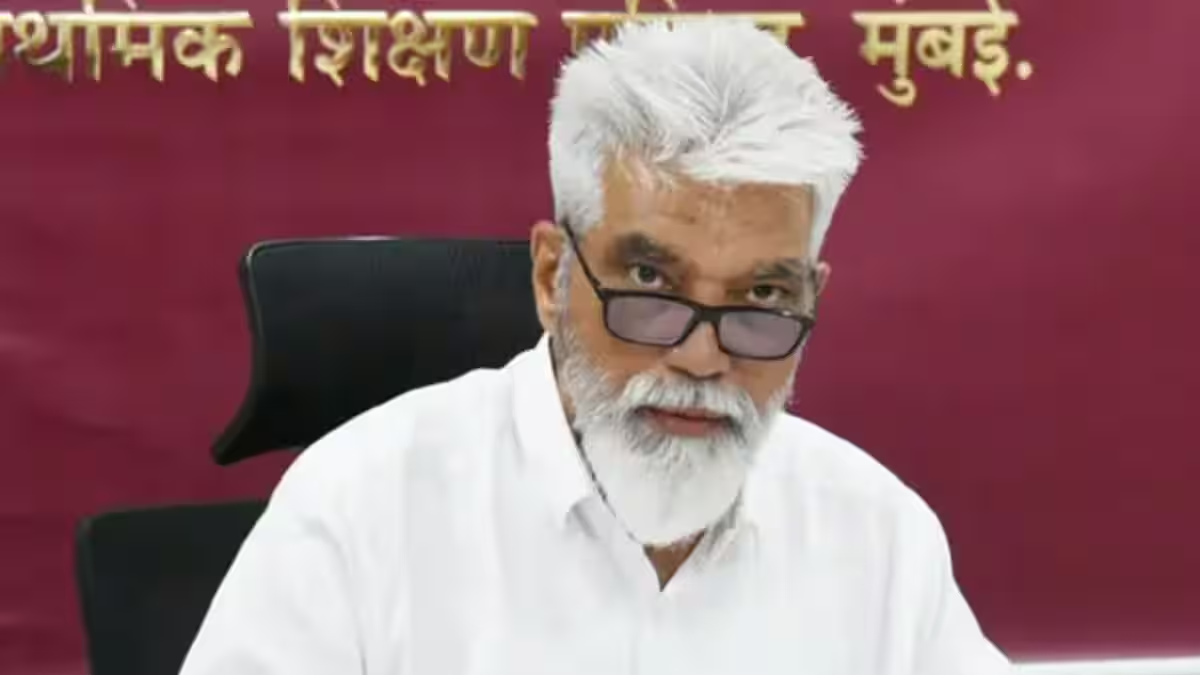
Maharashtra's School Education Minister, Dada Bhuse, has publicly responded to concerns raised by the Cockroach Janta Party (CJP) about the state of government schools. The minister acknowledged shortcomings in school operations and expressed openness to the recommendations put forward by CJP founder Abhijeet Dipke and his team.
The CJP campaign, called 'School Thik Karo,' aims to spotlight the poor conditions in rural government schools across Maharashtra. Dipke has been actively visiting schools to document issues such as inadequate infrastructure and lack of basic facilities, urging the government to take responsibility and improve the situation.
What Is the 'School Thik Karo' Campaign?
The 'School Thik Karo' (Fix the School) campaign was launched by the Cockroach Janta Party to draw attention to the neglected state of government-run schools in Maharashtra's villages. The campaign began on August 15, coinciding with India’s Independence Day, to emphasize the need for better educational facilities as a foundation for progress.
Abhijeet Dipke and CJP volunteers have conducted audits of numerous schools, highlighting issues such as locked or non-functional toilets, insufficient classrooms, lack of benches, and unsafe access roads. The campaign also calls for elected officials to be held accountable for these conditions, suggesting that they should personally experience the challenges by sending their own children to these schools for a day.
Key Facts About the Government School Concerns
- Dipke visited a Zila Parishad school in Ujani village, Latur district, to assess conditions firsthand.
- Basic facilities like proper classrooms, benches, toilets, and safe roads were found lacking or in poor condition.
- The campaign demands greater accountability from ministers and MLAs regarding the upkeep of government schools.
- Bhuse acknowledged the issues and stated that the government is reviewing the observations positively.
- CJP has called for Bhuse’s resignation, criticizing the government’s handling of public education.
Why This Response Matters for Maharashtra’s Schools
The education minister’s acknowledgment signals a willingness to engage with civil society groups and address long-standing problems in rural schools. Government schools serve millions of children, many from disadvantaged backgrounds, making their condition critical for equitable education.
By accepting feedback from campaigns like 'School Thik Karo,' the government may be prompted to allocate more resources and implement reforms that improve infrastructure and teaching quality. The campaign also pressures elected representatives to take a more active role in ensuring schools meet basic standards.
However, the call for Bhuse’s resignation reflects frustration among activists and citizens who feel progress has been too slow. The situation underscores the challenges in transforming public education systems and the importance of sustained oversight and community involvement.
Frequently Asked Questions
Q: What specific problems did the CJP highlight in Maharashtra’s government schools?
A: The CJP pointed out issues such as inadequate classrooms, lack of benches, locked or unusable toilets, and unsafe access roads in rural government schools.
Q: How did Education Minister Dada Bhuse respond to these concerns?
A: Minister Bhuse acknowledged the shortcomings and said the government views the observations positively and welcomes suggestions to improve school operations.
Q: What is the goal of the 'School Thik Karo' campaign?
A: The campaign aims to improve the condition of government schools by raising awareness, demanding accountability from officials, and encouraging reforms to provide better facilities and learning environments for students.