On a warm morning in May, Jagannath Shinde, a pharmacist and politician in Kalyan near Mumbai, meets a young woman struggling to register with the Maharashtra State Pharmacy Council. She recently graduated from a pharmacy college in Karnataka, but the council no longer recognizes many out-of-state degrees due to doubts about training quality. Shinde, who serves on both the Maharashtra State Pharmacy Council and the Pharmacy Council of India, explains that many colleges operate with questionable practices, including hiring agents and producing fake documents to enroll students.
Rapid Growth of Pharmacy Colleges in Maharashtra
Over the past decade, Maharashtra has experienced a dramatic increase in the number of pharmacy colleges. Between the academic years 2016-17 and 2025-26, the number of institutions offering Bachelor of Pharmacy (BPharm) courses tripled from 168 to 531. The total intake capacity for students more than quadrupled, rising from 11,588 to 32,951 seats.
Initially, the growth in admissions kept pace with the increased capacity, suggesting a genuine demand for pharmacy education. However, from 2019-20 onwards, the number of students enrolling failed to keep up with the expanding number of seats. By 2023-24, nearly one-third of pharmacy seats remained unfilled, a trend that has continued. Many new colleges struggled to attract students, with 11 institutions failing to enroll a single student in 2025-26 and 37 others enrolling fewer than 10.
Factors Behind the Surge and Its Consequences
- The growth aligns with the expansion of India’s pharmaceutical industry, which ranks third globally by volume and eleventh by value.
- The lifting of a ban on new pharmacy colleges in 2022 led to a surge in approvals, with many institutions opening rapidly.
- Increased awareness of pharmacy career options after the COVID-19 pandemic boosted interest initially.
- However, the supply of pharmacy seats now far exceeds demand, partly due to delayed admission schedules compared to other professional courses.
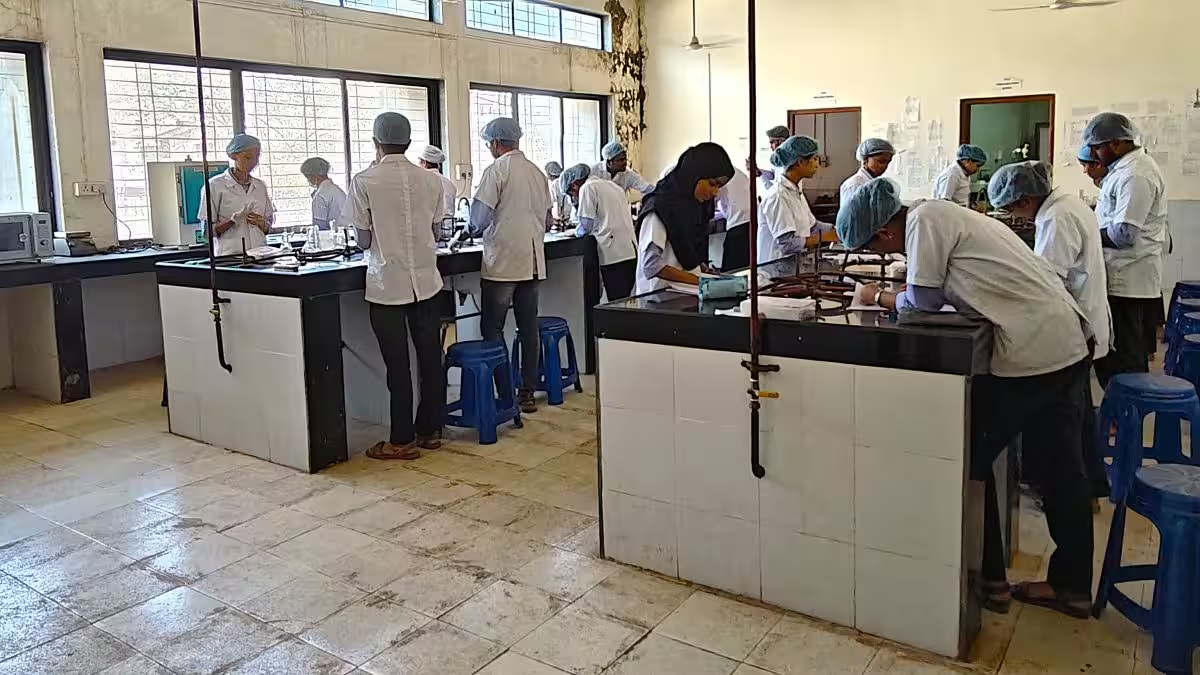
- Many new colleges face challenges meeting faculty and infrastructure standards, leading to notices and restrictions from regulatory bodies.
Regulatory Challenges and Impact on Graduates
The Pharmacy Council of India (PCI) and Maharashtra’s technical education authorities have struggled to manage the rapid expansion. Inspections revealed significant shortcomings in many new colleges, prompting the state to request bans on admissions at 89 institutions. Some bans were later lifted after compliance or court rulings.
Conflicting claims between state officials and the PCI about approval processes have added to the confusion. The PCI chairperson faced allegations of corruption related to rapid approvals, though he was granted bail and denied wrongdoing.
The Dr Babasaheb Ambedkar Technological University (DBATU) in Lonere, responsible for affiliating many colleges, lacked a long-term plan during the peak growth years. Recently, it has tightened inspections and proposed a freeze on new pharmacy colleges until 2031.
Meanwhile, many pharmacy graduates face shrinking job opportunities as pharmaceutical manufacturing plants relocate outside Maharashtra. With more pharmacists than licensed drug stores, many graduates struggle to find employment, raising concerns about the sustainability of the current education boom.
Frequently Asked Questions
Q: Why are so many pharmacy seats vacant in Maharashtra?
A: The rapid increase in pharmacy colleges has outpaced student demand. Many new colleges struggle to attract students due to competition, delayed admissions, and concerns about quality.
Q: What role does the Pharmacy Council of India play in this issue?
A: The PCI is responsible for approving pharmacy colleges and ensuring standards. However, it has faced criticism and investigations for approving many colleges without proper inspections.
Q: How does this situation affect pharmacy graduates?
A: Graduates face limited job opportunities as the number of pharmacists exceeds available positions, especially with manufacturing plants moving out of the state and an oversupply of graduates.