The Maharashtra government has introduced a draft law aimed at regulating private coaching centers, but many small coaching institutes in the state are raising strong objections. They argue that the proposed rules are modeled on large coaching hubs like Kota and fail to reflect the everyday operations of smaller centers that make up most of Maharashtra’s private tuition industry.
Coaching owners are particularly concerned about restrictions such as banning students under 13 from enrolling, segregating students by academic performance, and strict infrastructure requirements that many small centers cannot meet. These include mandates for minimum space per student, parking facilities, and prohibitions on running classes in basements.
Why Maharashtra Wants to Regulate Coaching Centers
The draft Maharashtra Private Coaching Centers (Registration and Regulation) Bill, 2026, is the latest attempt by the state to bring private coaching institutes under legal oversight. This follows earlier efforts in 2017 and even two decades ago, which were shelved due to opposition from coaching owners.
The new draft was released for public feedback with just a 10-day consultation period. It comes in the wake of controversies like the National Eligibility-cum-Entrance Test (NEET) paper leak, which implicated several coaching centers in Maharashtra. The central government had issued guidelines in 2024 urging states to regulate coaching institutes through appropriate laws.
Key Provisions and Concerns from Coaching Owners
- The law defines coaching centers as those with more than 25 students and requires them to register with the state.
- It imposes limits on fees, mandates physical infrastructure standards, and outlines student welfare measures.
- Students below 13 years cannot be enrolled, and classes must not segregate students based on academic performance.
- Coaching hours are capped at five hours per day to reduce academic stress.
- Facilities must provide at least one square meter of space per student and include parking areas; classes cannot be held in basements.
- Coaching centers must have websites and are barred from hiring teachers with criminal complaints.
- Integrated coaching or 'dummy schools'—where students skip regular schooling to focus solely on coaching—are prohibited.
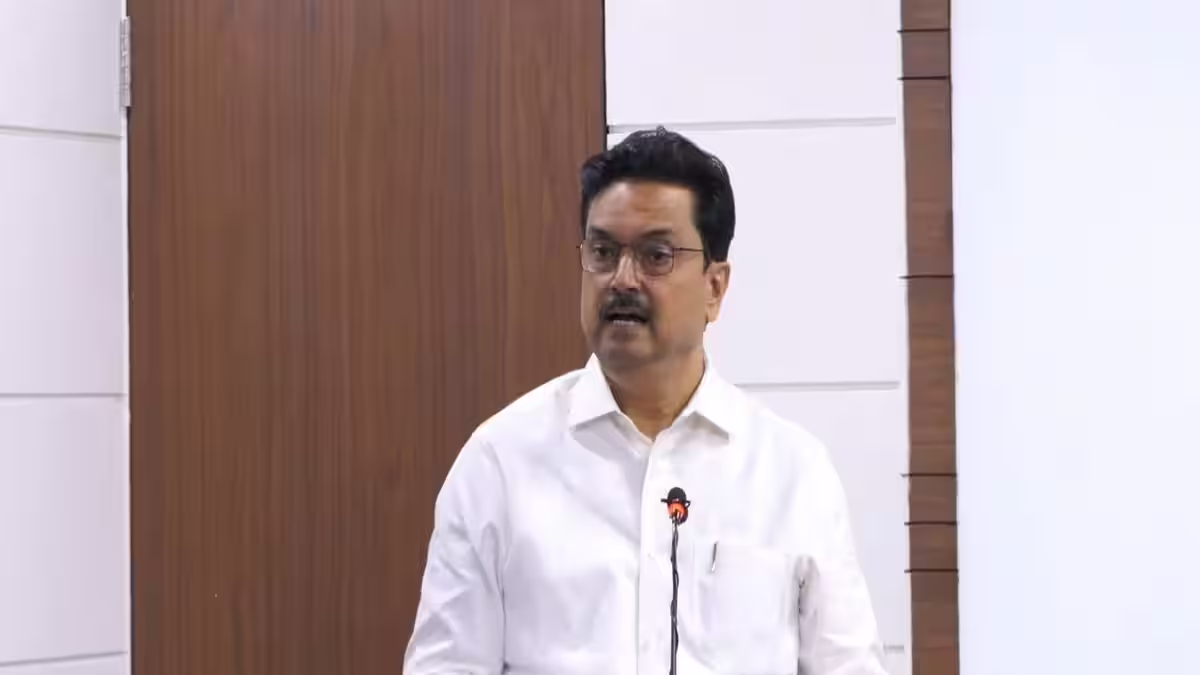
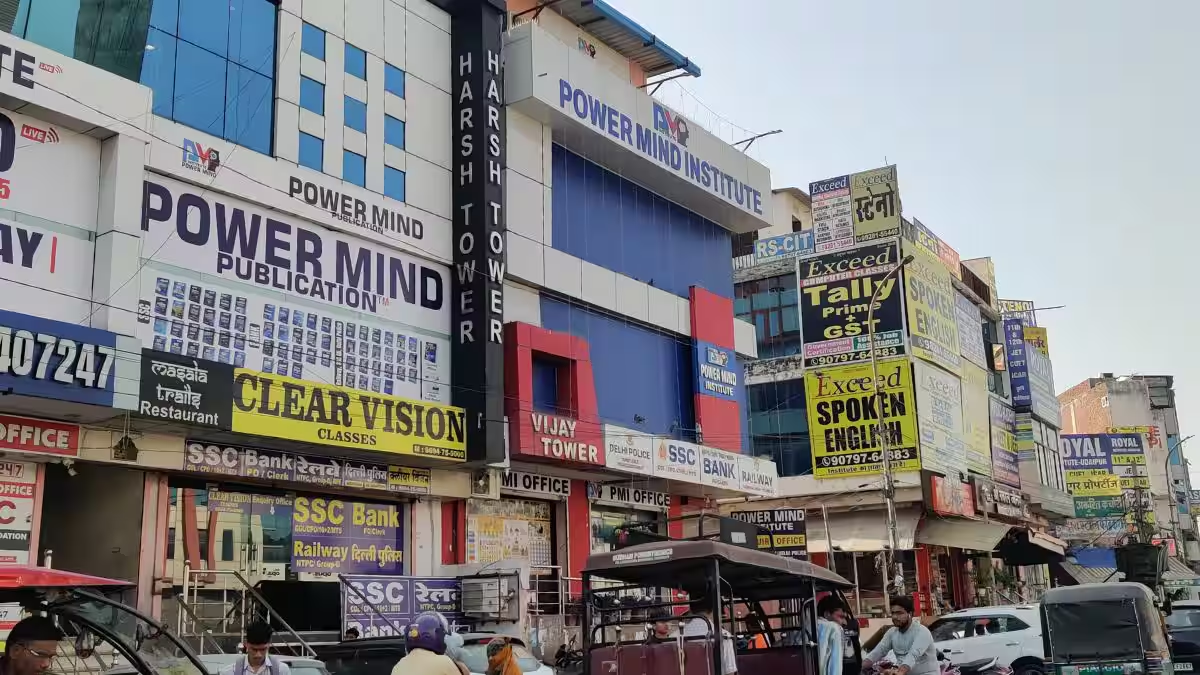
Coaching owners say these rules are unrealistic for small centers, which constitute 99% of Maharashtra’s coaching industry. Narendra Bhambwani, founder of the Maharashtra Class Owners’ Association, criticized the government for basing the draft on practices from Kota, which even that city abandoned years ago.
He highlighted that many small centers teach children younger than 13, including in underprivileged areas, and prepare students early for competitions like Olympiads. The infrastructure demands, such as parking and basement bans, are also impractical for many small setups.
Why This Regulation Could Impact Students and Coaching Centers
The draft law’s restrictions on student age and coaching hours aim to reduce academic pressure, but coaching owners argue these measures may have unintended consequences. They believe aptitude tests and counseling about realistic expectations do not accurately capture students’ potential and that segregating students is often a natural outcome of exam preparation.
Bhambwani also noted that coaching centers often help alleviate academic stress by providing support up to exam day, rather than causing it. Limiting coaching hours to five per day could disrupt study routines, especially on days when students attend school for fewer hours.
The ban on ‘dummy schools’ places responsibility solely on coaching centers, while schools and junior colleges are not equally regulated, raising concerns about enforcement fairness.
Overall, small coaching centers fear the draft law could force many to close or operate illegally, reducing access to affordable tuition for thousands of students across Maharashtra.
Frequently Asked Questions
Q: What is the main goal of Maharashtra’s draft coaching regulation law?
A: The law aims to regulate private coaching centers by setting standards for registration, fees, infrastructure, student welfare, and to reduce academic stress among students.
Q: Why are small coaching centers opposing the draft law?
A: Small centers say the rules are designed for large institutes and ignore their operational realities, such as infrastructure demands and age restrictions that exclude many students they currently teach.
Q: How might the law affect students in Maharashtra?
A: If small coaching centers close or reduce services due to the law, many students—especially those from lower-income backgrounds—could lose access to affordable tuition and academic support.