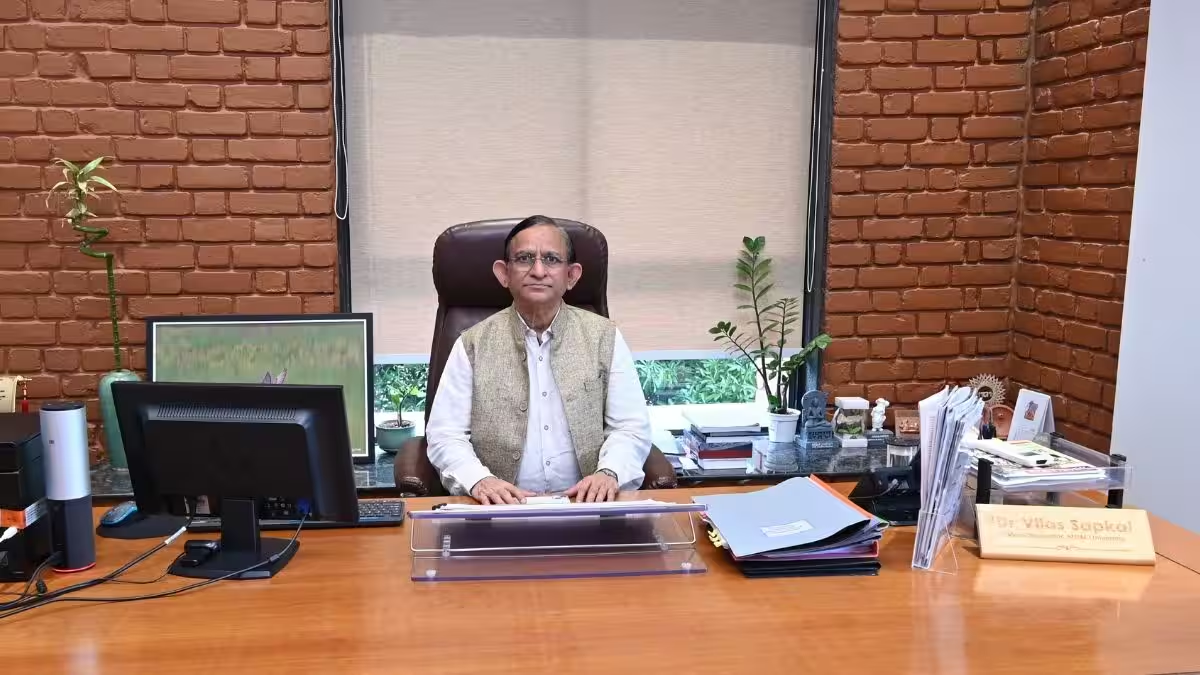
MGM University in Chhatrapati Sambhajinagar, Maharashtra, has shifted to a four-year undergraduate program (FYUP) in line with the National Education Policy (NEP) 2020. Vice Chancellor Colonel Prof. Dr. Vilas Sapkal explains how this change equips students with advanced skills and better prepares them for global opportunities, contrasting it with the traditional three-year degree that may limit prospects abroad.
MGM University’s Growth and Academic Structure
Established in 2019 by the Maharashtra government, MGM University evolved from a group of educational institutions managed by the Mahatma Gandhi Mission Trust. It serves around 9,000 to 10,000 students across seven faculties, including engineering and technology, commerce and management, basic and applied sciences, design, performing arts, interdisciplinary studies, and social sciences and humanities. The university offers nearly 300 programs, positioning itself as a key educational hub in the Marathwada region.
Implementing NEP 2020 and the Four-Year Undergraduate Program
The university embraced the NEP 2020 to provide a flexible, multidisciplinary education system. Students can now pursue combinations of majors, minors, and open electives across diverse fields such as computer science, business analytics, design, languages, and hotel management. The FYUP includes a fourth year focused on projects, internships, research methodology, and advanced subjects, which significantly enhance students’ competencies.
- The four-year program aligns with international standards, offering global recognition.
- Students can exit earlier if needed due to financial or personal reasons.
- The additional year develops practical skills through extended projects and internships.
- Research guidance is robust, with around 500 research students supported by experienced faculty.
According to Dr. Sapkal, the FYUP is well received by students, who benefit from the deeper knowledge and skill development it provides. In contrast, three-year degrees may disadvantage students seeking opportunities abroad due to the lack of this additional training.
Industry Collaboration and Curriculum Adaptation
MGM University actively partners with industries to align education with market demands. It has signed memorandums of understanding with over 200 companies, including Toyota, which is establishing a manufacturing plant in the city. Media collaborations with groups like Sakal and The Hindu provide students with internships and expert interactions.
The curriculum is regularly updated to incorporate emerging fields such as artificial intelligence, machine learning, data science, semiconductors, design thinking, and digital media. This approach ensures graduates are equipped with relevant skills for evolving industries.
Scholarships and Accessibility
Affordability remains a priority for MGM University. Tuition fees are significantly lower than those at Pune colleges, and the university offers various scholarships, including merit-based, economic need-based, alumni, and chancellor’s scholarships. Approximately 20% to 25% of students benefit from these financial aids, with installment payment options available to ease the burden on families.
Frequently Asked Questions
Q: What advantages does the four-year undergraduate program offer over the traditional three-year degree?
A: The four-year program includes an additional year focused on practical projects, internships, and research, which enhances students’ skills and global recognition. It better prepares students for international opportunities and industry demands.
Q: How does MGM University support research for undergraduate students?
A: The university has around 500 research students and sufficient experienced faculty to guide research activities. Research and project-based learning are integral parts of the curriculum, especially in the final year.
Q: What industries does MGM University collaborate with for student placements?
A: MGM University partners with over 200 companies, including Toyota and media groups like Sakal and The Hindu, to provide internships, expert interactions, and placement opportunities aligned with current industry needs.