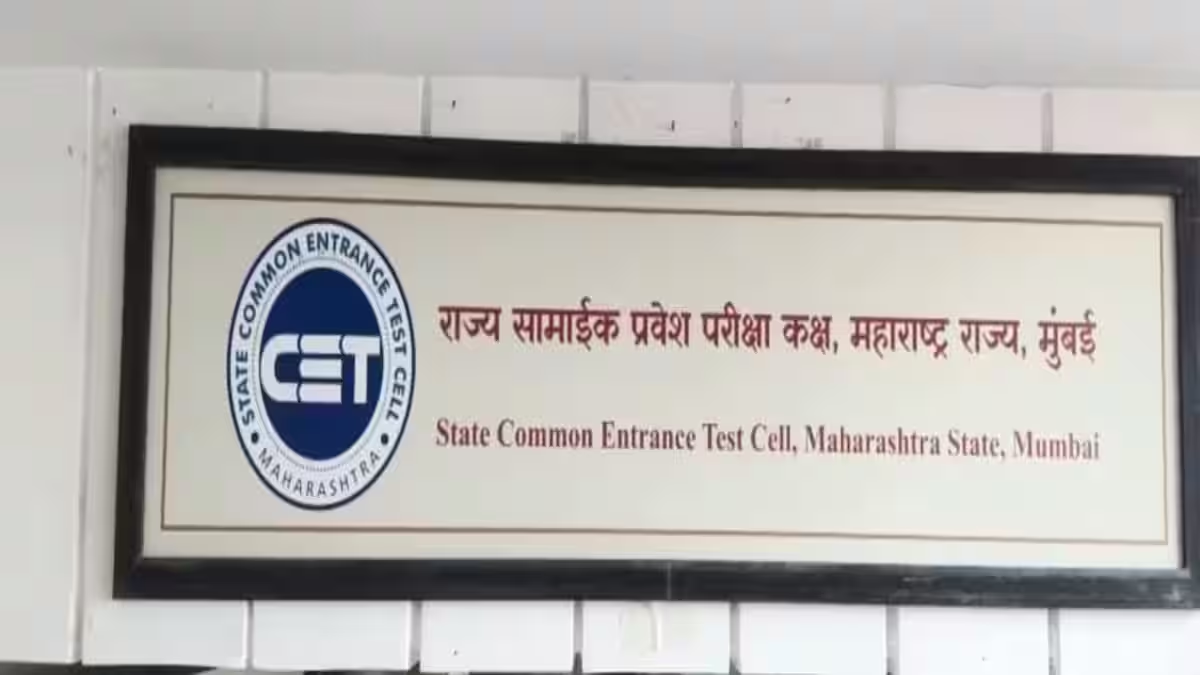
The Maharashtra State Common Entrance Test (MHT CET) Cell has announced an increase in the seat acceptance fee for the 2026 Centralised Admission Process (CAP) for engineering courses. The move aims to tackle the persistent issue of students reserving seats by paying a nominal fee but later abandoning them, which blocks opportunities for other aspiring candidates.
Dileep Sardesai, the CET Cell Commissioner, explained during a recent press briefing that the fee hike is designed to encourage students to confirm their admissions promptly and reduce the number of vacant seats caused by seat blocking.
Understanding the Seat Blocking Problem in MHT CET CAP
Seat blocking has been a significant challenge in Maharashtra's engineering admissions. In the previous year, around 41,000 students accepted engineering seats by paying a Rs 1,000 fee but eventually left these seats unoccupied. This behavior prevented other eligible students from securing admission in the state’s engineering colleges.
Breaking down the numbers, the CET Cell reported the following seat dropouts during various CAP rounds:
- 11,000 students in the second round
- 3,000 students in the third round
- 11,040 students in the fourth round
Overall, approximately 60,000 students abandoned their allotted BTech and BE seats at different stages, creating a significant vacancy problem. This situation deprived many deserving students of the chance to pursue engineering education in Maharashtra.
Details of the Revised Seat Acceptance Fees for MHT CET CAP 2026
To address this, the CET Cell has revised the seat acceptance fees for each round of the CAP counselling process. The updated fee structure is as follows:
- First seat allotment round: Rs 1,000
- Second seat allotment round: Rs 2,000
- Third seat allotment round: Rs 3,000
Students who receive seat allotments in the second, third, or fourth rounds will still pay the initial Rs 1,000 fee for their first allotted seat but must pay the higher fees for subsequent rounds. This incremental fee system is intended to discourage students from holding onto multiple seats without commitment.
Commissioner Sardesai noted that despite the low acceptance fee previously set—lower than many colleges’ prospectus costs—many students repeatedly secured seats in multiple rounds but did not confirm admission. This pattern contributed to the large number of vacant seats.
Why the Fee Increase Matters for Maharashtra’s Engineering Admissions
The increased fees are an experimental measure aimed at changing student behavior during the counselling process. By raising the cost of seat acceptance in later rounds, the CET Cell hopes to reduce the number of students who reserve seats without genuine intent to enroll.
While the fee hike may raise concerns about additional financial burdens on students from various social backgrounds, the commissioner emphasized that this approach is necessary to ensure seats are allocated fairly and efficiently. He described the fee as a reasonable charge for the opportunity to participate in subsequent allotment rounds.
Ultimately, this policy seeks to maximize the utilization of available engineering seats and provide more students with the chance to pursue technical education in Maharashtra.
Frequently Asked Questions
Q: What is the new seat acceptance fee for MHT CET CAP 2026?
A: The fee is Rs 1,000 for the first allotment round, Rs 2,000 for the second, and Rs 3,000 for the third round.
Q: Why was the seat acceptance fee increased?
A: To discourage students from blocking seats without confirming admission, which prevents other candidates from getting seats.
Q: Will the higher fees affect students from different social categories differently?
A: The CET Cell acknowledges this concern but is treating the fee increase as an experiment to improve seat allocation fairness.