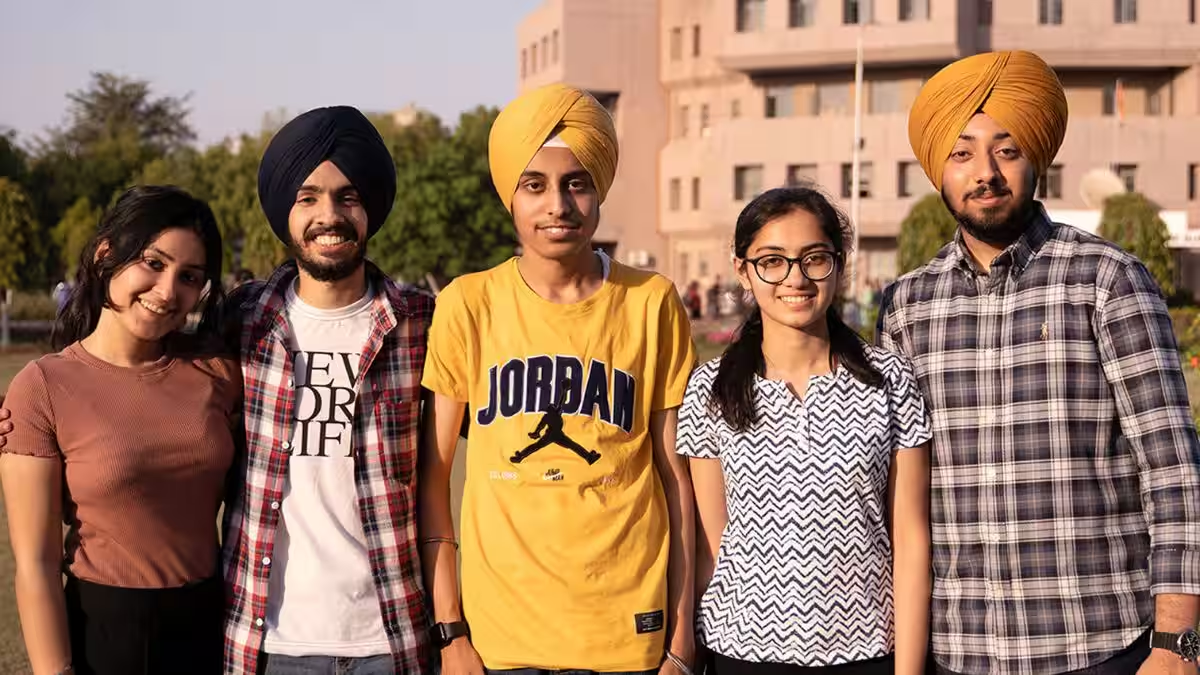
The central government led by Prime Minister Narendra Modi is intensifying its efforts to connect with Generation Z by launching a new initiative called ‘One Day, One University.’ This program involves Union ministers visiting a different university each day to engage directly with students, listen to their concerns, and promote government welfare schemes tailored for young people. The announcement follows a cabinet meeting held on August 19, where ministers were urged to expand their reach, especially through social media platforms.
Why the Government Is Focusing on Gen Z Engagement
The government’s renewed focus on youth outreach comes amid widespread student protests, notably over the NEET UG 2026 exam paper leak and other education-related issues. These protests have highlighted the need for better communication between policymakers and students. Prime Minister Modi himself has been active on social media, addressing students’ concerns and encouraging dialogue. The cabinet meeting reviewed the performance of ministers’ social media accounts, with Modi ranking highest in reach and engagement. Ministers were encouraged to increase their presence on platforms like Instagram to connect more effectively with younger audiences.
Details of the ‘One Day, One University’ Program
The initiative will see a Union minister assigned to visit a different university every day. These visits aim to foster direct interaction with students, allowing ministers to understand their perspectives on national issues and inform them about government schemes that could benefit them. The program also seeks to raise awareness about opportunities in sectors such as manufacturing, space, nuclear energy, and semiconductors.
- Education Minister Pralhad Joshi and Youth Affairs and Sports Minister Mansukh Mandaviya are coordinating the visits.
- The program complements other youth-focused initiatives announced on August 15, including free online coaching, AI skill development, sports talent hunts, and civil defense network expansion.
- The cabinet emphasized the importance of social media engagement alongside physical visits to maximize outreach.
How This Initiative Could Impact Students and Youth
By bringing ministers directly to campuses, the government hopes to bridge the gap between policymakers and young citizens. This approach could help address student grievances more promptly and increase awareness of government programs designed to support education, skill development, and employment. Enhanced social media activity by ministers is expected to amplify these efforts, making information more accessible to tech-savvy youth. The initiative also signals the government’s recognition of Gen Z as a critical demographic whose participation is vital for the country’s future growth.
However, the success of the program will depend on the sincerity of engagement during visits and the ability to translate student feedback into actionable policies. It also comes at a time when trust between students and authorities has been tested by recent controversies, making transparent communication all the more important.
Frequently Asked Questions
Q: What is the ‘One Day, One University’ program?
A: It is a government initiative where a Union minister visits a different university each day to interact with students, understand their concerns, and promote government welfare schemes aimed at youth.
Q: Why is the government focusing on university visits now?
A: The government aims to improve communication with young people following student protests and to increase awareness of education and employment opportunities through direct engagement and social media.
Q: Who is responsible for coordinating the university visits?
A: Education Minister Pralhad Joshi and Youth Affairs and Sports Minister Mansukh Mandaviya are overseeing the coordination of the visits and ministerial engagement with universities.