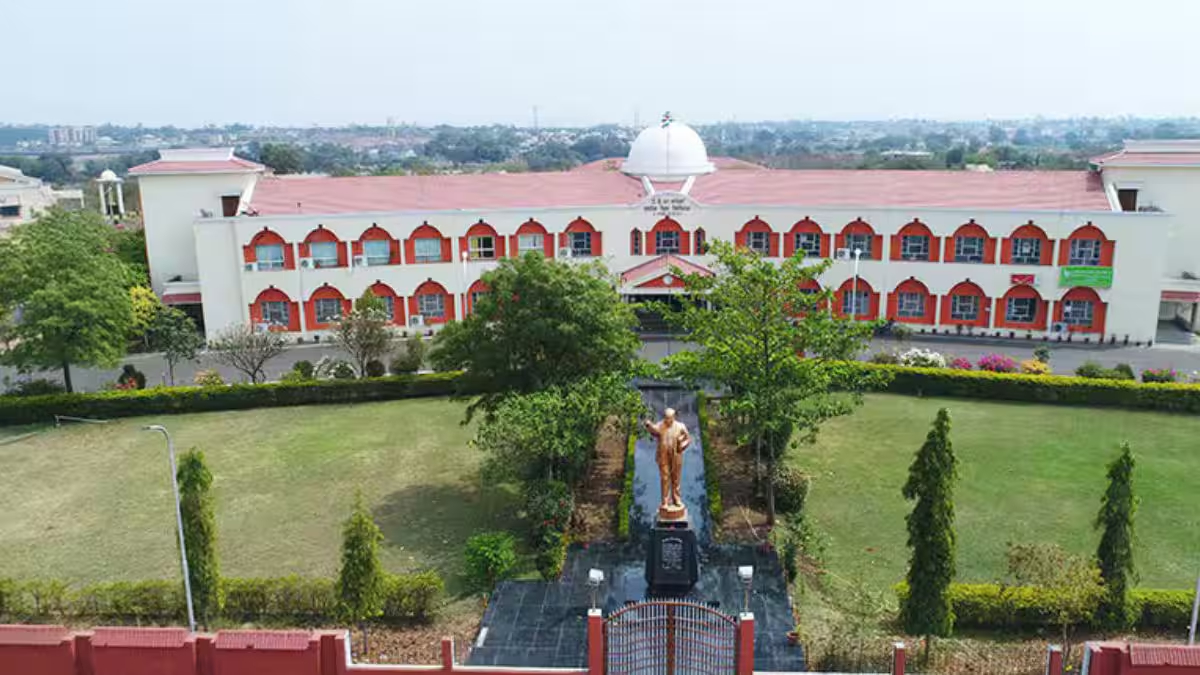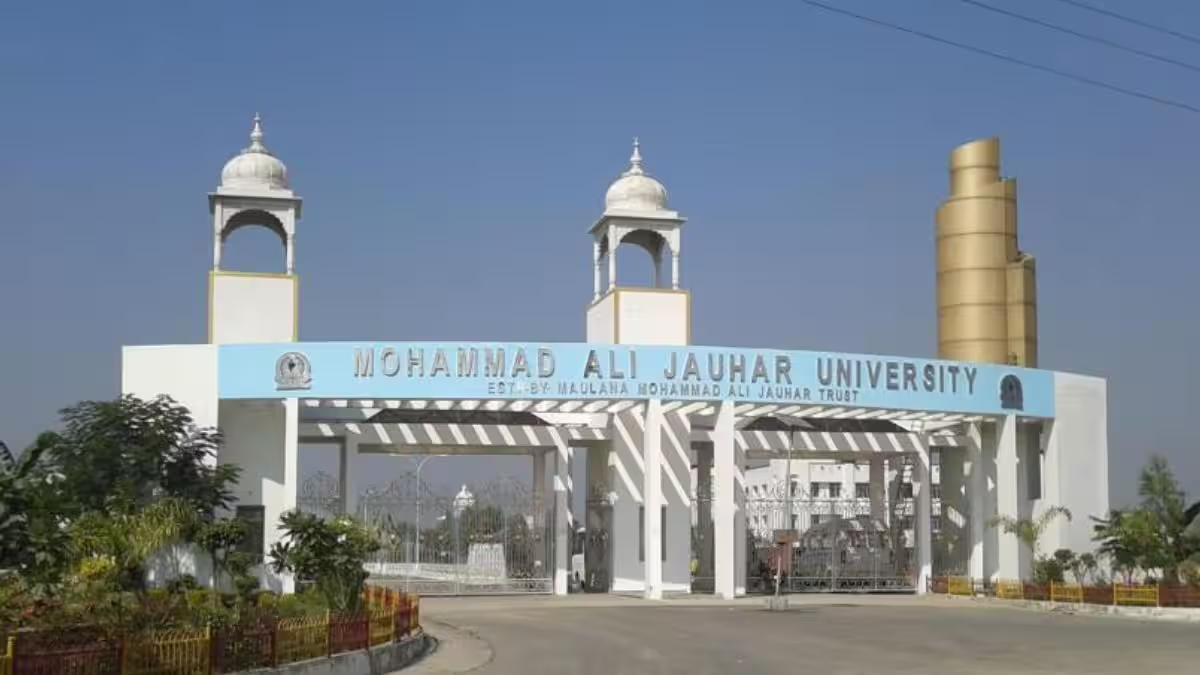
Uttar Pradesh’s Public Works Department (PWD) has declared that a main road running through Mohammad Ali Jauhar University in Rampur is open for public use, despite the university administration’s attempts to restrict access. This announcement comes as the Rampur Development Authority (RDA) has ordered the demolition of 38 buildings on the university campus for lacking proper approvals.
The university, which spans 450 acres, has been at the center of a long-standing conflict involving land use and unauthorized construction. The road in question, a three-kilometer four-lane cement stretch, was built by the PWD during the Samajwadi Party government led by Akhilesh Yadav in 2016-17 at a cost of approximately Rs 17.16 crore. Despite being a government road intended for public use, the university administration closed the main gate in 2019, blocking access even to PWD officials.
Understanding the Dispute Over the Public Road
The road cuts through the university campus from its main entrance to the far end, making it a vital thoroughfare for local residents and commuters. However, the university, headed by Uttar Pradesh minister and senior Samajwadi Party leader Azam Khan, restricted access by closing the gate, leading to a standoff with government authorities. The PWD issued multiple notices demanding the reopening of the road, emphasizing that it was constructed with public funds and must remain accessible to the public.
Legal proceedings have been ongoing since 2021-22, with 10 to 12 hearings scheduled but no final resolution reached. The court has instructed the university to pay 30% of the damages related to the road, but the question of whether the gate should stay closed or be removed remains unresolved. The PWD has actively sought a swift court decision, even assigning a junior engineer to advocate for the road’s public status.
Details on Unauthorized Buildings and Approvals
- Only two buildings on campus—the medical college and the academic block—have official approval for construction.
- The remaining 38 buildings lack valid permits and are considered illegal under state regulations.
- The university administration had obtained permission from Rampur’s Zila Panchayat for two buildings but proceeded with other constructions without necessary approvals.
- The RDA has declared these unauthorized structures in violation of land-use rules and has ordered their demolition.
The university was established in 2006 by an act of the Uttar Pradesh legislature and is located about 12 kilometers from Rampur Railway Station. The controversy highlights ongoing challenges in balancing institutional autonomy with regulatory compliance in the region.
Why This Decision Matters for Rampur and the University
The enforcement of demolition orders and the reopening of the road underscore the state government’s zero-tolerance approach toward illegal construction and misuse of public land. For local residents, access to the road is crucial for daily travel, and the PWD’s move to install signboards declaring the road open to the public aims to prevent further restrictions.
For Mohammad Ali Jauhar University, the demolition of 38 buildings presents significant operational challenges, potentially affecting students, faculty, and ongoing academic activities. It also raises questions about governance and adherence to legal frameworks within educational institutions.
The case reflects broader tensions in Uttar Pradesh between development authorities and institutions over land use, infrastructure, and regulatory enforcement. How this situation unfolds may set precedents for similar disputes across the state.
Frequently Asked Questions
Q: Why is the road through Mohammad Ali Jauhar University important?
A: The road is a three-kilometer, four-lane cement road built with public funds to serve as a public thoroughfare through the university campus, connecting different parts of Rampur.
Q: What led to the demolition order for 38 buildings?
A: The Rampur Development Authority found that 38 buildings on the university campus were constructed without valid approvals, violating state land-use regulations, leading to the demolition order.
Q: Has the university responded to these orders?
A: The university administration had restricted access to the road by closing the main gate and has been involved in ongoing legal proceedings. However, the court has directed partial payments related to road damages, and the final decision on the gate remains pending.