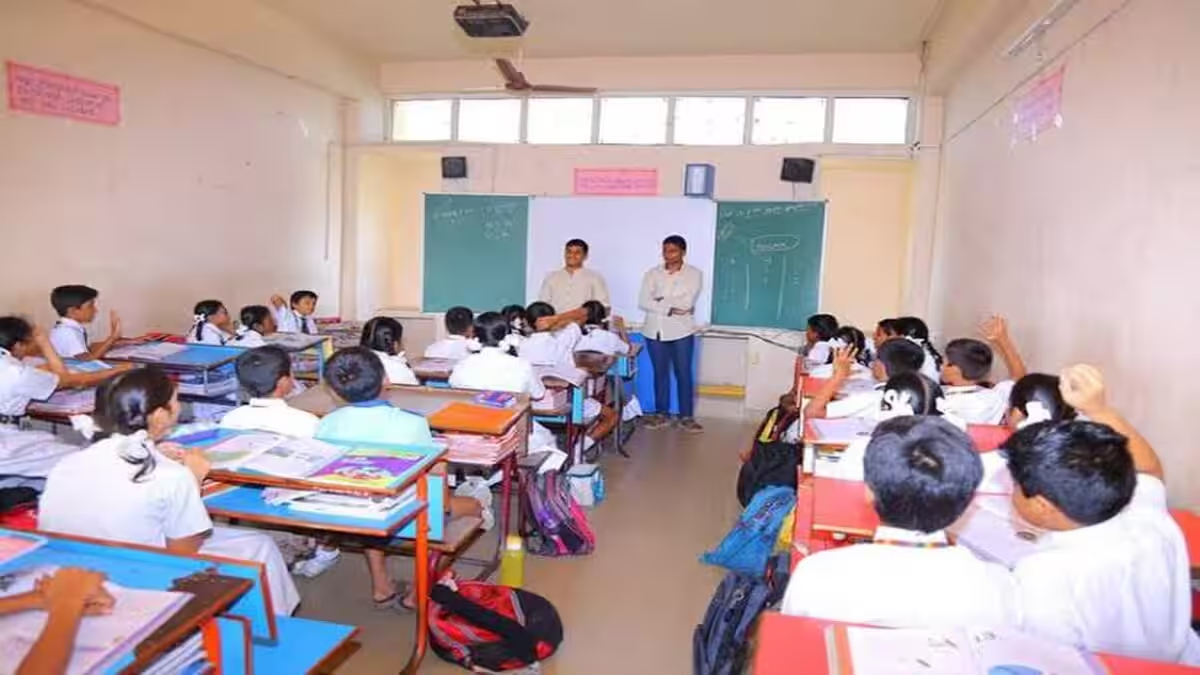
Mumbai University has rolled out an Apprenticeship Embedded Bachelor of Engineering (B.E.) Degree Programme aimed at blending academic learning with hands-on industry experience. This new initiative, approved by the university’s Academic Council under the Faculty of Science and Technology, aligns with the National Education Policy (NEP) 2020 and follows guidelines set by the All India Council for Technical Education (AICTE).
Designed to bridge the gap between theoretical engineering education and real-world industry demands, the program allows up to 15% of final-year B.E. students to participate in apprenticeships during their seventh and eighth semesters. These students will complete a full year of apprenticeship, including a minimum of 1,260 hours of practical training, earning 42 academic credits in the process.
Understanding the Apprenticeship Embedded B.E. Program
The Apprenticeship Embedded Degree Programme (AEDP) integrates structured industry training within the engineering curriculum. This approach provides students with the opportunity to apply classroom knowledge to actual projects and daily operations in engineering firms. It also exposes them to contemporary technologies, quality assurance standards, and professional workplace practices.
The program reflects a broader shift in Indian higher education under NEP 2020, which emphasizes experiential learning, skill development, and employability. By embedding apprenticeships directly into degree programs, Mumbai University aims to produce graduates who are not only academically qualified but also industry-ready.
Key Eligibility and Program Details
- Eligibility is limited to up to 15% of final-year B.E. students.
- Applicants must have a minimum Cumulative Grade Point Equivalent Average (CGPEA) of 6.75 by the fifth semester.
- Selection is merit-based, prioritizing students with higher CGPEAs.
- Students enrolled in Honours, Minor, or Honours with Research tracks are excluded from eligibility.
- The apprenticeship spans the seventh and eighth semesters, requiring at least 1,260 hours of practical training.
- Successful completion awards 42 academic credits.
How the Program Enhances Student Skills and Career Prospects
The program is designed to develop a broad set of skills beyond technical knowledge. Students will enhance communication, teamwork, problem-solving, decision-making, and time management abilities. Working under experienced industry mentors, they gain insight into workplace expectations and learn to navigate practical challenges.
This exposure not only equips students with relevant professional skills but also helps build valuable industry connections. These relationships and experiences are expected to improve graduates’ employability and ease their transition into professional engineering roles.
Vice-Chancellor Ravindra Kulkarni highlighted the importance of combining theoretical education with practical experience in today’s rapidly evolving industrial landscape. He emphasized that the initiative supports NEP 2020’s goals of fostering skill-based, employment-oriented education and preparing engineers for future challenges.
Frequently Asked Questions
Q: Who is eligible to participate in the Apprenticeship Embedded B.E. program?
A: Up to 15% of final-year B.E. students with a minimum CGPEA of 6.75 by the fifth semester are eligible. Students pursuing Honours, Minor, or Honours with Research are not eligible.
Q: How long is the apprenticeship period and what does it involve?
A: The apprenticeship takes place during the seventh and eighth semesters and requires at least 1,260 hours of practical training in an industry setting, earning students 42 academic credits.
Q: What benefits do students gain from this program?
A: Students gain hands-on industry experience, develop professional and soft skills, build industry contacts, and improve their employability by aligning academic learning with real-world engineering practices.