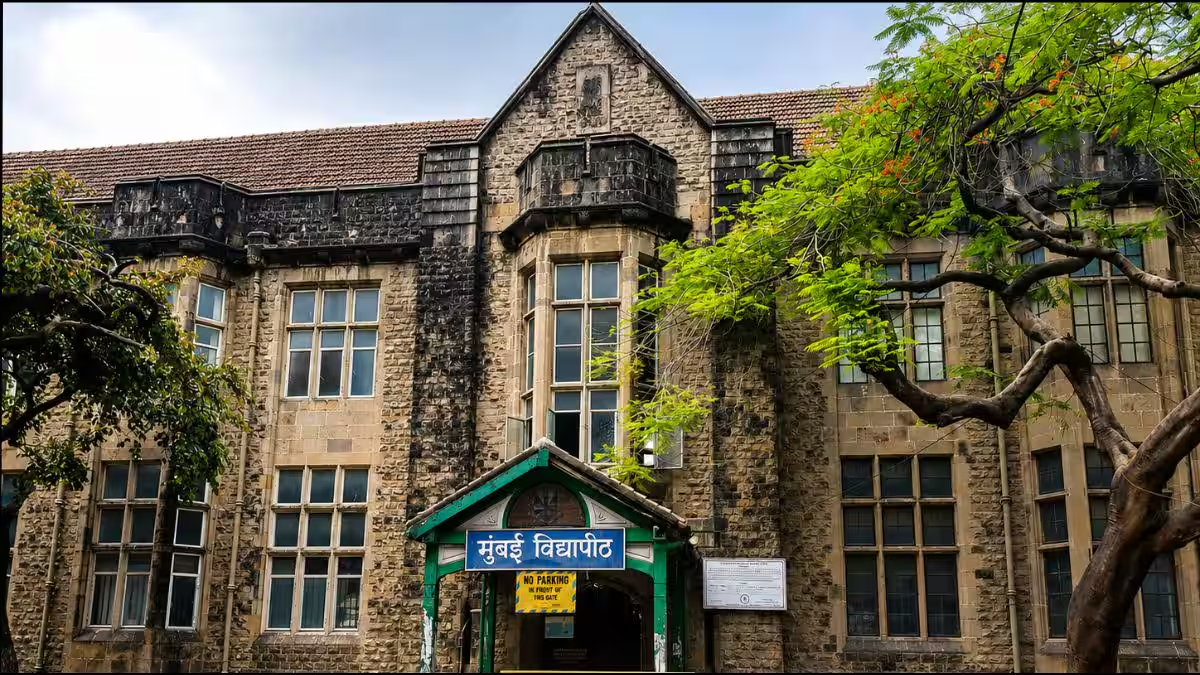
Mumbai University is actively implementing the National Education Policy (NEP) 2020 by launching several initiatives designed to modernize higher education. These include introducing four-year honours and honours with research programmes, expanding multidisciplinary minors, and offering a wide range of open electives. The university is also adopting a new cluster-based model to foster academic collaboration among colleges.
Vice-Chancellor Ravindra Kulkarni emphasized that while the university is still in the early stages of NEP implementation, many new programmes and approaches are being introduced. An external review by the National Institute of Educational Planning and Administration (NIEPA) is planned to assess progress and identify areas for improvement.
NEP Implementation and Cluster Model Explained
The National Education Policy 2020 aims to transform India’s education system by promoting multidisciplinary learning, research, and skill development. Mumbai University has embraced this by offering 50 departments with four-year honours programmes and 49 with honours plus research. Autonomous colleges are also participating, with 58 offering honours and 33 offering honours with research. Some engineering colleges have introduced minor programmes to complement their core courses.
The university’s cluster model groups colleges based on academic disciplines and geographic proximity. This approach encourages sharing of faculty, infrastructure, and resources, enhancing collaboration. Pro-Vice-Chancellor Ajay Bhamare explained that clusters use both top-down and bottom-up strategies to maximize cooperation. The university is also exploring joint and dual degree options, revenue-sharing models, and research clusters, including a group of six colleges focusing on defense-related studies.
Key Initiatives and Facts Under NEP
- 12 new Skill Institutes planned across the Konkan region starting academic year 2027-28, pending state government approval.
- These institutes will offer specialized courses such as B.Com Finance and FinTech in Mumbai, B.Sc IT and Cybersecurity in Thane, and B.A. Journalism and Digital Media in Navi Mumbai.
- A total of 516 open electives are currently available, with plans to update and expand this selection.
- Students can choose from three NEP programme models: single major, major with minor, or multiple subjects.
- Internships and on-the-job training are prioritized, with some students receiving stipends up to Rs 15,000 and securing employment through these opportunities.
- Indian Knowledge Systems (IKS) initiatives include developing content in 12 languages and preparing 12 IKS books, covering both ancient and modern scientific achievements.
- The university has registered nearly 2,000 students in its Academic Bank of Credits (ABC) system for 2024-25, with numbers expected to grow.
- Community engagement programmes involve thousands of beneficiaries, focusing on issues like screen time awareness and support for senior citizens.
Why Mumbai University’s NEP Efforts Matter
The university’s push to integrate skill development with traditional education reflects a broader shift in Indian higher education towards employability and practical knowledge. By establishing specialized skill institutes, Mumbai University aims to meet regional industry needs while offering students relevant, future-ready courses.
The cluster model fosters resource sharing and academic collaboration, which can improve quality and efficiency across colleges. This is particularly important given the university’s limited non-teaching staff and the need to support smaller institutions.
Expanding open electives and multidisciplinary options encourages students to explore diverse fields, breaking down rigid academic silos. This flexibility aligns with NEP’s vision of holistic education and better prepares students for a rapidly changing job market.
Community engagement initiatives demonstrate the university’s commitment to social responsibility, involving students in meaningful projects that benefit local populations. These programmes also provide practical experience that complements classroom learning.
Frequently Asked Questions
Q: What are the 12 Skill Institutes planned by Mumbai University?
A: These institutes will be established across the Konkan region starting in the 2027-28 academic year, offering specialized courses that combine traditional degrees with industry-relevant skills in areas like finance, cybersecurity, journalism, environmental science, and more.
Q: How does the cluster model work at Mumbai University?
A: The cluster model groups colleges based on academic disciplines and location to encourage sharing of faculty, infrastructure, and resources, promoting collaboration and efficiency in implementing NEP initiatives.
Q: What opportunities do students have for internships under NEP at Mumbai University?
A: The university has defined guidelines for on-the-job training and supports district-wise faculty training. Some students have received stipends and secured full-time employment through internships, highlighting the focus on practical experience.