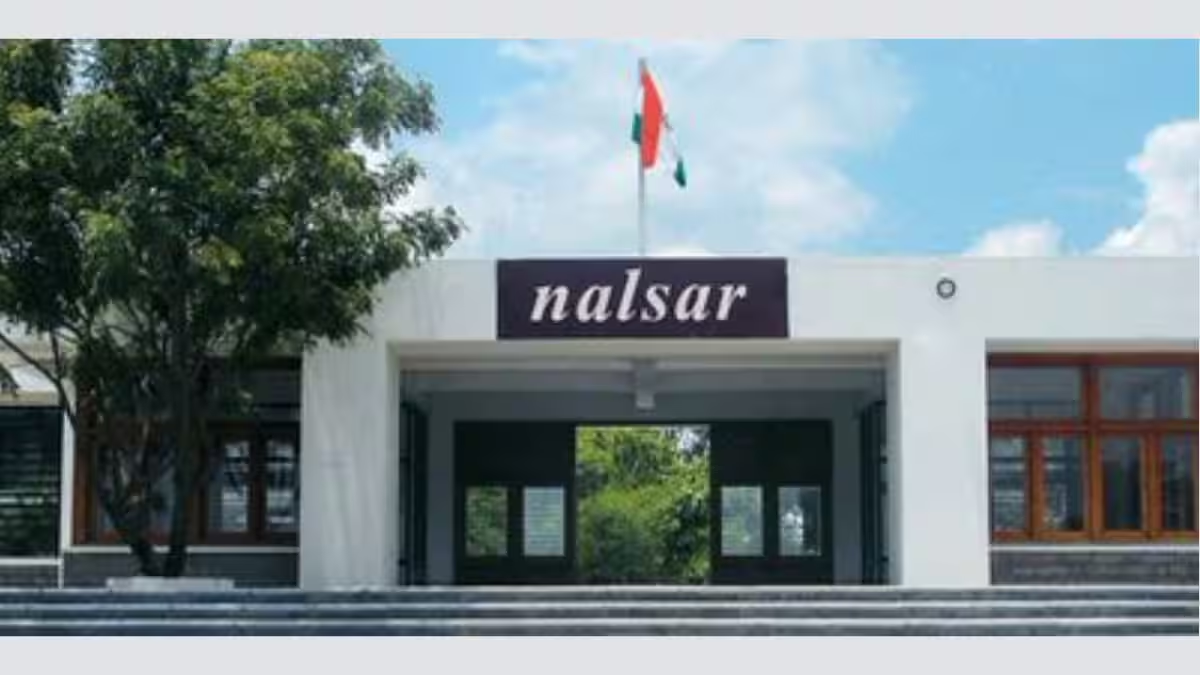
NALSAR University of Law in Hyderabad is currently reviewing a request from the Bar Council of India (BCI) to conduct an inquiry into students involved in recent protests surrounding the university's convocation ceremony. The matter has been referred to the university's Executive Council (EC) for detailed discussion and assessment.
This development follows the BCI’s earlier directive to suspend enrollment for the university’s BA batch of 2026. The suspension was issued after students protested the invitation extended to Chief Justice of India (CJI) Surya Kant to be the convocation's chief guest. However, the BCI later withdrew the suspension amid backlash from students and members of the legal community.
Understanding the Inquiry Request and University Response
The Bar Council of India initially sought an inquiry report to identify students involved in the convocation protests. The protests had sparked controversy due to opposition against CJI Surya Kant’s presence as the chief guest. The BCI’s suspension of student enrollment was a direct response to these events but was quickly retracted.
NALSAR University has stated that it will evaluate whether conducting such an inquiry aligns with its constitutional powers and regulatory framework. The university emphasized that the decision would be made after consulting the Executive Council, which holds the highest authority under the university’s statute.
Key Facts About the Situation
- The Bar Council of India issued a suspension order for the BA batch of 2026 at NALSAR University following student protests.
- The protests were against the invitation of CJI Surya Kant as the convocation’s chief guest.
- BCI withdrew the suspension order within an hour after facing criticism from students and legal professionals.
- NALSAR University is now placing the BCI’s inquiry request before its Executive Council to determine if the inquiry is constitutionally permissible.
- The Executive Council’s decision will be communicated back to the BCI once consultations are complete.
- BCI chairman acknowledged that the initial suspension order was issued hastily and confirmed that most students were innocent and should not be penalized.
- The BCI has stated that the matter is now closed and emphasized protecting students from harm or inconvenience.
Why This Inquiry Decision Matters for NALSAR and Legal Education
The situation at NALSAR highlights the delicate balance between student activism, institutional authority, and regulatory oversight in legal education. The university’s careful approach to consulting its Executive Council reflects the importance of adhering to constitutional and regulatory norms when addressing internal disputes.
For students, the outcome of this decision will affect their academic progress and the university’s reputation. The BCI’s initial suspension order caused significant concern about potential disruptions to students’ education. By involving the Executive Council, NALSAR aims to ensure transparency and fairness in handling the issue.
More broadly, this episode underscores ongoing challenges in legal education governance in India. It raises questions about how regulatory bodies like the BCI engage with universities and students, especially when controversies arise around judiciary-related events. The resolution of this inquiry request could set a precedent for how similar situations are managed in the future.
Frequently Asked Questions
Q: Why did the Bar Council of India suspend enrollment at NALSAR?
A: The BCI suspended enrollment for the BA batch of 2026 following student protests against the invitation of Chief Justice of India Surya Kant as the convocation’s chief guest.
Q: What is the role of NALSAR’s Executive Council in this matter?
A: The Executive Council is the highest decision-making body at NALSAR. It will review the BCI’s request for an inquiry and decide whether conducting such an inquiry is constitutional and permissible under university regulations.
Q: Has the Bar Council of India closed the issue?
A: Yes, the BCI chairman has stated that the inquiry request is no longer necessary, most students were innocent, and the matter is considered closed to prevent harm or inconvenience to students.