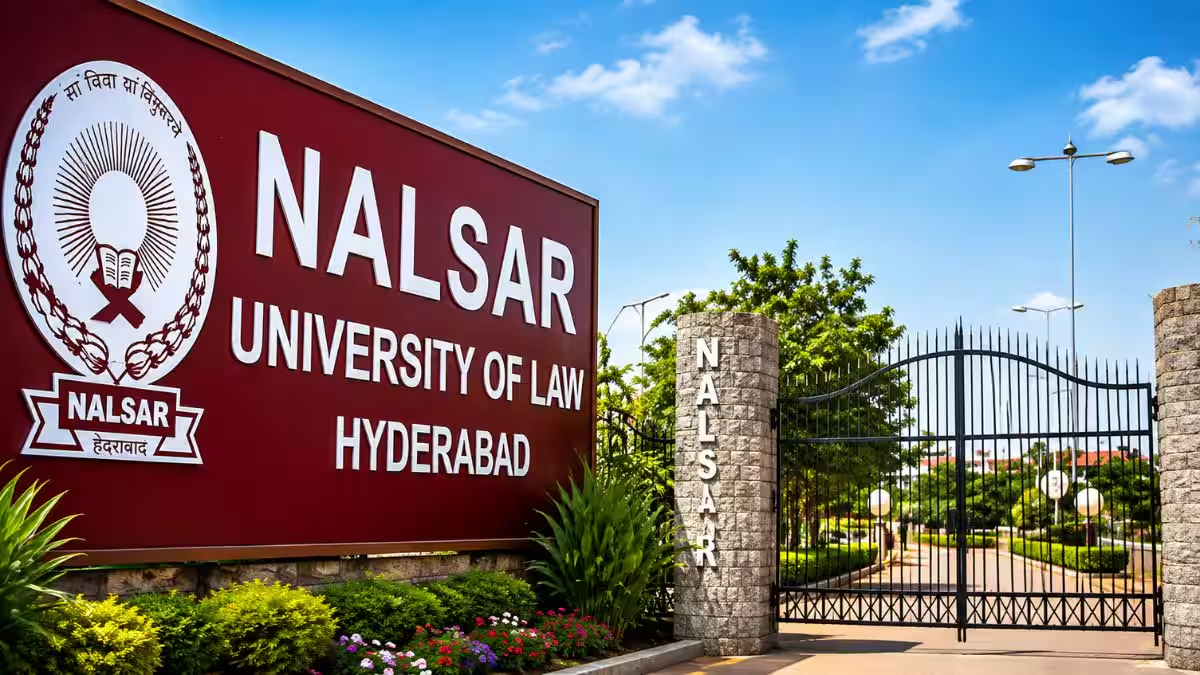
The Student Bar Council of NALSAR University of Law has strongly condemned a letter issued by the Bar Council of India (BCI) on August 13 that temporarily barred the university’s 2026 batch from enrolling with any state bar council. The letter also called for an inquiry into students and faculty who protested the proposed participation of the Chief Justice of India (CJI) at the university’s convocation. Although the BCI later rescinded the letter, the Student Bar Council insists the incident must be recorded and criticized on multiple grounds.
What Sparked the Controversy at NALSAR?
The controversy began when some NALSAR students voiced opposition to the invitation extended to the CJI to be the chief guest at the university’s convocation ceremony. This dissent prompted the BCI, led by chairperson Manan Kumar Mishra, to issue a letter on August 13 that effectively imposed a "blanket ban" on the entire 2026 batch, preventing them from enrolling as advocates in any state bar council. The letter also demanded an inquiry and a factual report from the university’s vice chancellor identifying those involved in the dissent.
Later the same day, the BCI issued a revised letter allowing the 2026 batch to enroll with state bar councils but maintained its call for an inquiry, alleging that a small group of teachers and outsiders had influenced students to protest. Mishra subsequently announced on social media platform X that all proceedings against NALSAR had been cancelled.
Legal and Statutory Questions Raised by the Student Bar Council
The Student Bar Council challenged the BCI’s authority to impose such a ban, questioning the statutory basis cited in the Advocates Act, 1961. The BCI had invoked Sections 7(1)(b), 7(1)(g), 7(1)(h), and 7(1)(i), which relate to the council’s functions in regulating professional conduct and promoting legal education. However, the council argued these provisions do not grant the BCI power to restrict enrollment arbitrarily.
Furthermore, the council pointed to Section 24A of the Advocates Act, which limits disqualification from enrollment to specific grounds such as criminal convictions. Since no such grounds existed in this case, the council said the BCI’s directive to bar the 2026 batch from enrollment was beyond its statutory mandate.
Why the Incident Matters Beyond NALSAR
The Student Bar Council emphasized that even though the BCI withdrew its restrictive letter, the episode raises serious concerns about statutory overreach, constitutional rights, and fundamental principles of freedom of expression. They highlighted the broader social context of repression and the chilling effect such actions can have on academic and political dissent within educational institutions.
More than 400 NALSAR alumni also condemned the BCI’s initial order, accusing the council of attempting to coerce students and faculty into silence. The incident has sparked debate about the balance between regulatory authority and individual rights in India’s legal education system.
Frequently Asked Questions
Q: What was the Bar Council of India’s original action against NALSAR students?
A: The BCI issued a letter barring the entire 2026 batch of NALSAR students from enrolling with any state bar council and called for an inquiry into those who protested the Chief Justice of India’s convocation role.
Q: Why did the Student Bar Council oppose the BCI’s letter?
A: They argued the BCI exceeded its statutory powers under the Advocates Act and that no legal grounds existed to restrict enrollment, as no criminal convictions or disqualifications applied.
Q: What was the outcome after the BCI’s letter was rescinded?
A: The BCI allowed the 2026 batch to enroll but continued to seek an inquiry. Eventually, all proceedings against NALSAR were cancelled, though the Student Bar Council insists the incident should be condemned and remembered.