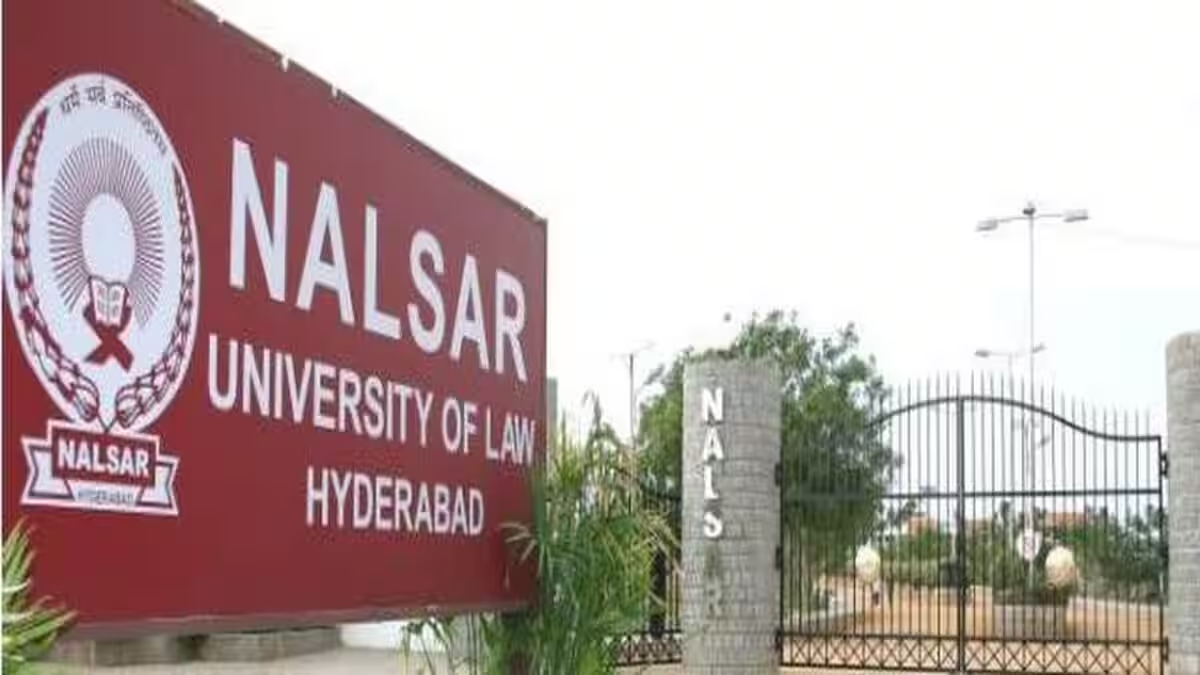
Students at NALSAR University of Law in Hyderabad have voiced strong opposition to the decision to invite Chief Justice of India Surya Kant as the chief guest for their upcoming convocation ceremony. The protest stems from the students’ concerns about the Chief Justice’s conduct and comments during recent legal proceedings related to the NEET protests at Jantar Mantar.
The outgoing batch of law students formally requested the university administration to reconsider the tradition of inviting the sitting Chief Justice to the convocation. As of now, the university has not made any official statement or decision regarding the issue.
Understanding the Controversy Around the Convocation Guest
The NEET protests, which involved widespread demonstrations against the National Eligibility cum Entrance Test, drew significant attention across India. During these protests, allegations of police brutality surfaced, prompting legal scrutiny. Chief Justice Surya Kant presided over a bench that declined to initiate suo motu proceedings against the police for their alleged excesses during the protests.
Many students at NALSAR viewed this judicial decision as dismissive of serious concerns raised by the protesters. This perception has fueled their discomfort with having the Chief Justice as the convocation’s chief guest, as they feel it conflicts with the university’s values of justice, constitutional rights, and reasoned engagement with grievances.
Key Points of Student Opposition
- By July 25, approximately 380 students from various batches had joined the protest against inviting CJI Surya Kant.
- The protest began gaining momentum after July 20, when NALSAR showed solidarity with NEET protesters and activist Sonam Wangchuk.
- Students expressed that the convocation should symbolize the university’s commitment to upholding constitutional rights and justice.
- The letter from the students emphasized that receiving degrees from a dignitary perceived as dismissive of police brutality allegations contradicts the principles taught at NALSAR.
- The university has yet to announce any decision on the convocation guest or the event’s scheduling.
Why This Debate Matters to NALSAR and Its Students
The convocation ceremony is a significant event symbolizing academic achievement and institutional values. For law students, the choice of chief guest carries symbolic weight, reflecting the university’s stance on justice and legal integrity.
The students’ protest highlights a broader conversation about the role of judiciary figures in public events, especially when their recent actions or rulings are seen as controversial. It also underscores the importance students place on aligning ceremonial traditions with the ethical standards they have been taught.
Moreover, the timing of the convocation is uncertain, as it may coincide with mid-semester exams for some students, adding another layer of complexity to the planning of the event.
Frequently Asked Questions
Q: Why are NALSAR students opposing Chief Justice Surya Kant as the convocation guest?
A: Students are concerned about the Chief Justice’s remarks and judicial decisions related to the NEET protests, particularly his bench’s refusal to investigate alleged police brutality during the demonstrations.
Q: Has NALSAR University made any official decision regarding the convocation guest?
A: As of now, the university has not released any official statement or decision about the invitation of the Chief Justice or the convocation schedule.
Q: How many students have joined the protest against inviting the Chief Justice?
A: Around 380 students from different law batches have expressed their opposition to having CJI Surya Kant as the convocation’s chief guest.