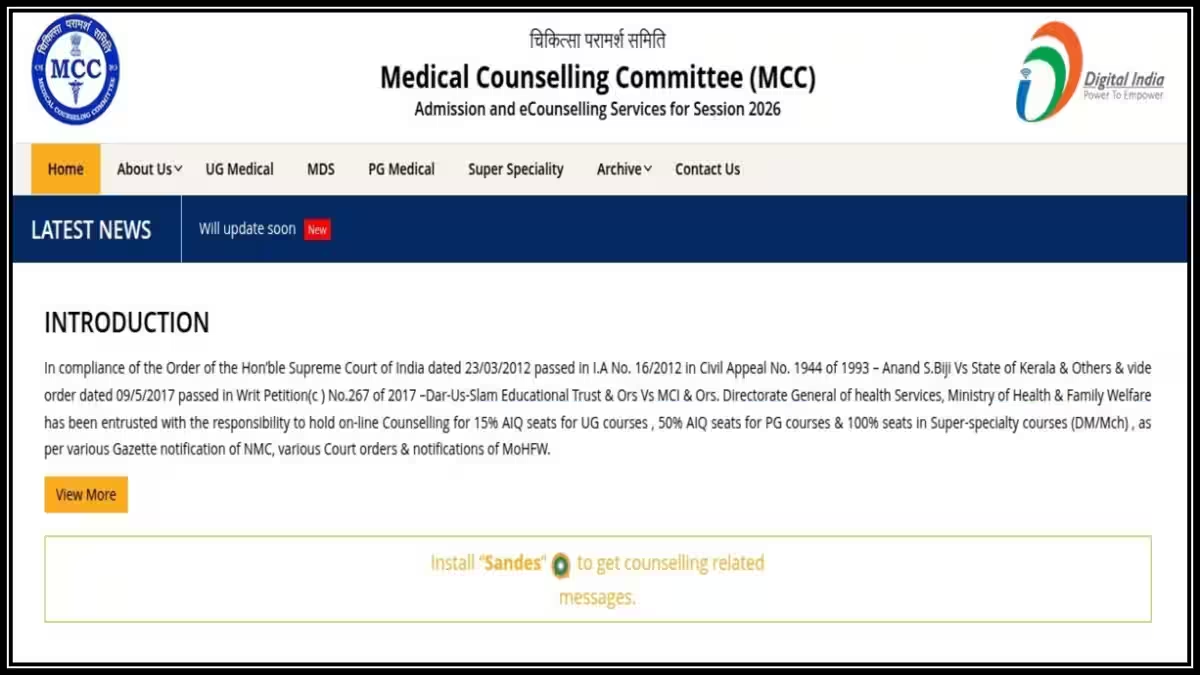
The Medical Counselling Committee (MCC) is set to announce the counselling schedule for the National Eligibility-cum-Entrance Test Undergraduate (NEET UG) 2026. This process will guide the admission of approximately 11.21 lakh candidates seeking MBBS and other undergraduate medical courses across India. The MCC has implemented new rules aimed at making the counselling process more transparent and convenient for students.
Understanding NEET Counselling and Its Scope
NEET UG counselling is the centralized process through which medical aspirants are allocated seats in various government and private medical colleges across India. The MCC manages counselling for the 15% All India Quota seats, central and deemed universities, AIIMS, JIPMER, ESIC institutions, and the Armed Forces Medical College (AFMC). Meanwhile, the remaining 85% of seats in state government colleges and most private institutions are handled by respective state counselling authorities.
This year, the total number of MBBS seats available across government and private medical colleges is approximately 1.37 lakh. This includes 63,296 seats in government colleges and 73,643 in private institutions. The MCC has increased the seat count by adding 2,111 seats in government colleges and 7,800 in private colleges, reflecting efforts to accommodate the growing number of aspirants.
Key Changes in MCC Counselling Rules for 2026
- Candidates who opt for seat upgradation in subsequent rounds will no longer need to physically report to their allotted colleges during the upgrade process. This step will now be conducted entirely online.
- Physical reporting will only be required once candidates accept their final allotted seat after the counselling rounds conclude.
- Students wishing to resign from their allotted seats can complete the resignation process online through the MCC portal, eliminating the need for in-person visits.
- The MCC continues to uphold reservation policies, with 10% of seats reserved for the General-Economically Weaker Section (GEN-EWS), 15% for Scheduled Castes (SC), 7.5% for Scheduled Tribes (ST), 27% for Other Backward Classes in the Non-Creamy Layer (OBC-NCL), and 5% for Persons with Benchmark Disabilities (PwBD).
How These Changes Affect Medical Aspirants
The shift to online seat upgrades and resignations is expected to reduce logistical challenges and travel expenses for candidates, making the counselling process more accessible and less stressful. This digital approach also aims to speed up seat allocation and improve transparency by minimizing manual interventions.
With over 11 lakh candidates competing for roughly 1.37 lakh seats, the competition remains intense. The increased seat availability may ease some pressure, but aspirants must stay informed about counselling timelines and new procedures to avoid missing critical deadlines.
The reservation policy ensures representation from various social groups, supporting diversity in medical education. Additionally, the MCC’s efforts to streamline counselling align with broader goals to enhance fairness and efficiency in medical admissions across India.
Frequently Asked Questions
Q: When will the NEET 2026 counselling schedule be announced?
A: The Medical Counselling Committee will release the NEET 2026 counselling dates shortly, guiding candidates through the admission process.
Q: What is new in the MCC counselling process for 2026?
A: Candidates can now upgrade their seats and resign from allotted seats online without needing to report physically until the final seat acceptance.
Q: How many MBBS seats are available for NEET 2026 candidates?
A: There are approximately 1.37 lakh MBBS seats across government and private medical colleges, including recent additions to both sectors.