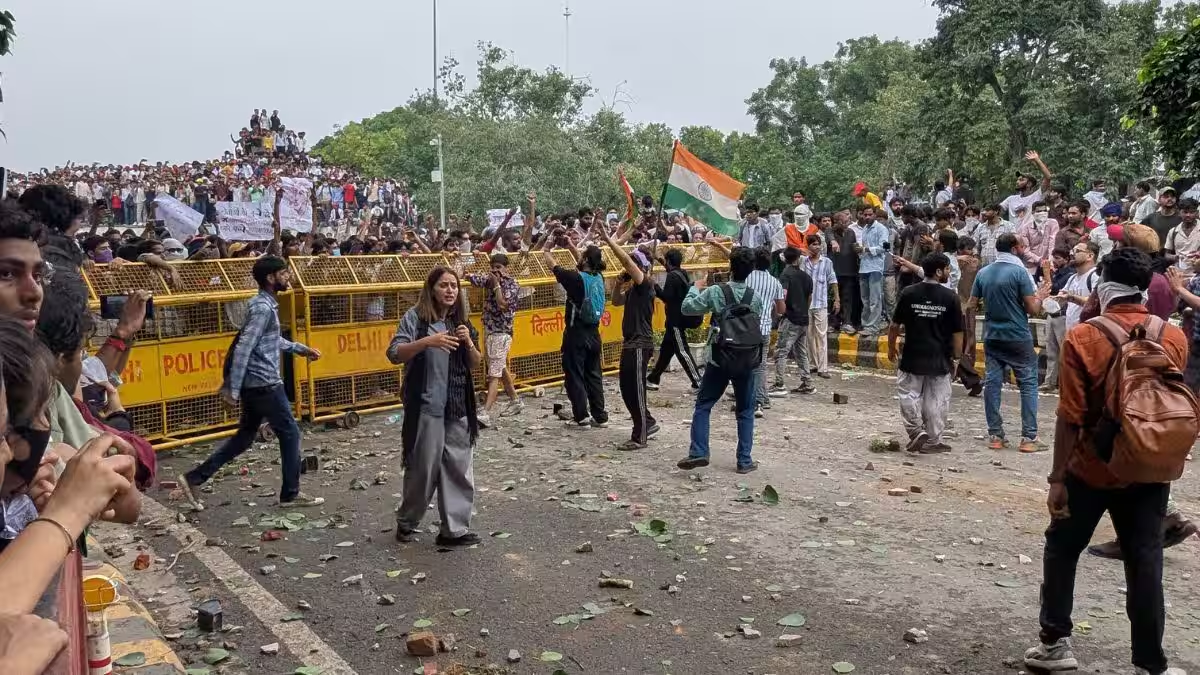
The Supreme Court of India has established a five-member committee led by former Supreme Court judge Justice R Subhash Reddy to investigate claims of police brutality and violence during recent student protests in Delhi. The panel will also examine allegations of violence by protesters against law enforcement officials. This decision follows clashes that occurred during demonstrations organized by the Cockroach Janta Party (CJP) in July 2023.
Understanding the NEET Protests and Their Context
The protests began on June 20, 2023, at Jantar Mantar in Delhi, primarily demanding the resignation of Union Education Minister Dharmendra Pradhan. The agitation quickly spread to multiple cities and culminated in a march towards Parliament on July 20, which resulted in violent confrontations between protesters and security forces. Police used lathis (batons) and teargas to disperse crowds attempting to approach Parliament, while protesters reportedly engaged in acts of violence against police personnel.
The CJP-led movement ended on July 25 after Pradhan resigned and the government agreed to several demands made by the protesters. However, the events raised serious concerns about the conduct of both police and demonstrators, prompting the Supreme Court to intervene and order a thorough inquiry.
Key Facts About the Supreme Court’s Inquiry Panel
- The committee is chaired by Justice R Subhash Reddy, a former Supreme Court judge.
- Other members include former Punjab and Haryana High Court Chief Justice Ravi Shankar Jha, former Delhi High Court Judge Shalinder Kaur, ex-CBI Director Rishi Kumar Shukla, and retired Meghalaya DGP L R Bishnoi.
- The panel’s mandate covers alleged excessive use of force by police, including the deployment of pellet guns, and violence by protesters.
- It will specifically prioritize investigating incidents of targeted violence, harassment, and molestation of female protesters.
- The committee is tasked with assessing damage to public and private property caused during the protests.
- It will consider the injuries and trauma experienced by police personnel and their families.
- The panel is required to submit periodic interim reports and conduct ongoing assessments rather than a one-time investigation.
- The Supreme Court has directed police and security agencies to preserve all relevant footage and communication records related to the protests and provide them to the committee.
- The government will provide the committee with necessary resources, including honoraria and secretarial support.
Why This Investigation Matters for Public Trust and Accountability
The formation of this high-powered enquiry committee reflects the judiciary’s commitment to ensuring accountability on both sides of the conflict. The protests highlighted deep tensions between student activists and law enforcement, with serious allegations of police excesses and protester violence. By appointing respected former judges and senior officials, the Supreme Court aims to conduct a balanced and comprehensive review.
Addressing the claims of harassment, especially against female protesters, is critical for safeguarding human rights and restoring public confidence. The inquiry’s findings could influence future law enforcement protocols during demonstrations and shape government responses to civil unrest. Moreover, recognizing the trauma faced by police personnel acknowledges the challenges security forces encounter while maintaining order.
Ultimately, this investigation seeks to provide a clear, impartial account of the events, recommend measures to prevent recurrence, and ensure justice for all affected parties.
Frequently Asked Questions
Q: Who is leading the investigation into the NEET protests?
A: The inquiry is headed by Justice R Subhash Reddy, a former Supreme Court judge, supported by a panel of former judges and senior officials.
Q: What are the main issues the committee will examine?
A: The committee will investigate allegations of excessive police force, including pellet gun use, violence by protesters, targeted harassment of female demonstrators, and damage to public property.
Q: How will the committee carry out its work?
A: The panel will conduct ongoing assessments, submit interim reports, review evidence such as CCTV footage and communication records, and accept submissions from involved parties, including anonymous complaints.