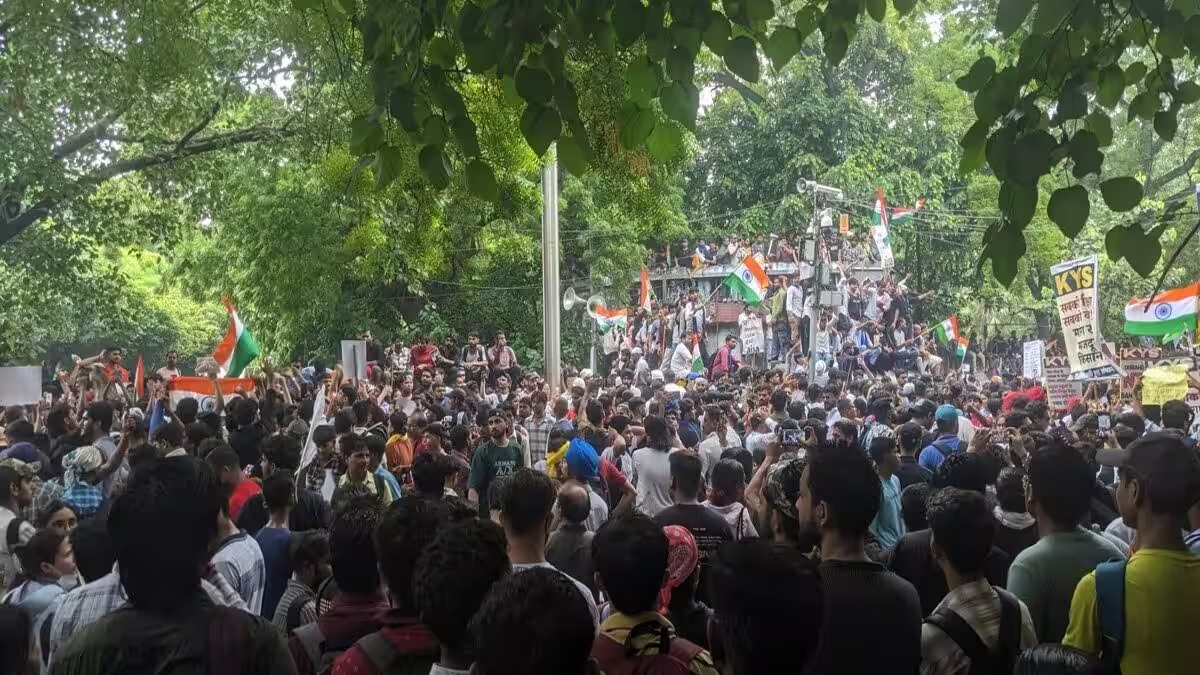
Protests around the 2026 National Eligibility cum Entrance Test (NEET) have brought to light significant challenges within India’s education system. Organised by the Cockroach Janata Party (CJP), these demonstrations have sparked debate over exam fairness, accountability, and the broader pressures faced by students and teachers nationwide.
These protests are not just about one exam but reflect a larger concern about how education in India has evolved over decades, often pushing students into relentless competition rather than fostering holistic growth.
How India’s Education System Shapes Student Experience
Since gaining independence in 1947, India has seen a variety of school education models, including the Central Board of Secondary Education (CBSE), state boards, Montessori, and Waldorf-inspired schools. Despite these diverse options, many students find themselves trapped in a cycle of intense academic competition, often described as a “rat race.” This environment can undermine the broader goals of education, which include personal development, creativity, and social skills.
Teachers, as frontline educators, bear much of the strain. Many face excessive workloads and long hours, often without commensurate pay or support. This imbalance affects their ability to maintain a healthy work-life balance and can diminish the quality of education delivered.
Key Facts About Education Challenges in India
- A recent NITI Aayog report highlights that while some states have improved student-teacher ratios, others still have over 200,000 vacant teaching positions.
- At the higher secondary level, some states report pupil-to-teacher ratios as high as 37:1, exceeding the Right to Education Act’s recommended 23:1 ratio.
- India allocates just 4.6% of its Gross Domestic Product (GDP) to school education, which limits infrastructure development, teacher salaries, and overall educational quality.
- According to the 2023-24 All-India Survey of Higher Education, 98 universities offer medical education, but only 7.7% are exclusively medical institutions.
- In medical undergraduate programs, about 21.3 lakh students enrolled, with 3.8 lakh graduating; approximately 59.6% of these graduates are female.
- Studies show that even among high NEET scorers, only about one-third pass their first-year MBBS exams, indicating challenges beyond entrance exams.
Why the NEET Protests Reflect a Deeper Educational Crisis
The NEET protests expose the immense pressure students face after more than a decade of schooling focused on securing a spot in professional courses. Many students and families see these exams as make-or-break moments, leading to stress, anxiety, and sometimes despair.
For those who do not succeed, options can be limited. Some take gap years to prepare again, while others may feel lost or forced into paths chosen by family expectations. This narrow focus on exam results often overlooks alternative career routes and personal interests.
The protests also highlight systemic issues such as inadequate funding, teacher shortages, and a lack of accountability at multiple levels—from government bodies to educational institutions. Addressing these problems requires cooperation among policymakers, educators, and communities to create a more balanced and inclusive education system.
Frequently Asked Questions
Q: What is NEET and why is it important?
A: NEET is the National Eligibility cum Entrance Test, a national-level exam in India for admission to undergraduate medical courses. It is considered a critical gateway for students aspiring to become doctors.
Q: Why are students protesting NEET 2026?
A: Students are protesting due to concerns about exam fairness, the pressure of intense competition, and broader issues in the education system such as teacher shortages and inadequate support.
Q: How does the teacher shortage affect education quality?
A: Teacher shortages lead to high student-to-teacher ratios, overworked educators, and reduced individual attention for students, which can negatively impact learning outcomes.