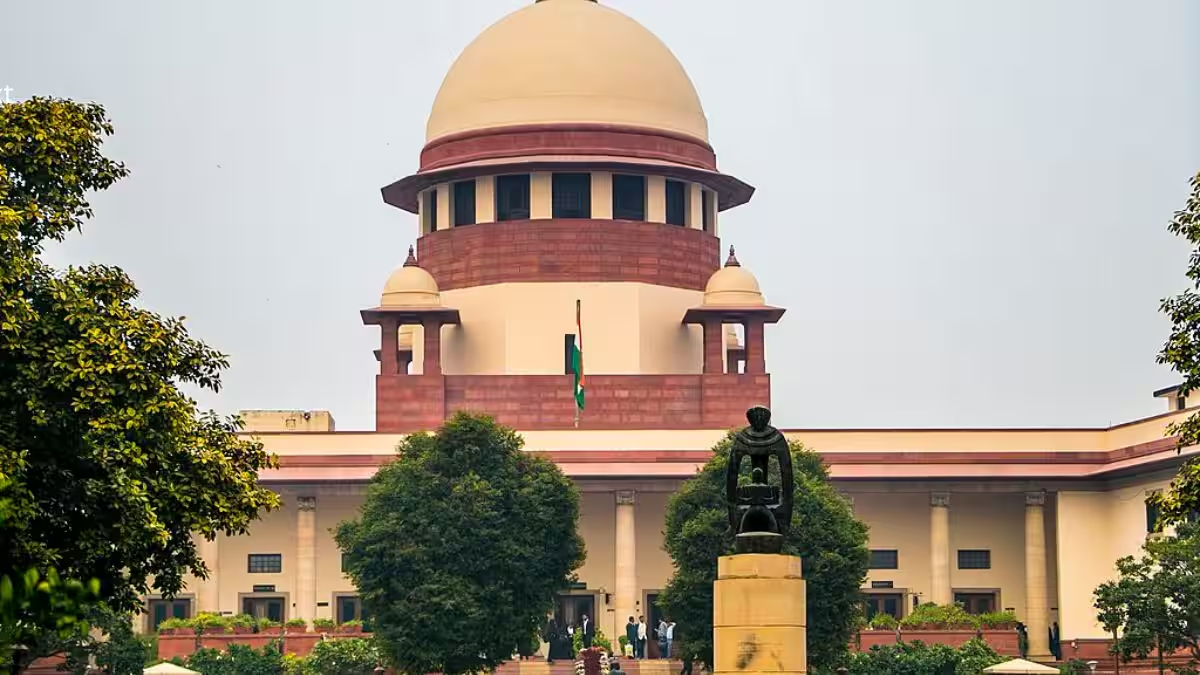
The Supreme Court of India has scheduled a hearing for August 3 to address multiple petitions connected to the recent protests against the NEET examination paper leaks. These petitions include complaints about the use of pellet guns by law enforcement and the detention of a volunteer who provided food to protesters.
The protests, led by the Cockroach Janata Party (CJP), erupted following revelations of widespread paper leaks that called into question the integrity of the NEET exam, a critical test for medical college admissions. The demonstrations have drawn significant attention due to clashes between protesters and police forces, as well as allegations of excessive force.
Background on NEET Protests and Police Response
The NEET exam is a national-level test that determines admission to medical colleges across India. In 2026, reports emerged of paper leaks that undermined confidence in the exam's fairness. In response, the CJP organized protests, including a major march called 'Sansad Chalo' on July 20 in New Delhi, aiming to pressure the government for accountability and reforms.
During the protests, security forces, including the Rapid Action Force (RAF) and Delhi Police, were deployed to manage the crowds. The authorities used tear gas, lathi charges (baton charges), and pellet guns to disperse demonstrators. These measures sparked controversy, with several protesters claiming they were injured despite peaceful behavior.
Details of Petitions and Allegations
- Yashovardhan Azad, Prashant Kumar, and Sheikh Irshad Mansoori filed a petition seeking a ban on the use of metallic kinetic projectiles, such as pellets fired from pump-action rifles or projectile action guns, for crowd control.
- Prashant Kumar, an artist aged 25, said he was injured by pellet firing during the Sansad Chalo march despite not provoking the police.
- Sheikh Irshad Mansoori, 26, reported similar pellet injuries while at Connaught Place on the same day after completing personal errands.
- The petitioners described how police and RAF personnel fired tear gas and used lathi charges to push protesters toward the Inner Circle of Connaught Place.
- Another petition was filed by Junaid Malik, a volunteer who provided food to protesters. Malik alleges he was illegally detained by Delhi Police around midnight on July 24, after receiving medical treatment.
- Malik claims he was confined in a police vehicle for five to six hours, during which he faced intimidation and had his phone forcibly searched. He was questioned about the funding sources for the food supplied to protesters and was reportedly blindfolded and taken to Mussoorie.
Why the Supreme Court Hearing Matters
The upcoming hearing will address critical questions about the balance between maintaining public order and protecting citizens' rights during protests. The use of pellet guns has been widely criticized for causing serious injuries, raising concerns about law enforcement tactics in crowd control.
The petitions also highlight issues of alleged illegal detention and intimidation of volunteers supporting peaceful demonstrations. These cases could set important legal precedents regarding police conduct and accountability in managing protests.
The NEET protests have already led to significant political consequences, including the resignation of Union Education Minister Dharmendra Pradhan. The government has agreed to compensate families of those who died during the unrest and promised not to file FIRs against CJP protesters.
Frequently Asked Questions
Q: What triggered the NEET protests in 2026?
A: The protests began after widespread leaks of the NEET exam papers, which many felt compromised the fairness of the medical entrance exam.
Q: Who are the petitioners asking the Supreme Court to act against?
A: The petitioners seek to ban the use of pellet guns and address alleged police misconduct, including illegal detention and intimidation of protesters and volunteers.
Q: What outcomes could result from the Supreme Court hearing?
A: The court could issue directives on the use of force during protests, ensure protection of protesters' rights, and hold law enforcement accountable for any violations.