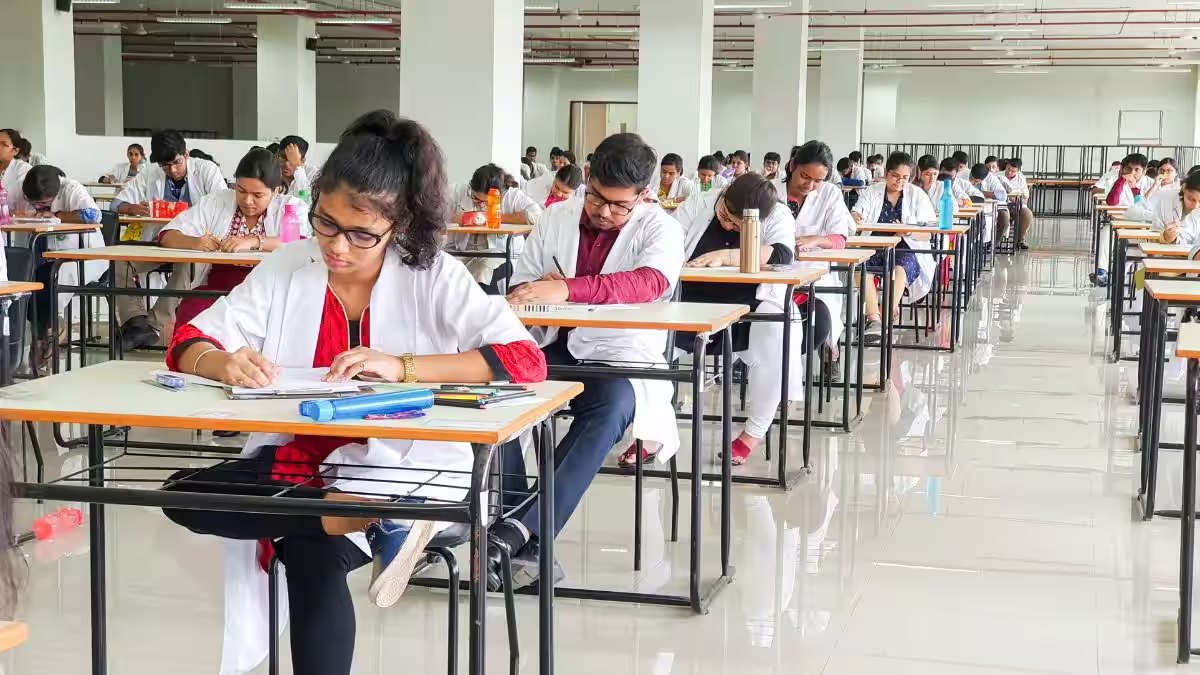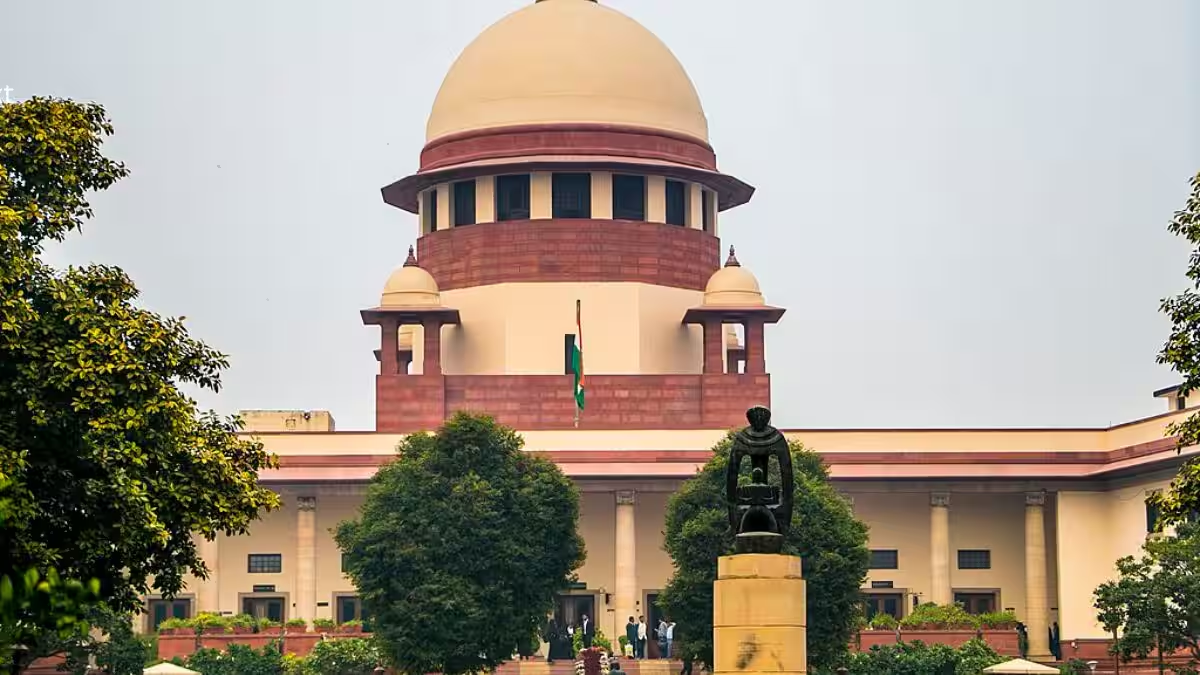
The Supreme Court is set to review the Centre's affidavit outlining the security measures implemented to protect the National Eligibility cum Entrance Test (NEET) question papers. This development comes as the government seeks to assure the court of the stringent protocols followed from the printing stage to the distribution of exam papers to students. Solicitor General Tushar Mehta informed the bench on Monday that the affidavit explaining the process would be filed soon, with hearings scheduled for later in the week.
Understanding NEET and Its Security Challenges
NEET is the primary medical entrance examination in India, determining admissions to undergraduate medical courses across the country. Given its high stakes, the exam has faced repeated issues with question paper leaks, undermining its credibility and fairness. These leaks have prompted widespread concern among students, parents, and educational authorities, leading to calls for enhanced security measures.
In response, the government has taken several steps to strengthen the examination's integrity. A high-level committee, led by technology expert Nandan Nilekani, was established to explore innovative solutions, including the possibility of conducting NEET online. The committee also includes prominent figures such as former ISRO chairman S Somanath, ex-Intelligence Bureau director Tapan Deka, IIT Chennai Director V Kamakoti, former education secretary Anita Karwal, and logistics expert Amrit Lal Meena.
Key Security Measures and Government Actions
- The Centre plans to submit a detailed affidavit explaining the entire security protocol from question paper printing to distribution.
- A high-powered task force is exploring technological and procedural reforms to prevent leaks, including transitioning to an online exam format.
- The government has committed to going beyond the recommendations of the Radhakrishnan Committee, which was initially set up to suggest reforms after previous leaks.
- Steps include implementing robust data security protocols and restructuring the National Testing Agency (NTA), which conducts NEET, to enhance transparency and accountability.
- The Supreme Court has emphasized the need for actual accountability to prevent recurring issues and has indicated close monitoring of the government's efforts.
- Following a major paper leak in May 2024, the NTA canceled the compromised exam and conducted a retest in June, while investigations by the Central Bureau of Investigation (CBI) continue.
Why This Court Review Matters for NEET Aspirants
The Supreme Court's scrutiny of the Centre's affidavit signals a critical step toward restoring confidence in NEET's examination process. For millions of students aspiring to enter medical fields, the integrity of the exam is paramount. Ensuring that question papers remain secure protects not only the fairness of admissions but also the future careers of these candidates.
The involvement of high-profile experts and the government's commitment to surpass previous reform recommendations suggest a serious approach to tackling the issue. The court's active role in overseeing these measures also adds a layer of accountability, which could lead to more transparent and reliable examination procedures.
As NEET moves toward potential online formats and enhanced security protocols, students and educators alike will be watching closely to see how these changes unfold and whether they effectively eliminate the risk of leaks and malpractice.
Frequently Asked Questions
Q: What prompted the Supreme Court to seek details on NEET question paper security?
A: Repeated incidents of question paper leaks in NEET examinations raised concerns about exam integrity, prompting the court to request detailed information on security measures from the Centre.
Q: Who is involved in the committee addressing NEET security reforms?
A: The committee is led by Nandan Nilekani and includes experts like former ISRO chairman S Somanath, ex-Intelligence Bureau director Tapan Deka, IIT Chennai Director V Kamakoti, former education secretary Anita Karwal, and logistics expert Amrit Lal Meena.
Q: What steps has the government taken to prevent future question paper leaks?
A: The government has canceled compromised exams, conducted retests, formed expert committees, planned to implement online exams, and is working on overhauling the National Testing Agency's processes to enhance transparency and security.