Six candidates who appeared for the NEET-UG 2026 examination have filed a petition in the Supreme Court, claiming that the OMR sheets released by the National Testing Agency (NTA) do not match the answers they marked during the exam. These candidates, each scoring above 600 marks, raised concerns about discrepancies that could affect their results and future counselling process.
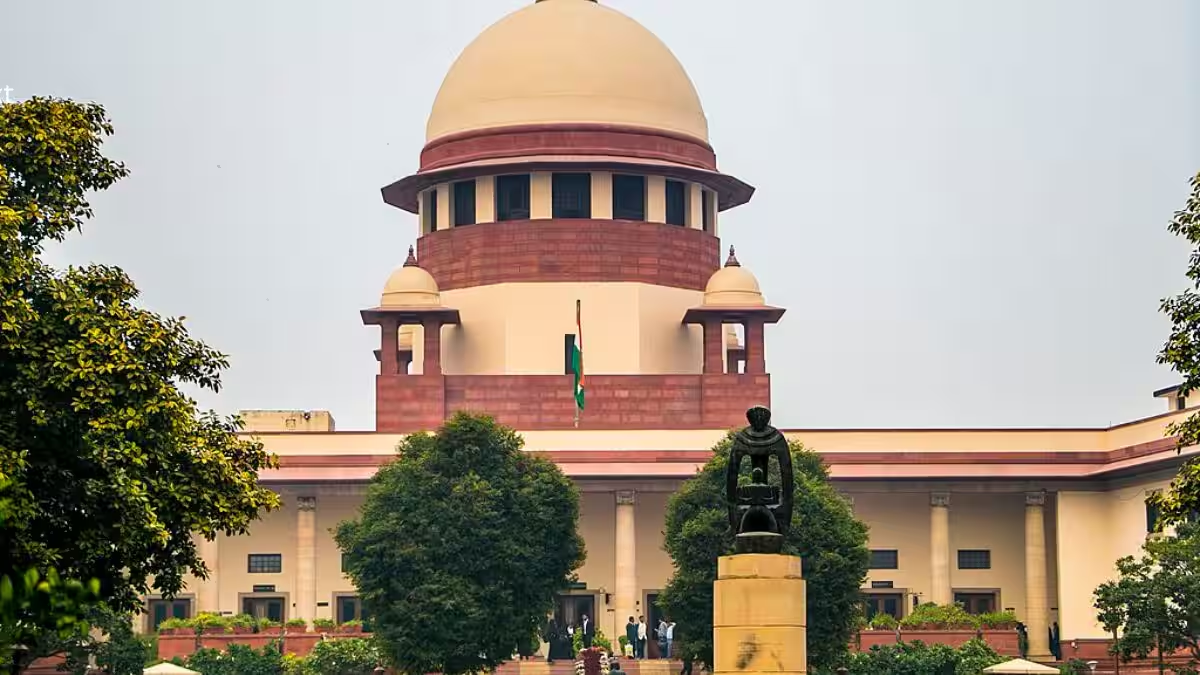
The petition was presented before Chief Justice of India Surya Kant and a bench including Justices Joymalya Bagchi and V Mohana. The candidates requested an expedited hearing ahead of the counselling phase to address the issue promptly.
Understanding NEET-UG and Its Importance
The National Eligibility cum Entrance Test for Undergraduates (NEET-UG) is a highly competitive exam in India for admission into medical and dental colleges. Conducted by the National Testing Agency, it serves as the gateway for students aspiring to pursue MBBS and BDS courses nationwide. The exam's integrity is crucial since it determines the future of thousands of medical aspirants each year.
In 2026, the NEET-UG exam faced significant challenges. The initial exam held on May 3 was cancelled due to a paper leak, leading to a re-examination on June 21. This disruption heightened scrutiny on the exam process, including the handling of answer sheets and result declaration.
Key Details About the Petition and Allegations
- Six candidates scored more than 600 and 650 marks respectively in the NEET-UG 2026 exam.
- They allege that the OMR sheets uploaded by the NTA differ from the answers they actually marked during the exam.
- The candidates attempted to resolve the issue by emailing the NTA and visiting its office but did not receive any response.
- The petition was mentioned before the Supreme Court bench, which agreed to list the matter for hearing.
- The timing of the petition is critical as it comes just before the counselling process, which allocates medical seats based on NEET scores.
Why This Case Matters for Medical Aspirants
The accuracy of OMR sheets is fundamental to ensuring fair evaluation in competitive exams like NEET. Any discrepancy can lead to incorrect scores, impacting candidates’ chances of admission into medical colleges. For students who have invested years preparing for this exam, such errors could mean losing out on coveted seats.
This case also highlights the challenges faced by examination authorities in maintaining transparency and accountability, especially after the disruption caused by the paper leak earlier in the year. The Supreme Court’s intervention could set a precedent for how discrepancies are handled in future exams, potentially leading to stricter oversight and improved grievance redressal mechanisms.
For the candidates involved, a swift resolution is essential to avoid delays in the counselling process and to ensure their rightful scores are recognized. The outcome of this petition may influence how exam authorities communicate and verify answer sheets with candidates going forward.
Frequently Asked Questions
Q: What is NEET-UG and why is it important?
A: NEET-UG is the National Eligibility cum Entrance Test for undergraduate medical courses in India. It is the primary exam for admission to MBBS and BDS programs across the country.
Q: What are OMR sheets in the context of NEET?
A: OMR (Optical Mark Recognition) sheets are answer sheets where candidates mark their responses during the exam. These sheets are scanned and evaluated to calculate scores.
Q: What happens if there is a discrepancy in OMR sheets?
A: Discrepancies can lead to incorrect scoring, affecting admission chances. Candidates can raise complaints with the exam authority or seek legal recourse if unresolved.