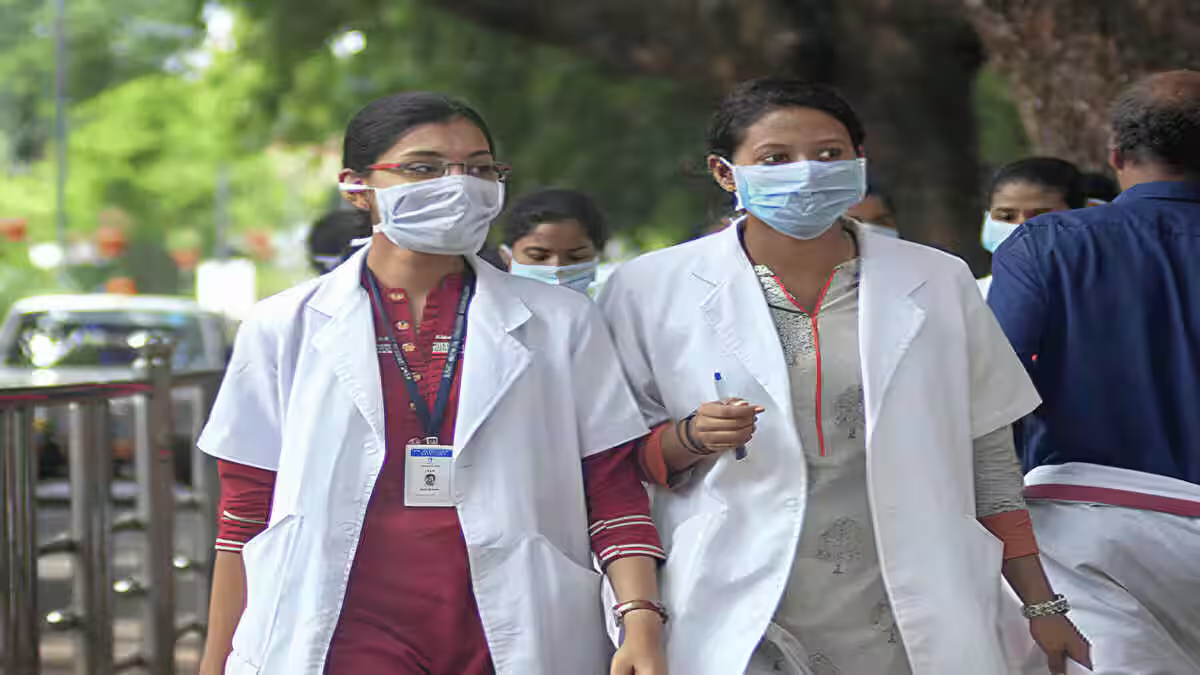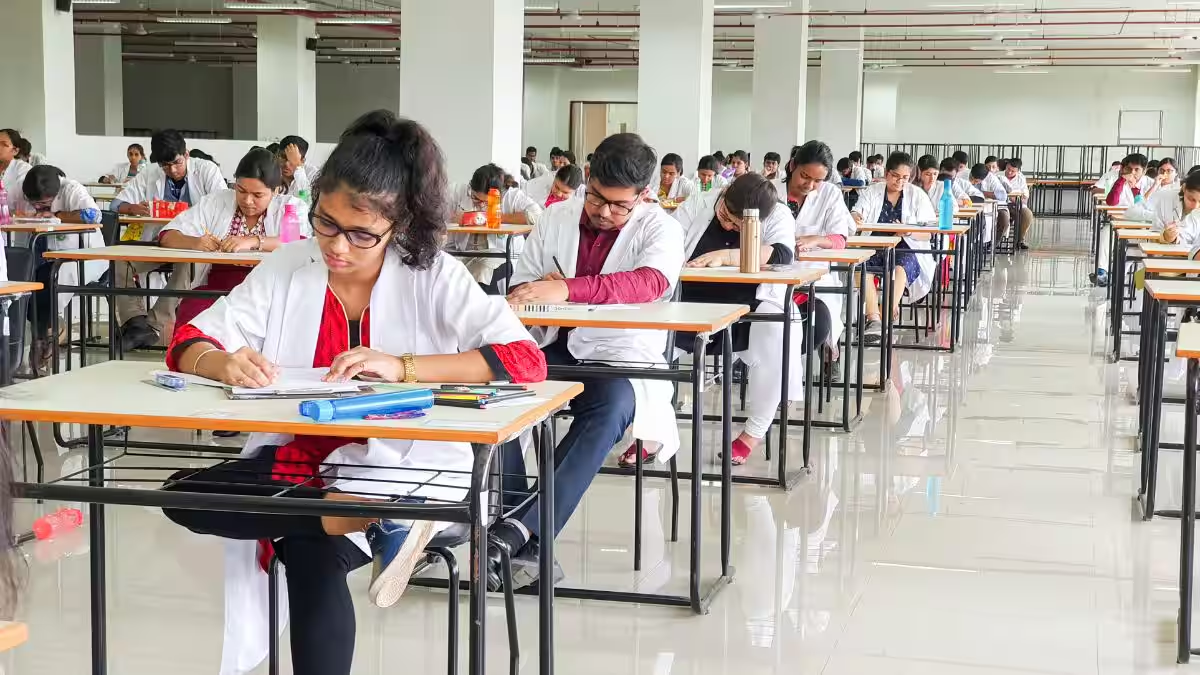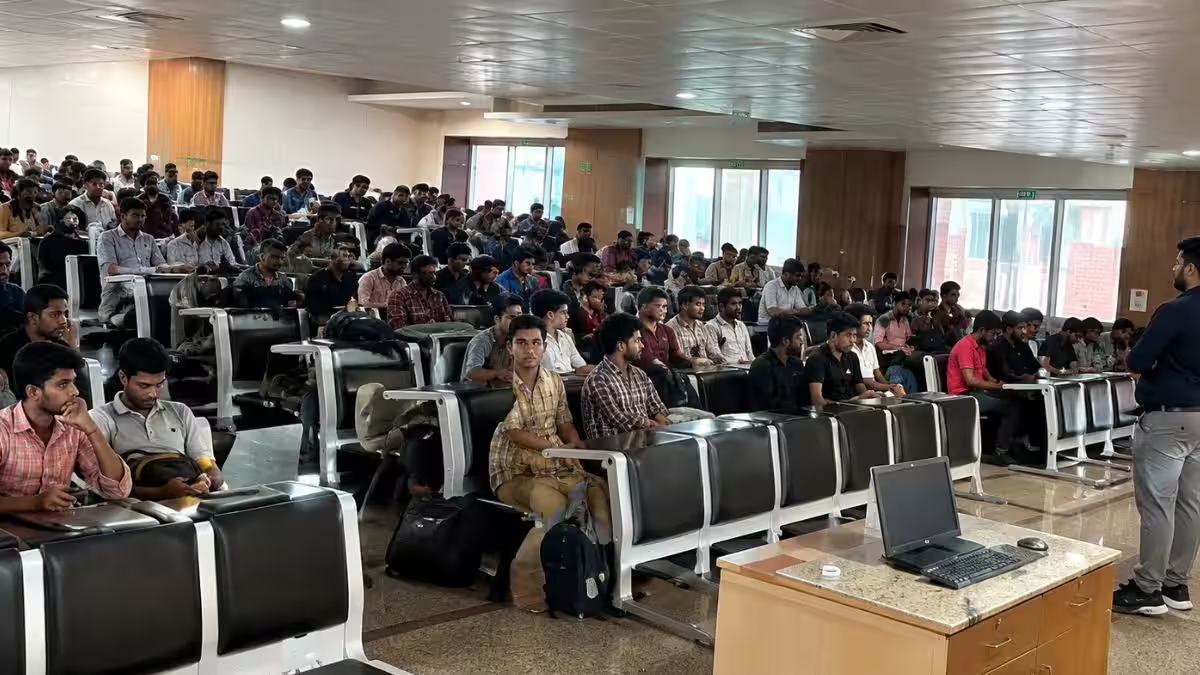
The National Institutes of Technology (NITs) have announced plans to enable up to 5% of their undergraduate students to spend a semester studying at another NIT or at the Indian Institute of Engineering Science and Technology (IIEST) Shibpur. This initiative aims to promote academic mobility and broaden learning experiences across these premier engineering institutions. To support this, the Malaviya National Institute of Technology (MNIT) Jaipur is developing a dedicated student mobility portal.
In addition to student exchanges, the NITs are moving towards offering minor degrees and facilitating credit sharing with other centrally-funded technical institutions (CFTIs). These changes come as part of a broader effort to modernize engineering education and align it with emerging industry demands.
Expanding Student Mobility and Flexible Learning Paths
The NIT Science and Engineering Research (NITSER) Council, which governs the NIT network including IIEST Shibpur and the Indian Institutes of Science Education and Research (IISERs), recently met for the first time in seven years to approve several key reforms. Among them is the adoption of a multiple-entry and multiple-exit framework for undergraduate programs. This system allows students to leave their studies after one year with a certificate, after two years with a diploma, or complete a full degree after three or four years. Students can also temporarily pause their studies for reasons such as research, entrepreneurship, employment, or health, and rejoin later.
NIT Patna’s director, PK Jain, highlighted the uneven implementation of these flexible policies across NITs and urged for uniform adoption. The council set maximum time limits for program completion: seven years for undergraduates, five years for postgraduates, and eight years for PhD candidates. Bridge courses will be introduced to help students transition smoothly between different stages of their education.
Minor Degrees, Credit Sharing, and AI Integration
The council directed NITs to introduce minor degree programs in advanced and emerging fields, enabling students to diversify their skill sets. Credit sharing between NITs and other CFTIs will be facilitated through the Academic Bank of Credits, allowing students to transfer credits more easily despite differing academic calendars.
Recognizing the growing importance of artificial intelligence (AI), the council mandated that all NITs and IIEST establish AI Task Forces. These groups will oversee the integration of AI and machine learning into curricula and teaching methods, ensuring students are prepared for future technological challenges.
Boosting Innovation, Startups, and Research Parks
The council also focused on strengthening innovation ecosystems within the NITs. Currently, 29 incubation centers operate across 19 NITs, but nearly 400 startups are concentrated in just five institutes: NIT Surathkal, NIT Rourkela, NIT Tiruchirappalli, NIT Calicut, and MNIT Jaipur. To balance this, the council approved NIT Surathkal’s Innovation and Entrepreneurship Policy as a model for all NITs, with flexibility for individual institutes to adapt it.
Plans include appointing a chief mentor to oversee the development of research parks and incubation centers, encouraging each NIT and IIEST to engage mentors from successful entrepreneurs and alumni. Thirteen NITs without incubation centers are expected to establish them within a year, and at least ten institutions will begin work on research parks immediately.
NIT Surathkal will coordinate with government initiatives like Startup India and agencies such as the Small Industries Development Bank of India (SIDBI) to enhance funding and industry connections. An annual pitching conclave will be organized to help startups present ideas to potential investors.
Frequently Asked Questions
Q: How many students can participate in the exchange program?
A: Up to 5% of undergraduate students at each NIT can study a semester at another NIT or IIEST Shibpur.
Q: What is the multiple-entry and multiple-exit framework?
A: It allows students to leave their program early with a certificate or diploma, pause their studies for valid reasons, and rejoin later, providing greater flexibility in education.
Q: How will credit sharing work between NITs and other technical institutes?
A: Credits earned at one institute can be transferred and counted towards degrees at another through the Academic Bank of Credits, facilitating smoother academic mobility.