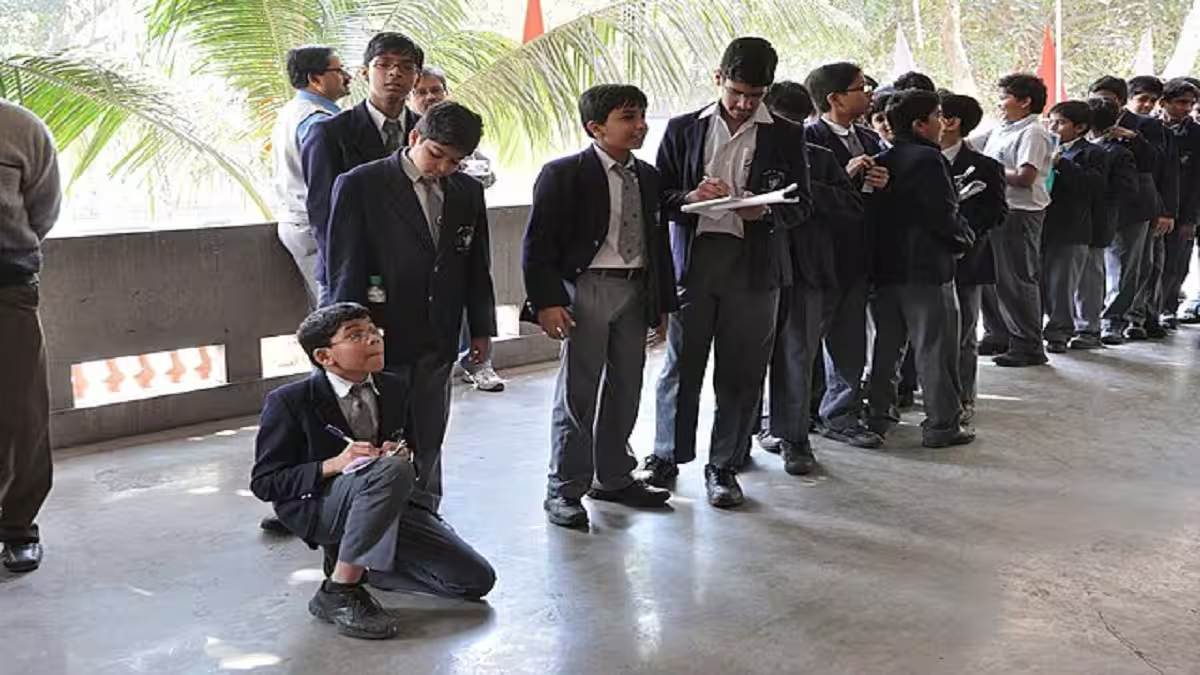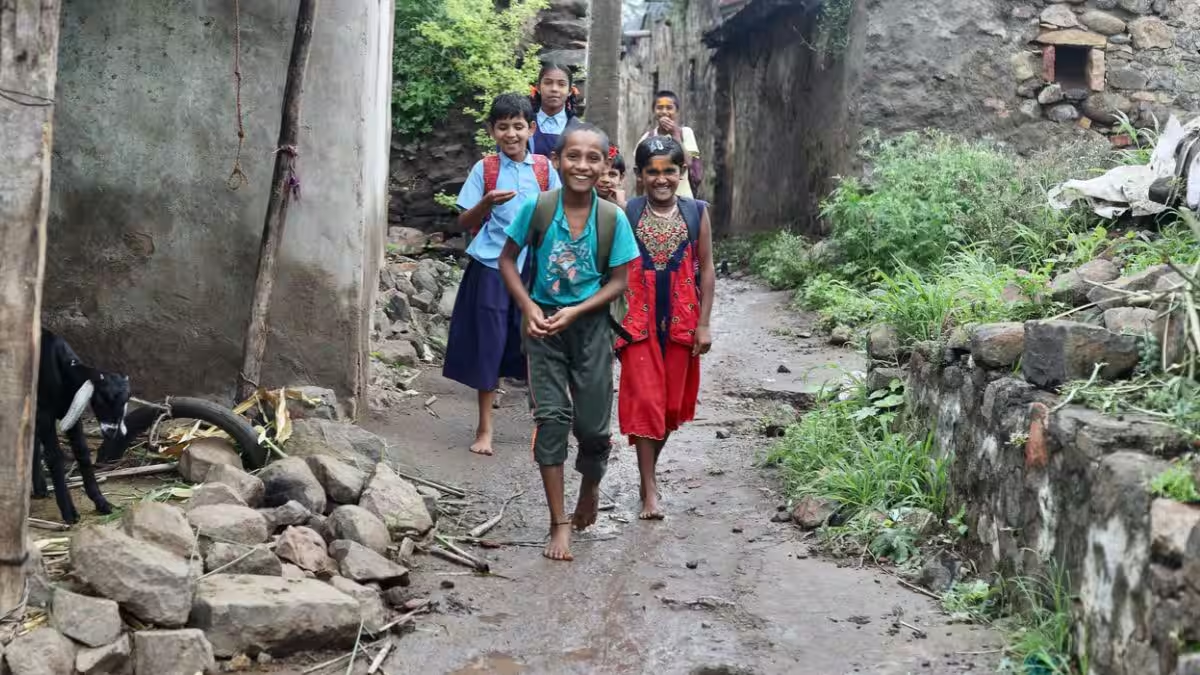
The National Statistics Office (NSO) conducted the first National Household Travel Survey (NHTS) between July 2025 and June 2026, revealing that nearly 60.6% of children aged 6-14 in India travel at least 1 kilometre to attend school. Among these children, almost half walk to school, especially in rural areas. This data is important in the context of the Right to Education (RTE) Act, which mandates a primary school within 1 km of every habitation.
- Nearly 50% of children aged 6-14 walk at least 1 km to school.
- 60.6% of children travel at least 1 km to educational institutions.
- Urban children travel slightly farther but walk less than rural children.
- Average monthly travel cost per student is Rs 443, higher in urban areas.
- Most students reach school within 30 minutes despite distances.
How far do children travel to school in India?
The survey found that 60.6% of children aged 6-14 travel at least 1 km to reach their educational institutions. The proportion is higher in urban areas (64.4%) compared to rural areas (59%). However, the survey does not specify the distance to the nearest school or differentiate between primary and upper primary students.
What modes of transport do students use?
Among children traveling at least 1 km, 47.3% walk, 28.4% take a bus, and 11.9% cycle. Walking is more common in rural areas, with 40.5% of rural students walking compared to 29.6% in urban areas. Urban students rely more on motorized transport such as buses, auto-rickshaws, and two-wheelers.
| Mode of Transport | All India (%) | Rural (%) | Urban (%) |
|---|---|---|---|
| Walking | 37 | 40.5 | 29.6 |
| Bus | 29.5 | 27.5 | 33.7 |
| Bicycle | 15.8 | 18.9 | 9.1 |
| Auto-rickshaw | 10.5 | 8.7 | 14.4 |
| Two-wheeler | — | 4.4 | 11.5 |
What are the travel costs for students?
Indian households spend an average of Rs 443 per student each month on travel to and from educational institutions. Urban families spend nearly twice as much as rural households, with average monthly expenses of Rs 617 in urban areas and Rs 361 in rural areas. Male students spend slightly more on travel (Rs 460) compared to female students (Rs 423).
How long do students take to reach school?
Despite the distances, 87.6% of students reach their educational institutions within 30 minutes. The average travel time is 23 minutes in rural areas and 22 minutes in urban areas.
Do older students travel farther?
The survey shows that travel distances increase with age. About 77% of students aged 15-29 travel at least 1 km, compared to 60.6% of children aged 6-14. Among older students, 79.1% in rural areas and 73.3% in urban areas travel at least 1 km. Their modes of transport also differ, with 31% using buses, 22.2% walking, and 21.4% cycling.
When do students typically travel to and from school?
About 35.7% of students begin their journeys between 8 am and 9 am, with a slightly higher proportion in rural areas (36.2%). Return journeys vary, with 28.3% of rural students leaving school between 3 pm and 4 pm, compared to 21.5% of urban students.
Frequently Asked Questions
Q: Does the survey distinguish between primary and secondary school students?
A: No, the survey does not differentiate between primary and upper primary or higher education students.
Q: What is the significance of the 1 km distance mentioned in the survey?
A: The 1 km distance relates to the Right to Education Act, which requires a primary school to be located within 1 km of every habitation.
Q: How does travel mode differ between urban and rural students?
A: Rural students are more likely to walk, while urban students use more motorized transport such as buses and auto-rickshaws.