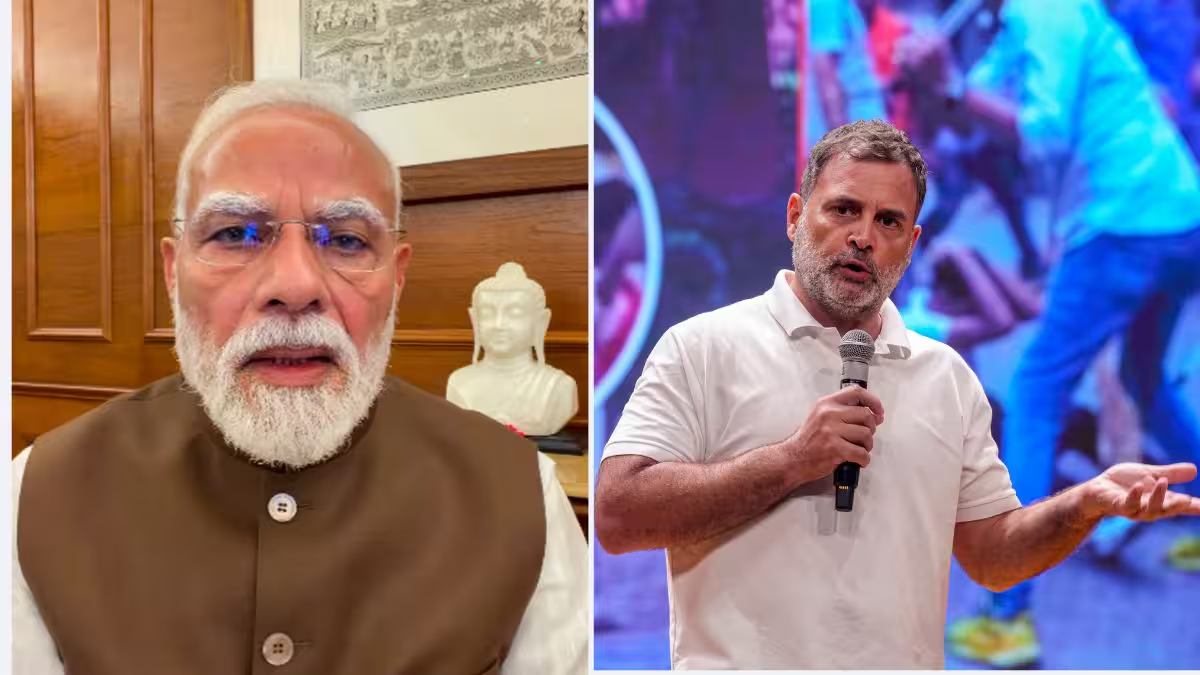
Prime Minister Narendra Modi addressed the recent protests at Delhi's Jantar Mantar, where he and his late mother were subjected to abusive language. Speaking on July 31, Modi called those responsible "misguided children" and emphasized forgiveness and guidance rather than punishment. His remarks came after weeks of student protests against irregularities in the National Eligibility cum Entrance Test (NEET).
Understanding the Jantar Mantar Protests
The protests began on June 20, led by the Cockroach Janta Party (CJP), a student group demanding action over alleged NEET exam irregularities. The agitation lasted 36 days, drawing significant attention nationwide. It culminated on July 25 with the resignation of Union Education Minister Dharmendra Pradhan and the government's acceptance of the protesters' demands, marking a rare victory for the student movement.
Jantar Mantar, a historic site in Delhi, has often been a venue for public demonstrations. This particular protest gained prominence due to its scale and the involvement of young students expressing frustration over the fairness of a critical medical entrance exam.
Key Points from PM Modi's Statement
- Modi acknowledged the pain caused by the abusive language directed at him and his late mother during the protests.
- He described the youths involved as "misguided children" who should be forgiven and guided rather than punished.
- Modi stressed the importance of embracing and educating the youth instead of resorting to legal action or public shaming.
- He used a metaphor, saying, "We don't disown our teeth even if they bite our tongue; both belong to us, just as our youth are our own."
- The Prime Minister appealed to society to accept this approach, emphasizing the responsibility to lead young people toward the right path.
- His message was shared via a late-night video on Instagram, reflecting a personal and direct communication style.
Political Reactions and Broader Implications
The Congress party responded critically to Modi's remarks, calling for an apology rather than forgiveness. Pawan Khera, Congress's media and publicity head, highlighted the public's demand for accountability, tweeting that the country was asking for an apology while Modi offered forgiveness.
This exchange underscores the political tensions surrounding the NEET protests and the government's handling of dissent. Modi's approach suggests a focus on reconciliation and youth engagement, while opposition voices demand acknowledgment of grievances and responsibility.
The protests and their resolution have broader implications for how student activism is managed in India, especially when it challenges government policies on education. Modi's call to guide rather than punish reflects an attempt to balance authority with empathy toward young protesters.
Frequently Asked Questions
Q: What sparked the protests at Jantar Mantar?
A: The protests began due to alleged irregularities in the NEET exam, which is a crucial medical entrance test in India. Students demanded transparency and fairness in the examination process.
Q: How did the government respond to the protests?
A: The government accepted the protesters' demands, leading to the resignation of Education Minister Dharmendra Pradhan and measures to address the concerns raised by the students.
Q: Why did PM Modi choose to forgive the protesters?
A: Modi viewed the youths as misguided and emphasized the need to guide and educate them rather than punish them, aiming to foster understanding and unity rather than deepen divisions.