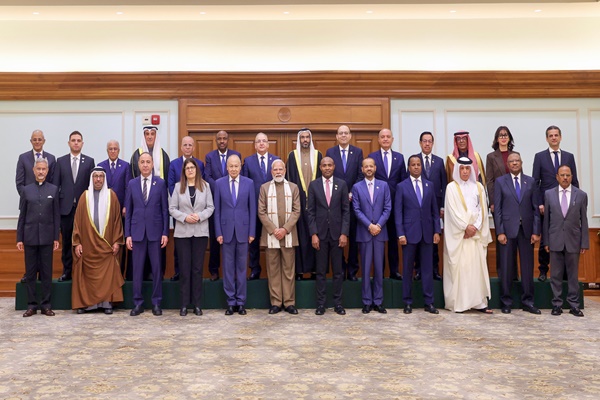
PM Modi Meets Arab Foreign Ministers in New Delhi, Calls for Deeper India–Arab Cooperation
India recently held a significant meeting with 22 Arab League countries. The event focused on improving cooperation in many areas and addressing regional issues. The meeting marked an important step in India’s relations with the Arab world.
5 min read155 views
On January 31, 2026, India hosted an important event called the second India-Arab Foreign Ministers' Meeting in the city of New Delhi. Many high-ranking officials from all 22 Arab League countries came together for this special gathering. The Arab League is a group of countries in the Middle East and North Africa that work together on regional issues. This meeting was very important because it was the first time the foreign ministers' gathering happened in India since 2016. The last meeting was held in Bahrain, another Arab country. Now, India was hosting once again, showing its desire to stay connected with Arab nations regularly.
The event was co-led by two countries: India and the United Arab Emirates. Both shared responsibility for guiding the discussions and making decisions during the meeting. This high-level cooperation shows how much the leaders value mutual friendship and cooperation.
Before this big meeting, there was a smaller meeting among officials. This took place on January 30, 2026. Its purpose was to prepare the agenda, decide what topics to discuss, and strengthen the cooperation among countries. These initial talks help make sure that everything runs smoothly during the main event.
Prime Minister Narendra Modi also took part in this important meeting. During his speech, he spoke about India's long history of relations with Arab nations. He explained that many people-to-people connections have existed for many years. These ties include family relationships, cultural exchanges, and trade relationships. Prime Minister Modi wanted everyone to remember how close India and Arab countries have been over many years.
He also talked about how India wants to grow its cooperation with Arab nations in many different areas. He highlighted trade, investment, energy, technology, and healthcare as key fields where countries can work together. India hopes that stronger cooperation will bring benefits to everyone involved. This means that both India and Arab nations can grow their economies, create jobs, and improve their citizens' lives.
Prime Minister Modi also spoke about supporting the people of Palestine, a region that has experienced ongoing conflicts. He welcomed peace efforts aiming to find a solution and achieve peace in Gaza, a troubled area. Supporting Palestine reflects India’s interest in regional stability and peace, which are very important for all countries in the Middle East.
The main goal of the meeting was to find new ways to work together more closely in trade, energy, and strategic areas. These are all critical because tensions in the Middle East have been rising. Many Arab countries depend heavily on energy imports, such as crude oil and liquefied natural gas, to power their economies. India is a big importer of these resources. Currently, trade between India and the Arab League countries is very large, exceeding 240 billion dollars each year. This shows how important economic ties are for both sides.
The Arab League has 22 member states, including some of the most influential countries in the region like Egypt, Saudi Arabia, and Morocco. As of January 2026, there was no confirmed news about whether Syria, another Arab country, would join the meeting. Syria’s participation was uncertain, possibly due to ongoing conflicts or political reasons. This uncertainty highlights some of the complex regional issues that influence cooperation.
Before the main meeting, there was a gathering of senior officials from all involved countries. Their role was to plan the agenda, discuss common interests, and prepare for the foreign ministers' meeting. Such meetings help build trust and ensure that everyone is on the same page.
India’s hosting of this event shows its effort to become a strong, dependable partner in the region. It’s part of India’s larger goal to build better relationships with Arab countries. India also wants to project an image of cooperation, stability, and progress. The event is not only about discussing current issues but also about creating a framework for future collaboration.
The event was led by India’s Foreign Minister, Subrahmanyam Jaishankar, and the UAE’s Deputy Prime Minister and Foreign Minister, Sheikh Abdullah bin Zayed Al Nahyan. Their partnership reflects the importance of strong India-UAE relations within the broader context of Arab-India cooperation. These leaders worked together to strengthen ties and promote common interests.
During the meeting, various topics were discussed, including trade, energy, and strategic partnerships. These topics are crucial because they impact regional stability and economic growth. The discussions aim to promote collaboration on regional challenges, including conflicts and economic development.
In recent years, India has become more active in engaging with Arab nations. This increased effort is aimed at promoting peace, stability, and economic growth in the region. India sees its relationships with Arab countries as vital for regional harmony and development.
The outcomes of this meeting are expected to influence future relations between India and Arab nations. They may also impact the broader situation in the Middle East. This shows the significance of such high-level meetings for regional and global stability.
By hosting this event, India demonstrates its ongoing commitment to building strong regional partnerships. It wants to play a role in promoting peace and progress in the Middle East. At the same time, India hopes to strengthen its own diplomatic and economic ties with Arab countries, opening new opportunities for collaborations in many fields.
Overall, this high-level meeting is a reflection of India’s ongoing efforts to foster cooperation and stability in the region. It signals India's determination to contribute positively to regional peace, development, and economic growth. The event underscores India’s role as an active and responsible partner in regional and global affairs.