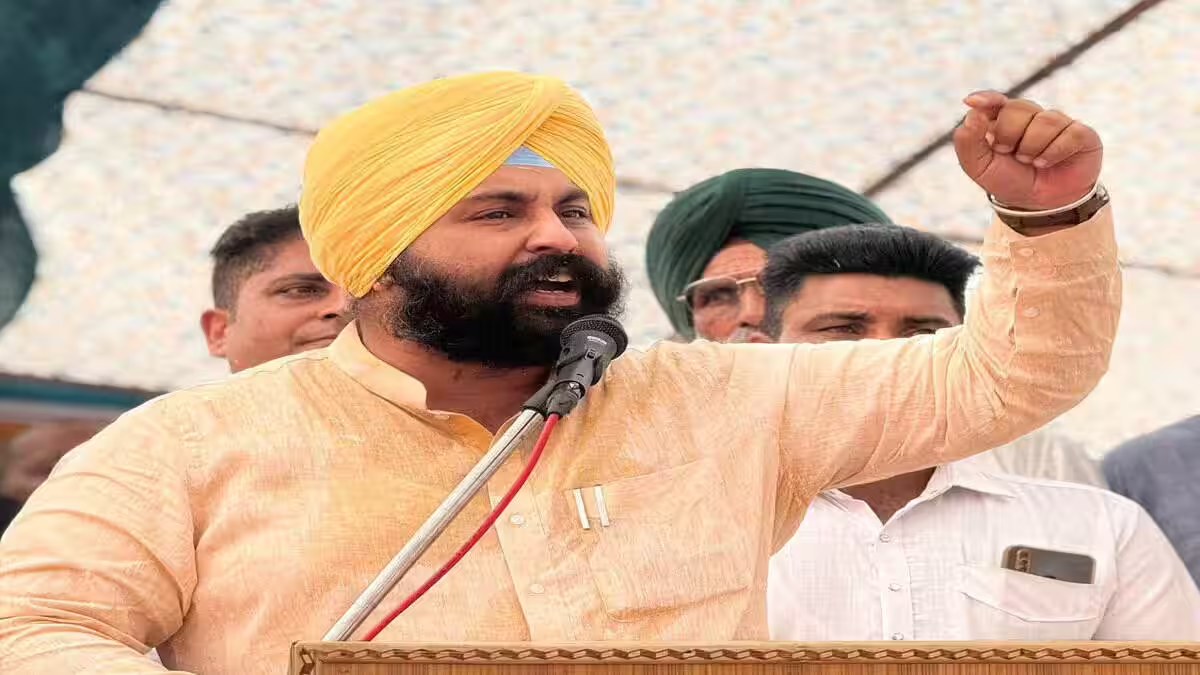
The Punjab government has announced a groundbreaking move to include Artificial Intelligence (AI) as a core subject for students from Class 1 through Class 12. Education Minister Harjot Singh Bains revealed that the Punjab School Education Board (PSEB) will roll out the AI curriculum in phases under the new 'Sarbat.AI' initiative, making Punjab the first state in India to adopt AI education at such an extensive level.
The launch event featured former Delhi Education Minister Manish Sisodia, alongside education experts and technology partners. Bains emphasized that this step marks a shift from Punjab’s historical leadership in the Green Revolution to becoming a pioneer in the AI Revolution, aiming to equip students with skills essential for the future.
Introducing AI Education Across All Grades
Artificial Intelligence is rapidly transforming industries worldwide, and Punjab’s decision to integrate it into school curricula reflects a commitment to future-proofing education. The curriculum is designed to foster innovation, ethical AI use, entrepreneurship, and responsible digital citizenship among students.
The AI syllabus has been developed after studying successful models from countries like Singapore, Finland, the UAE, and the United States. It aligns with the United Nations Educational, Scientific and Cultural Organization’s (UNESCO) Ethical AI Framework, ensuring that students learn about AI in a globally recognized ethical context.
Phased Rollout and Key Details
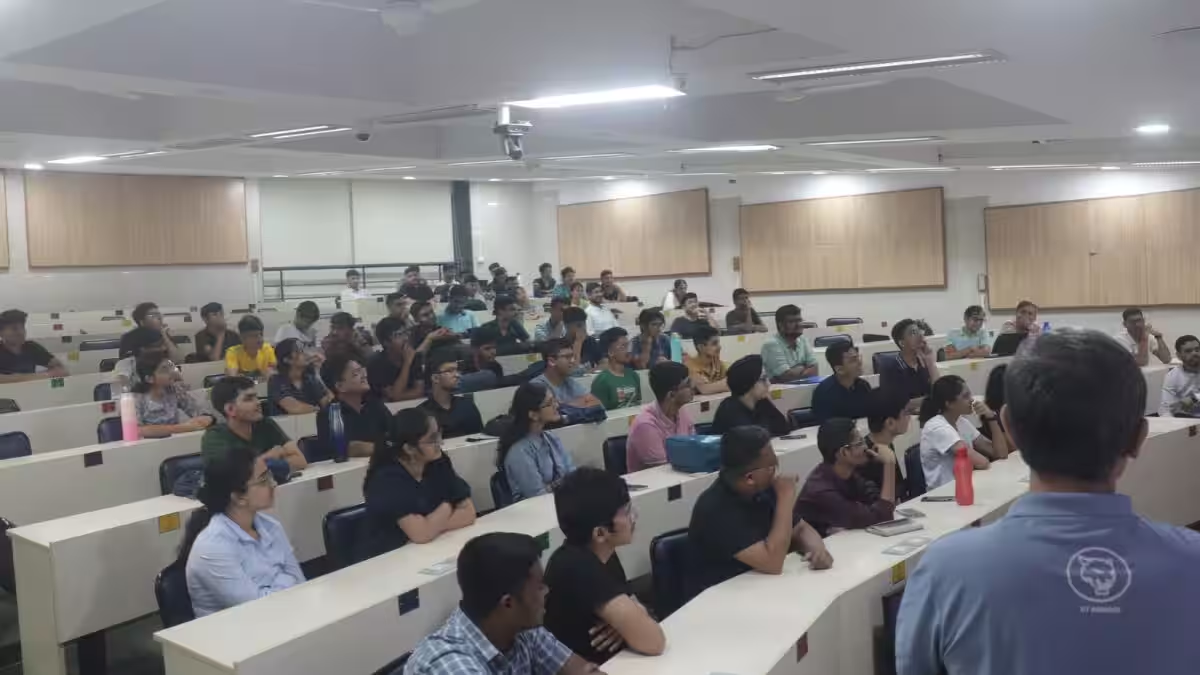
- Phase 1: AI education will begin with Classes 8 to 12 by integrating AI topics into the existing computer science curriculum. Students will engage with online classes, recorded lectures, project-based learning, and assessments through a dedicated learning management system.
- Phase 2: The program will expand to Classes 1 to 7, introducing age-appropriate AI concepts to younger students to build foundational knowledge early on.
- The initiative builds on PSEB’s pilot AI program and a statewide AI Hackathon, which helped refine the curriculum and teaching methods.
- Technological implementation will be supported by Neeev AI, with strategic partnerships involving Google, Intel, Canva, and the Foundation for Artifical Intelligence (FA-AI) to enhance AI literacy and teacher training.
- More than 25,000 schools and approximately 31.5 lakh students will benefit from this program.
- Over 12,000 computer science teachers and more than 200,000 educators across various subjects will receive training to effectively deliver AI education and integrate it into teaching and assessments.
Why Punjab’s AI Initiative Matters
This initiative positions Punjab as a national leader in AI education, setting a benchmark for other states to follow. By embedding AI learning from an early age, the state aims to nurture a generation capable not only of using AI tools but also of innovating and leading in a technology-driven world.
Former Delhi Education Minister Manish Sisodia praised the project, highlighting its potential to transform education and workforce readiness. The program’s emphasis on ethical AI use and entrepreneurship prepares students to navigate the challenges and opportunities of emerging technologies responsibly.
As AI continues to reshape economies and societies, Punjab’s comprehensive approach ensures that its students will be equipped with critical skills to thrive in the future job market and contribute to technological advancements.
Frequently Asked Questions
Q: What grades will study Artificial Intelligence in Punjab schools?
A: AI will be taught as a main subject from Class 1 through Class 12, with a phased introduction starting from Classes 8 to 12 and later expanding to younger grades.
Q: How will AI education be delivered to students?
A: Students will learn through a combination of online classes, recorded lectures, project-based learning, and assessments managed via a learning management system.
Q: Which organizations are involved in supporting Punjab’s AI curriculum?
A: The program is implemented with support from Neeev AI and partnerships with Google, Intel, Canva, and the Foundation for Artificial Intelligence (FA-AI).