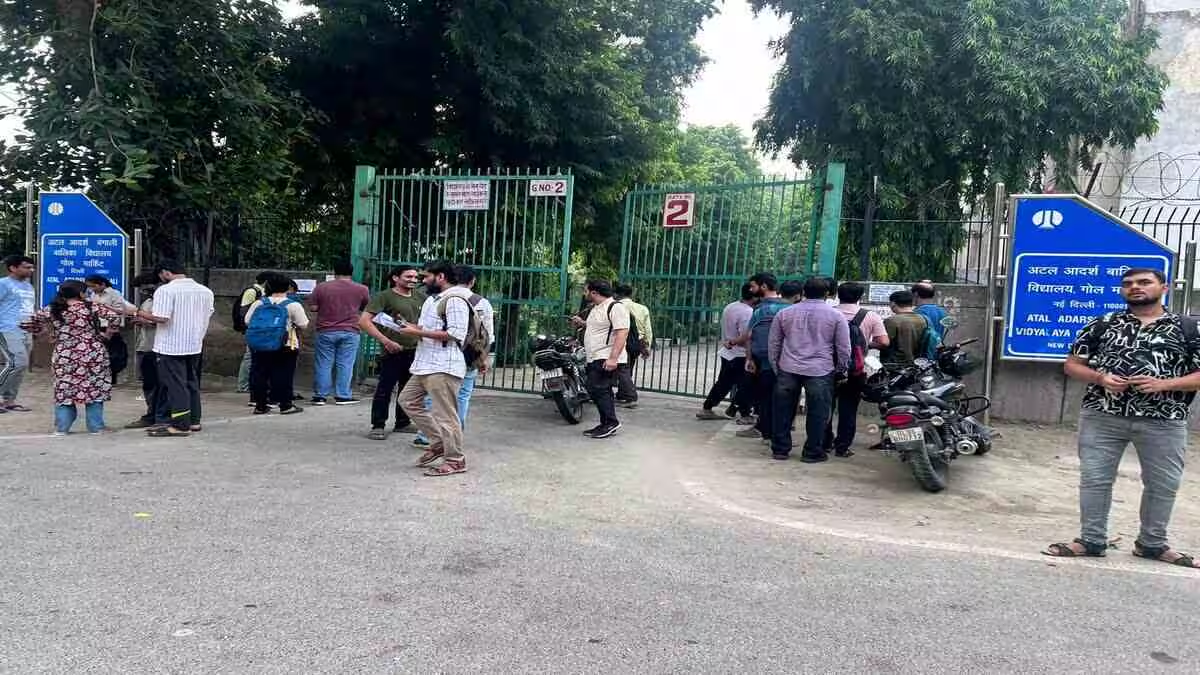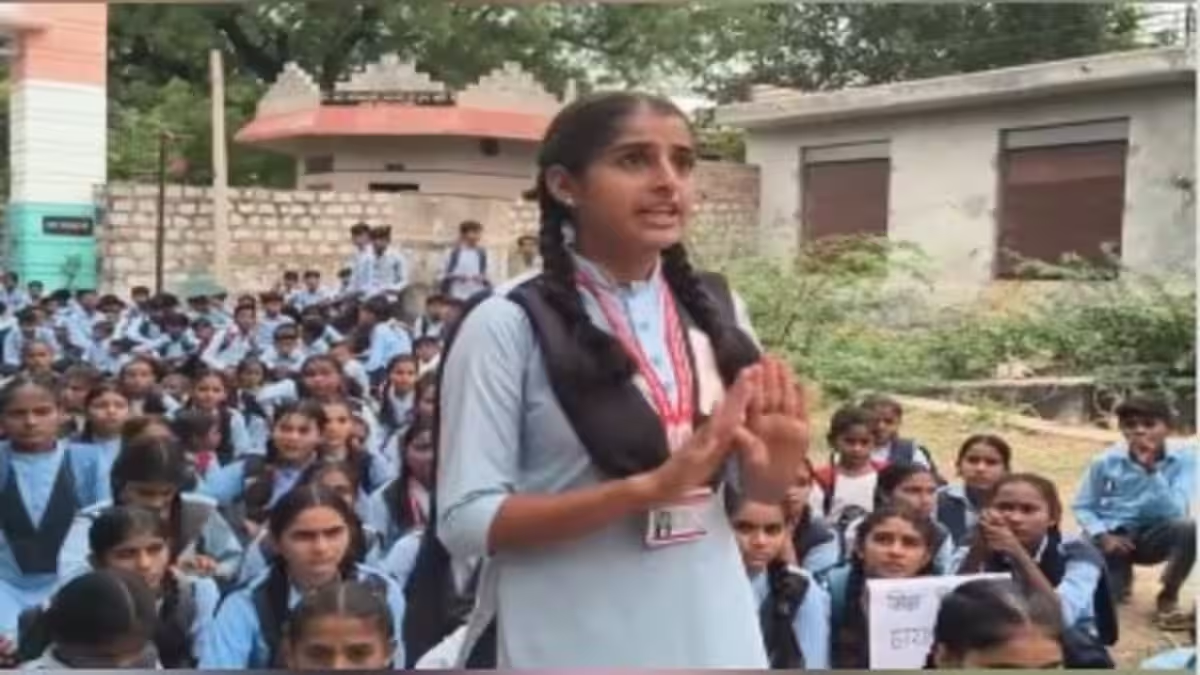
Students at a government primary school in Jalore district, Rajasthan, staged a protest over the shortage of teachers for Classes 1, 2, and 3. The demonstration took place outside their school, where students refused to open the gates until their demands were addressed. They warned that if no government officials or education department representatives responded by 10 a.m., they would escalate the protest by blocking a nearby road.
Teacher Shortage at the Heart of the Protest
A video circulating on social media shows a young girl clearly articulating the students' concerns while other children hold placards in the school playground. According to the students, the school currently has no teacher assigned to Class 2. For Class 1, there are only two teachers, one for history and one for Hindi. The history teacher also serves as the principal and is unable to dedicate time to teaching.
The students emphasized the urgent need for teachers not only for Classes 1, 2, and 3 but also for language levels L1, L2, and L3. Their message was firm: until the government fulfills these staffing requirements, the school gates will remain locked.
Context of School Protests in India
This protest follows a recent demonstration by students in Fatehpur district, Uttar Pradesh, who demanded basic facilities such as clean drinking water, functional fans, and clean toilets. These protests highlight ongoing challenges faced by government schools in various parts of India, including inadequate infrastructure and staff shortages.
Government schools in rural and semi-urban areas often struggle with insufficient resources and personnel, affecting the quality of education. The shortage of teachers for foundational classes can have long-term impacts on students’ learning and development.
What This Protest Reveals About Education Challenges
The Jalore students’ protest underscores the critical issue of teacher vacancies in government schools. Without adequate teaching staff, students risk falling behind in essential subjects during their early years of education. The involvement of students themselves in demanding better conditions signals growing awareness and frustration among young learners.
Local authorities face pressure to respond promptly to such protests to prevent disruption and ensure that children receive proper education. The threat to block roads indicates the seriousness of the students’ demands and their willingness to take bold steps to be heard.
Addressing teacher shortages requires coordinated efforts from education departments, including recruitment drives and better resource allocation. Ensuring that schools have enough qualified teachers is vital for improving educational outcomes and supporting children’s futures.
Frequently Asked Questions
Q: Why are students protesting at the Rajasthan government school?
A: They are protesting because there are not enough teachers for Classes 1, 2, and 3, which is affecting their education.
Q: What actions have the students threatened if their demands are not met?
A: The students have said they will keep the school gates locked and may block a nearby road to escalate their protest if no government officials respond by 10 a.m.
Q: Is this protest an isolated incident?
A: No, similar protests have occurred recently in other parts of India, such as in Uttar Pradesh, where students demanded better school facilities like clean drinking water and toilets.