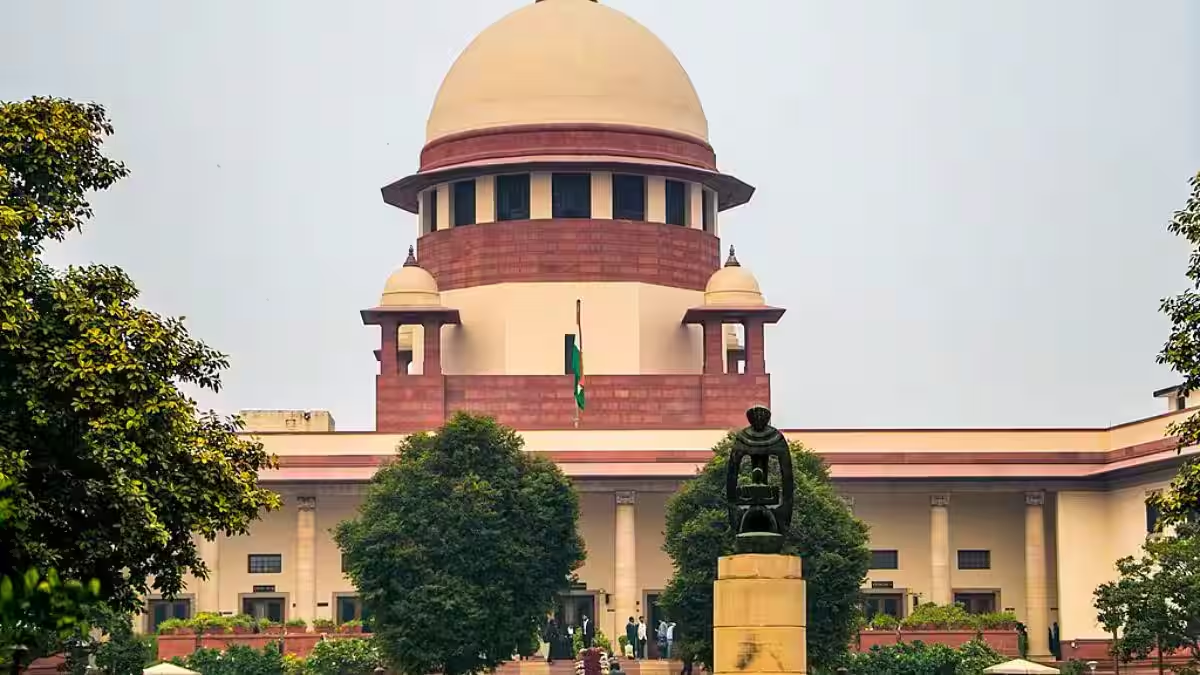
The Supreme Court of India has ordered the release of student protesters who are under 18 years old and have no criminal records. This directive came in the wake of nationwide demonstrations triggered by the NEET exam paper leak. The court emphasized the need to protect these young protesters from coercive actions by authorities while ensuring a fair investigation into the events surrounding the protests.
Understanding the NEET Protests and Court Intervention
The protests erupted across several states after the leak of the NEET (National Eligibility cum Entrance Test) exam paper, which is a crucial medical entrance test in India. Students took to the streets demanding justice and transparency, leading to clashes with law enforcement. Allegations of police brutality surfaced, prompting the Supreme Court to step in and address concerns about the treatment of young protesters and the handling of evidence related to the unrest.
Key Supreme Court Directives on Protesters and Evidence
- The court ordered the immediate release of student protesters below 18 years old who have no criminal history.
- Authorities were instructed to preserve all electronic and digital evidence, including CCTV footage, drone recordings, body-camera videos, wireless communication logs, and PCR (Police Control Room) records related to the protests.
- Any digital data collected on protesters must be preserved but not disclosed publicly to protect privacy.
- Coercive actions against eligible protesting students are barred during ongoing investigations.
- The Delhi government was allowed to continue investigations into FIRs but must refrain from coercive measures against qualifying students.
- Chief secretaries of Delhi, Maharashtra, Bihar, Kerala, Madhya Pradesh, and Uttar Pradesh were asked to respond to the allegations raised in the petitions.
Why the Supreme Court’s Decision Matters
The Supreme Court’s intervention highlights the importance of safeguarding the rights of young protesters while ensuring accountability for any excesses during law enforcement operations. By ordering the preservation of digital evidence, the court aims to facilitate a transparent and impartial investigation into the violence and police conduct during the protests. The possibility of constituting an independent committee or a Special Investigation Team (SIT) reflects the court’s commitment to a thorough inquiry that considers the perspectives of all parties involved, including the families of injured police personnel.
This ruling sets a precedent for how protests involving minors should be handled, emphasizing protection from coercion and the necessity of fair legal processes. It also underscores the judiciary’s role in balancing public order with civil liberties in sensitive situations.
Frequently Asked Questions
Q: Who are the student protesters the Supreme Court ordered to be released?
A: The court ordered the release of student protesters who are under 18 years old and have no criminal records, ensuring they are not subjected to coercive actions during investigations.
Q: What types of evidence must authorities preserve according to the Supreme Court?
A: Authorities must preserve CCTV footage, drone recordings, body-camera videos, wireless communication records, PCR logs, and other digital evidence related to the protests.
Q: Will there be an independent investigation into the police conduct during the protests?
A: The Supreme Court is considering constituting an independent committee or a Special Investigation Team to conduct a fair and transparent probe into allegations of police excesses and violence during the protests.