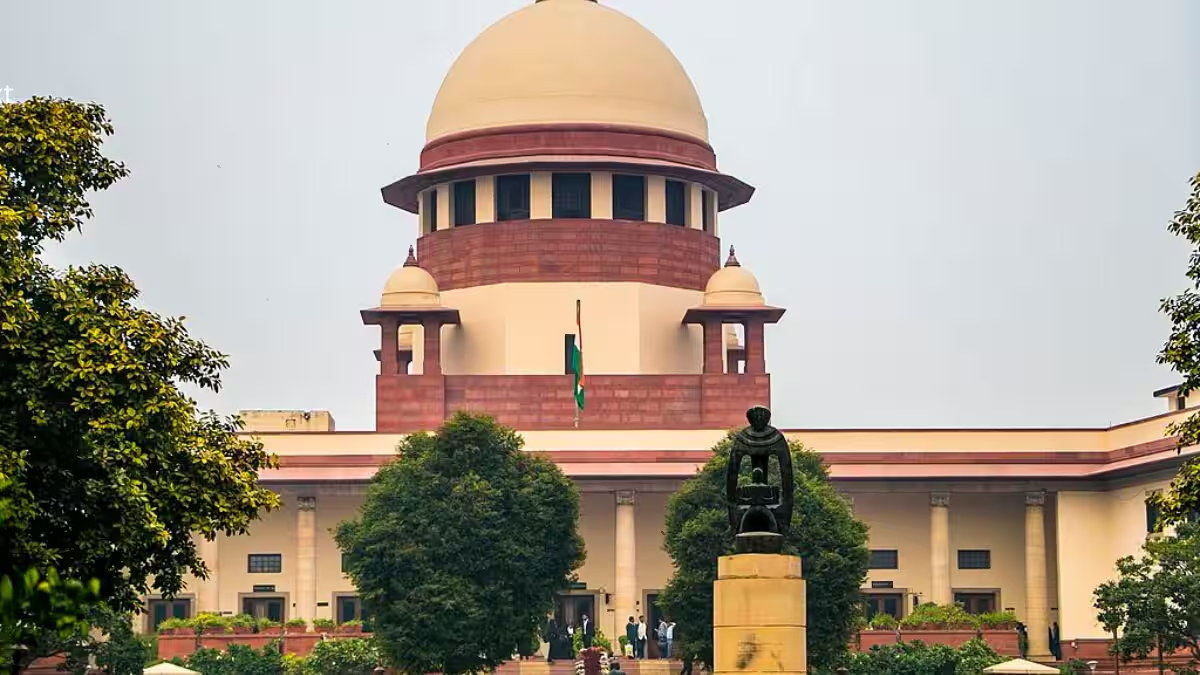
The Supreme Court of India declined to entertain a public interest litigation (PIL) filed to mandate biometric attendance systems in schools across the country. The petition aimed to compel the central and state governments to implement biometric tracking to prevent the existence of fake or dummy educational institutions. The court, however, advised the petitioner to seek relief through the respective high courts.
Understanding the Biometric Attendance Proposal
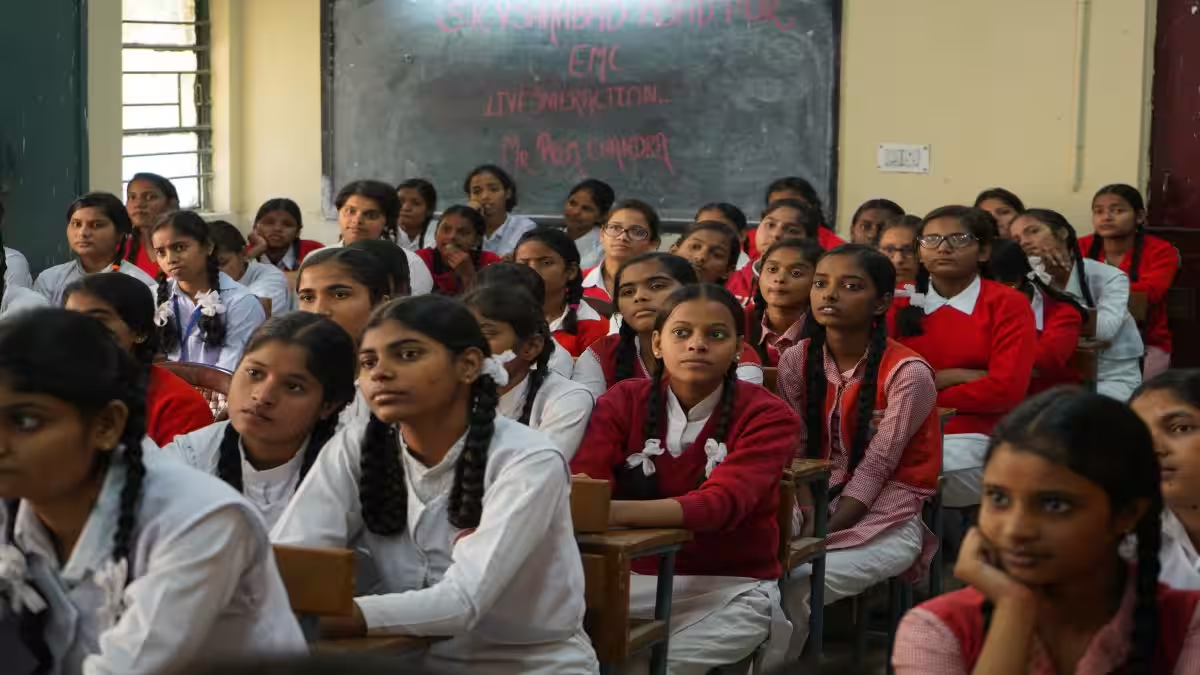
The PIL sought to introduce a biometric-based attendance system for students in schools. This system would use fingerprint or iris recognition technology to record attendance, ensuring that only genuine students are enrolled and present. The petitioner argued that such a system could help dismantle fraudulent schools that exist only on paper, often receiving government funds without providing actual education.
Additionally, the petition called for regulations on coaching centers, including setting statutory limits on coaching hours for children and enforcing a code of conduct to prevent misleading advertising practices, such as manipulating success rates or using photos of toppers to attract students.
Key Details from the Supreme Court Hearing
- The bench, comprising Justices P Narasimha and Alok Aradhe, refused to entertain the PIL under Article 32 of the Constitution, which allows citizens to approach the Supreme Court directly for enforcement of fundamental rights.
- The court suggested that the petitioner, advocate N K Goswami, should file the petition in the appropriate high courts instead of the Supreme Court.
- The plea included demands for a statutory cap on coaching hours and a binding code of conduct for coaching centers to curb unethical practices.
- The court’s refusal does not comment on the merits of the petition but focuses on procedural grounds regarding jurisdiction.
Why the Supreme Court’s Decision Matters
This decision highlights the procedural boundaries within India’s judicial system, emphasizing that not all public interest matters can be directly brought before the Supreme Court. Petitioners must first approach high courts unless fundamental rights violations are immediate and severe.
The refusal also reflects the challenges in regulating educational institutions and coaching centers, where issues like fake schools and misleading advertisements persist. While biometric attendance could offer a technological solution to verify student presence, implementing such systems nationwide involves logistical, privacy, and financial considerations.
Moreover, the court’s direction to approach high courts ensures that regional legal frameworks and authorities are engaged first, potentially allowing for more localized and practical solutions to these concerns.
Frequently Asked Questions
Q: What is a biometric attendance system in schools?
A: It is a method of recording student attendance using unique biological features like fingerprints or iris scans to ensure accurate and tamper-proof tracking.
Q: Why did the Supreme Court refuse to hear the PIL?
A: The court ruled that the petition should be filed in high courts instead, as it did not meet the criteria for direct Supreme Court intervention under Article 32.
Q: What issues does the PIL aim to address besides biometric attendance?
A: The petition also seeks to regulate coaching centers by limiting coaching hours for children and preventing misleading advertising practices.