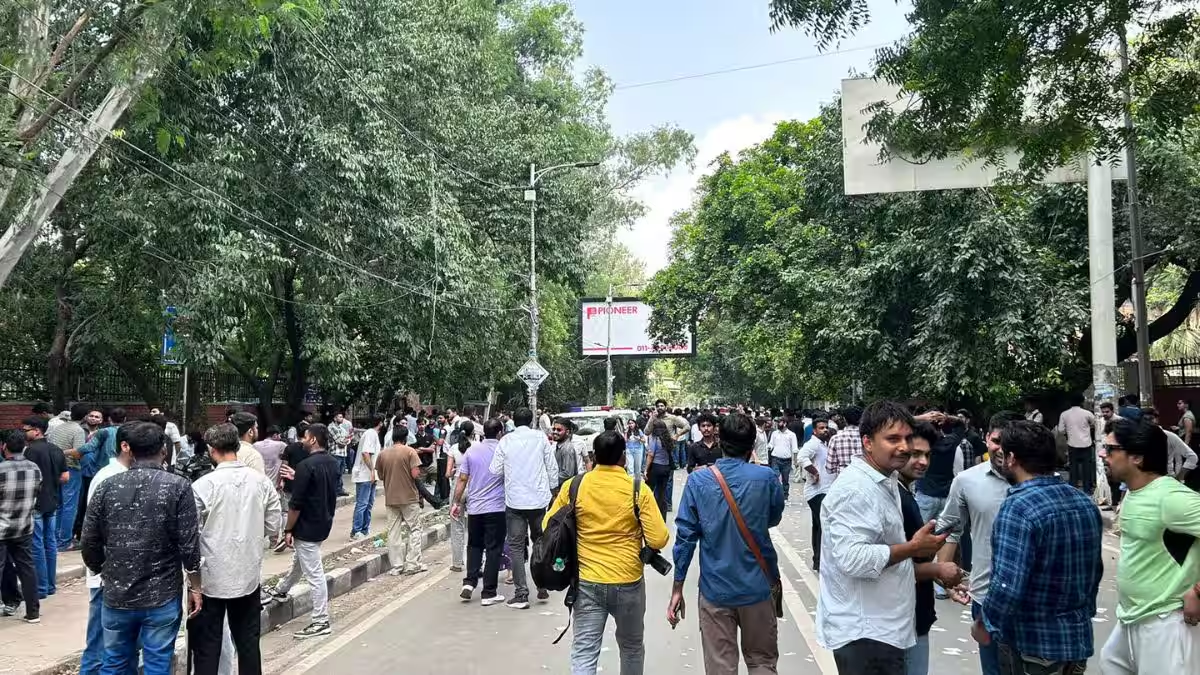
The Students' Federation of India (SFI) has called for protests on October 27 at several educational institutions to oppose what it describes as efforts to suppress students' democratic rights. The protests will take place at Jadavpur University, the Satyajit Ray Film and Television Institute (SRFTI), Calcutta University, and Presidency University. SFI leader Subhajit Sarkar stated that the demonstrations aim to mobilize students in West Bengal and other states against alleged attacks by right-wing forces on campuses and the erosion of institutional autonomy.
Subhajit Sarkar, a central executive committee member of SFI, emphasized that the SRFTI students' union, although not politically affiliated, consists of progressive and secular students. This highlights the inclusive nature of the protests, which seek to unite students across different backgrounds in defense of their rights.
What Are the Main Goals of the SFI Protests?
The protests have several key demands and objectives, including:
- Opposition to alleged attacks by right-wing groups on university campuses.
- Protection and restoration of institutional autonomy at educational institutions.
- Conducting students' union elections across campuses in West Bengal.
- Enactment of the proposed Rohith Vemula Act, which aims to address caste-based and institutional discrimination.
- Withdrawal of the Viksit Bharat Shiksha Adhishthan Bill, 2025.
- Opposition to the National Education Policy (NEP), 2020.
Why Is Institutional Autonomy Important to Students?
Institutional autonomy refers to the independence of educational institutions to govern themselves without external interference. Students and faculty often view this autonomy as essential for maintaining academic freedom, promoting diverse viewpoints, and ensuring fair governance. The SFI protests highlight concerns that this autonomy is being undermined, which could affect the quality and freedom of education.
What Is the Rohith Vemula Act?
The Rohith Vemula Act is a proposed law named after Rohith Vemula, a student who died by suicide in 2016, highlighting issues of caste-based discrimination in educational institutions. The act seeks to prevent such discrimination and promote equality on campuses. SFI supports this legislation as part of its broader fight against institutional discrimination.
What Are the Concerns Regarding the Viksit Bharat Shiksha Adhishthan Bill and NEP 2020?
SFI has expressed opposition to both the Viksit Bharat Shiksha Adhishthan Bill, 2025, and the National Education Policy, 2020. Critics argue that these policies may centralize control over educational institutions and reduce the role of students and faculty in decision-making. The protests aim to raise awareness and call for reconsideration of these policies.
How Can Students Participate in the Protests?
Students at the specified universities are encouraged to join the protests on October 27. The demonstrations are intended to be peaceful and focused on raising awareness about the issues affecting students' rights and institutional autonomy. Participation provides an opportunity for students to voice their concerns and advocate for changes in education policy.
In summary, the SFI's call for campus protests reflects ongoing debates about students' rights, institutional autonomy, and education policies in India. By organizing these demonstrations, the SFI aims to unite students in defending democratic principles and promoting equitable education.