More than 400 Indian-origin students, researchers, and alumni from universities across 27 countries have spoken out against recent opposition protests targeting the Election Commission of India. They describe these protests as efforts to weaken public trust in constitutional institutions and to undermine democratic processes.
- Over 400 Indian-origin academics condemn anti-Election Commission protests.
- Protests seen as attempts to delegitimize India's democratic institutions.
- Signatories call for resolving differences through constitutional dialogue.
- They emphasize the resilience of Indian democracy over seven decades.
- They invoke B.R. Ambedkar's call to reject anarchy and uphold constitutional methods.
Why are Indian-origin students condemning the protests?
The students and researchers issued a joint statement titled "Spare India from Anarchy," criticizing the use of "anarchic street protests" to challenge democratic processes. They warn that such actions threaten constitutional democracy under the guise of defending it. The statement expresses deep concern about attempts to sow doubt about Indian democracy by exploiting ongoing legal matters and amplifying unrest on the streets.
What issues are the opposition protests raising?
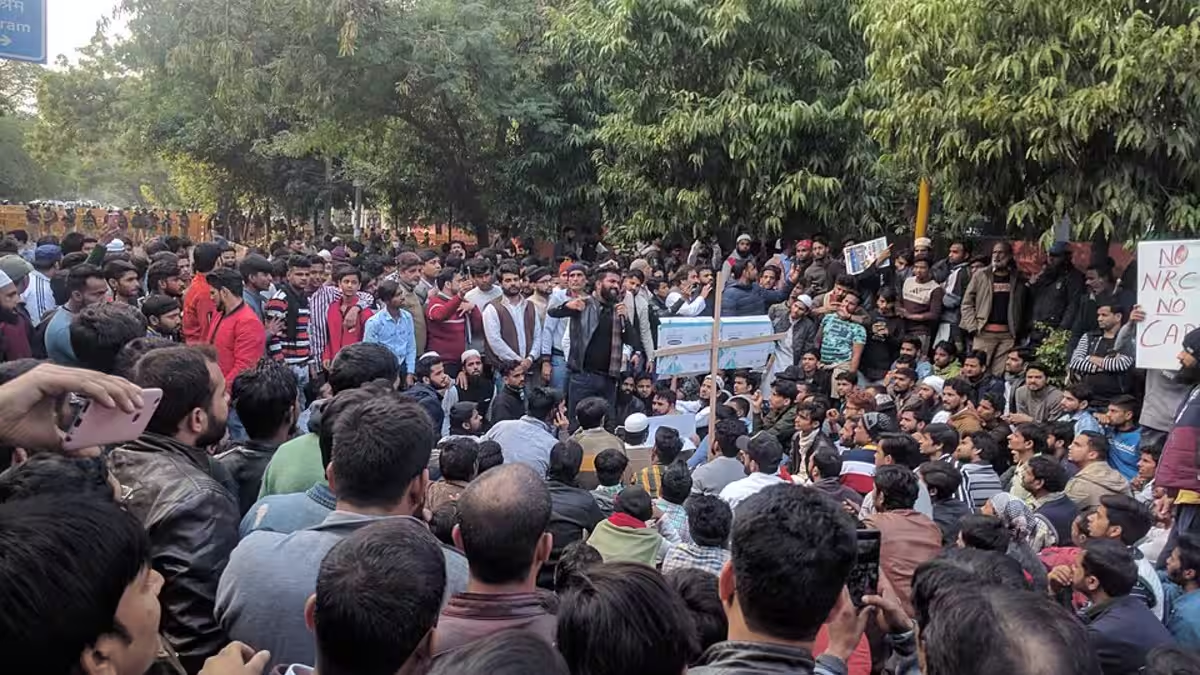
Opposition parties have been protesting against the Election Commission, questioning the integrity of electoral processes and alleging irregularities in elections. These protests have involved public demonstrations and calls for resignations, which the signatories view as attempts to delegitimize constitutional institutions and disrupt the democratic process.
How do the signatories view Indian democracy?
The statement highlights that Indian democracy has shown resilience over the seven decades since independence. Constitutional institutions have flourished, checks and balances have functioned well, and peaceful transitions of power have been a consistent feature. The signatories express concern that recent protests reflect a preference for street demonstrations over parliamentary debate and have led to unwarranted criticism of judicial independence and even the Armed Forces.
What constitutional values do the signatories emphasize?
Invoking B.R. Ambedkar, the principal architect of the Indian Constitution, the signatories recall his warning to "hold fast to constitutional methods" and to reject the "grammar of anarchy." They stress that while dissent is vital in a democracy, it must occur within constitutional frameworks through debate, discussion, dialogue, and peaceful dissent rather than through disruptive protests.
Who are the signatories of the statement?
The signatories include students, researchers, and alumni affiliated with universities in 27 countries, including the USA, UK, Canada, Australia, Germany, France, Japan, and Singapore. Their academic institutions include prestigious universities such as the Massachusetts Institute of Technology, Oxford, Cambridge, Harvard, Stanford, and the London School of Economics. The statement clarifies that these institutions do not necessarily endorse the statement.
What do the signatories urge moving forward?
They call on social and political forces to resolve their differences through constitutional means and reject regressive methods that harm democracy. They emphasize the importance of maintaining public confidence in democratic institutions and processes to ensure India's continued democratic resilience.