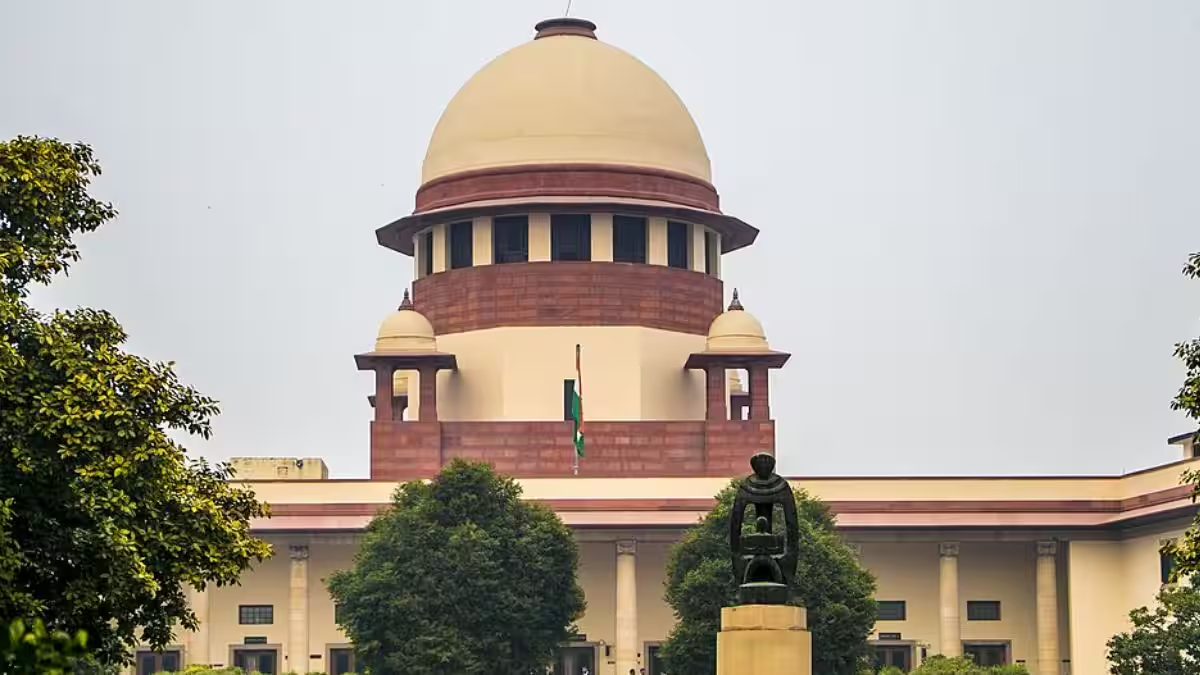
The Supreme Court of India has instructed the Central Board of Secondary Education (CBSE) to find ways to safeguard students whose admission chances have been affected by the Board’s recent introduction of the On-Screen Marking (OSM) system for Class 12 exams. This directive came during a hearing on Friday, following concerns that the new evaluation method resulted in lower marks for some students, impacting their eligibility for entrance-based courses.
Understanding the On-Screen Marking System and Its Introduction
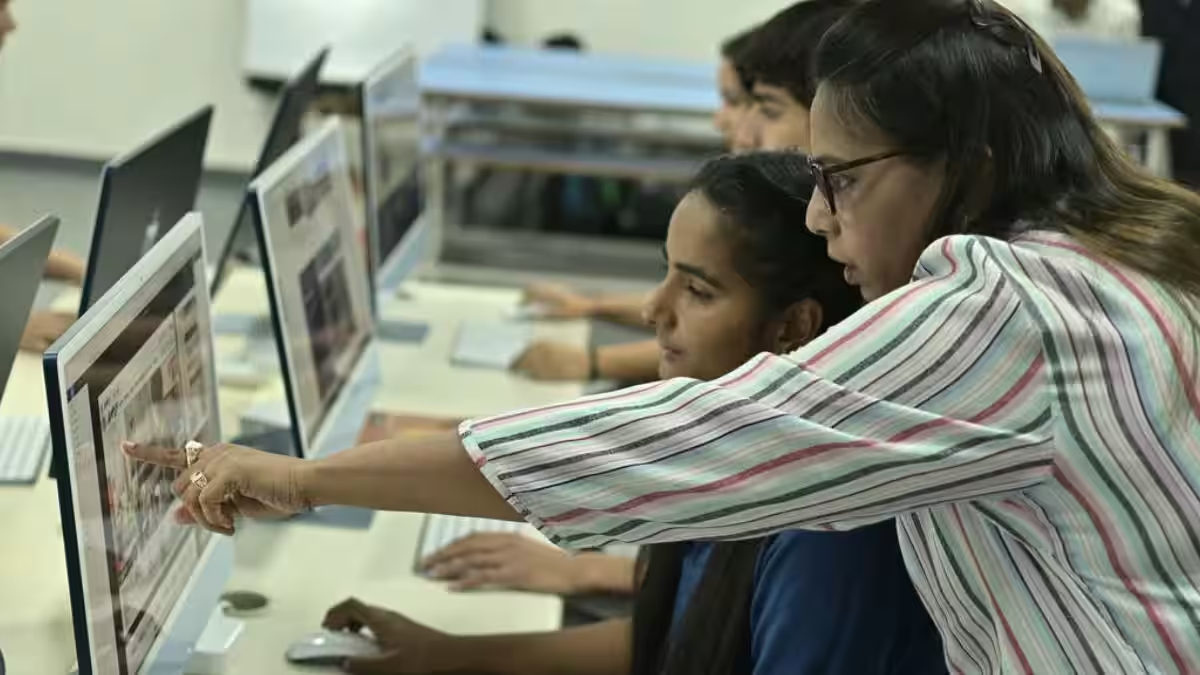
The OSM system was introduced by CBSE for the first time in 2026 as a digital method of evaluating answer sheets. Instead of traditional manual checking, teachers assess scanned copies of answer sheets on a computer screen. The Board issued several circulars in February 2026 to prepare teachers for this change, including instructions on relieving teachers from other duties to focus on evaluation and guidelines for accessing the system.
However, the petition brought before the Supreme Court claims that teachers did not receive adequate formal training before the OSM system was implemented. Although mock evaluations and monitoring exercises were scheduled, the petitioner alleges that these were insufficient and that many evaluators were unprepared for the new digital process.
Key Issues Raised About the OSM Evaluation Process
- Several irregularities were reported during the digital scanning of answer sheets, such as pages not being scanned, illegible scans, and some answers or entire pages being left unevaluated.
- These technical errors allegedly led to arbitrary marking and, in some cases, the complete non-evaluation of certain answer sheets.
- The petitioner highlighted that these problems affected students across India and even those studying abroad, potentially violating their constitutional rights to equality and fair treatment.
- The overall Class 12 pass percentage dropped to 85.2% in 2026, a decline of 3.19 percentage points from the previous year and the lowest in seven years, which the petitioner linked to the evaluation issues.
- Requests for access to answer sheets for verification were reportedly denied, with some answer sheets not being uploaded on the CBSE website.
Why the Supreme Court’s Intervention Matters for Students
The Supreme Court’s call for CBSE to protect affected students underscores the seriousness of the evaluation concerns. Many students who passed their exams found themselves unable to meet the minimum scores required for admission to competitive courses, some of which have already started. This situation threatens their academic futures and raises questions about the fairness of the new system.
The Court’s direction aims to ensure that students are not unfairly penalized due to technical or procedural flaws in the evaluation process. The petitioner has sought re-evaluation or rechecking of answer sheets, the cancellation of wrongful disqualifications, and provisional admission rights for those impacted.
CBSE now faces the challenge of reviewing the OSM system’s implementation, addressing the alleged irregularities, and restoring confidence in the evaluation process. The outcome will have significant implications for students’ academic progression and the credibility of the Board’s examination system.
Frequently Asked Questions
Q: What is the On-Screen Marking (OSM) system?
A: The OSM system is a digital evaluation method where teachers assess scanned answer sheets on a computer instead of traditional paper-based marking.
Q: Why are students affected by the OSM system?
A: Technical issues like unscanned pages and illegible scans during the OSM evaluation reportedly caused some students to receive lower marks or have parts of their answer sheets unevaluated, impacting their admission eligibility.
Q: What has the Supreme Court asked CBSE to do?
A: The Supreme Court has asked CBSE to investigate the evaluation problems and find ways to protect students’ interests, including considering re-evaluation and allowing affected students to participate in admissions provisionally.