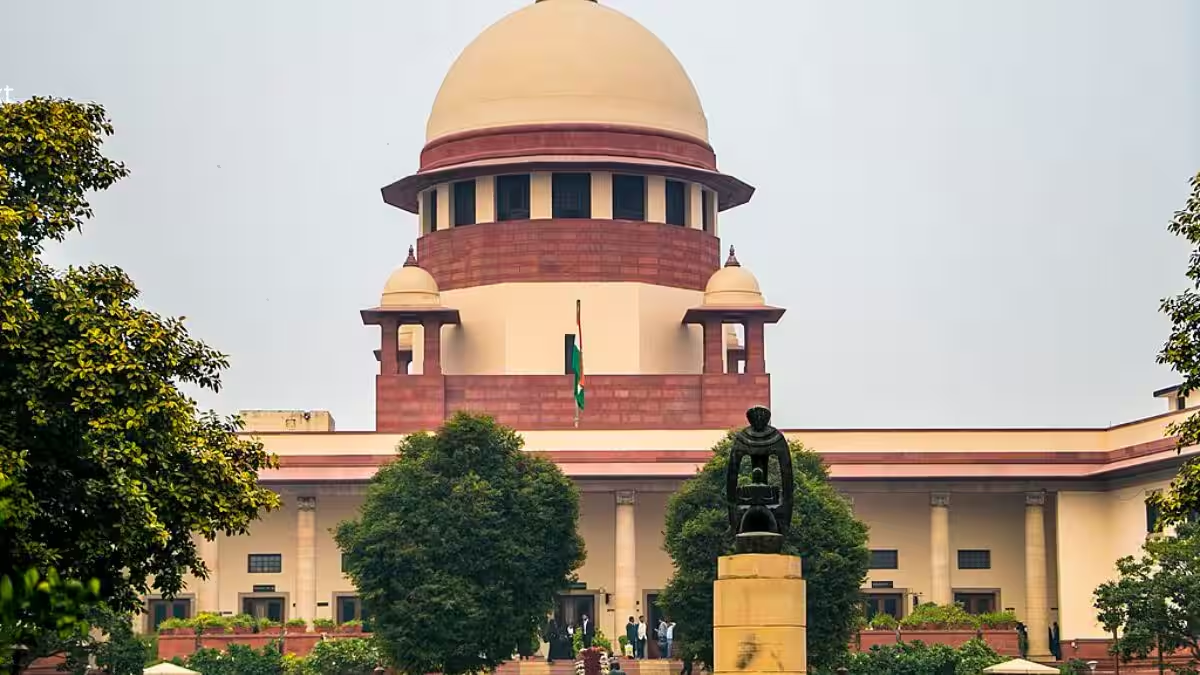
The Supreme Court of India is set to hear two petitions on Monday that accuse police of using excessive force against students protesting the NEET exam paper leak and other irregularities. The cases will be heard by a bench led by Chief Justice Surya Kant, alongside Justices Joymalya Bagchi and V Mohana.
The petitions were fast-tracked after senior advocate Gopal Sankaranarayanan highlighted concerns about police violence during nationwide student protests. The protests were sparked by a leaked NEET exam paper, which led to widespread outrage and demands for accountability.
Background on the NEET Paper Leak and Student Protests
NEET, or the National Eligibility cum Entrance Test, is a highly competitive medical entrance exam in India. In July 2023, a leak of the exam paper triggered protests across multiple states. Students, many of whom had prepared for months, felt the integrity of the exam was compromised.
The Cockroach Janata Party (CJP), a student-led group, organized a march in Delhi on July 20 to demand the resignation of Union Education Minister Dharmendra Pradhan and other reforms. The protest escalated when security forces used lathis (batons) and tear gas to disperse crowds attempting to approach Parliament, leading to allegations of police brutality.
Key Facts About the Supreme Court Hearing and Protests
- The Supreme Court bench will hear the pleas on July 27, 2023.
- Two separate petitions allege excessive police force during the protests.
- Senior advocate Gopal Sankaranarayanan represented the petitioners, emphasizing urgent attention.
- The CJP-led protest on July 20 saw clashes with police in Delhi, involving lathi charges and tear gas.
- Protesters demanded the resignation of Education Minister Dharmendra Pradhan over the NEET paper leak.
- Pradhan resigned on July 22, after which the CJP ended its 36-day agitation.
- The Delhi High Court has also sought responses from the Centre and Delhi Police regarding police conduct during the protests.
- Authorities were ordered to preserve all evidence related to police actions, including CCTV footage.
Why the Supreme Court Hearing Matters for Student Rights
This hearing represents a critical moment for addressing concerns about law enforcement’s response to peaceful protests, especially those involving students. The allegations of police excesses raise questions about the balance between maintaining public order and respecting citizens’ rights to demonstrate.
The Supreme Court’s scrutiny could set important precedents on how police handle protests in the future, particularly in sensitive cases involving young people and educational issues. It also highlights the broader debate on transparency and accountability in government responses to public dissent.
Moreover, the resignation of the Education Minister following the protests underscores the impact of sustained student activism in India. The court’s decision could influence how authorities engage with protest movements and manage grievances related to exam fairness and educational policy.
Frequently Asked Questions
Q: What triggered the student protests against NEET?
A: The protests began after a leak of the NEET exam paper, which many students saw as undermining the fairness of the medical entrance test.
Q: Who is the Cockroach Janata Party?
A: The Cockroach Janata Party is a student-led group that organized protests demanding accountability and reforms following the NEET paper leak.
Q: What actions did the police take during the July 20 protest?
A: Police used lathis and tear gas shells to disperse protesters attempting to march towards Parliament, leading to allegations of excessive force.